From Theory to Infrastructure
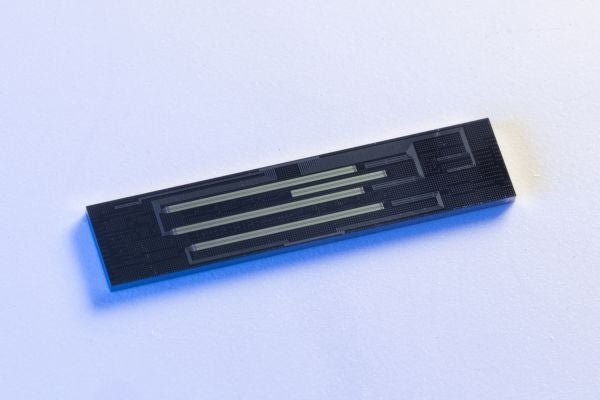
The Netherlands is positioning itself as a European leader in quantum internet development, building on decades of research at TU Delft’s QuTech institute. Unlike quantum computing — which remains years away from practical commercial deployment — quantum networking is already moving from laboratory demonstrations to real-world infrastructure projects.
In June 2026, a consortium led by QuTech, KPN, and the Dutch research organisation TNO announced the successful completion of a 25-kilometre quantum link between Delft and The Hague, transmitting entangled photons through existing fibre-optic cables. The demonstration proved that quantum signals can coexist with conventional internet traffic on the same infrastructure — a critical milestone for cost-effective deployment.
What Makes a Quantum Internet Different
A quantum internet does not replace the classical internet; it augments it with capabilities that are physically impossible with classical bits. The key difference is entanglement — a property where two particles become correlated in such a way that measuring one instantly determines the state of the other, regardless of distance.
This enables three transformative applications: unconditionally secure communication (any eavesdropping attempt unavoidably disturbs the quantum state and is detected), distributed quantum computing (linking quantum processors across cities), and precision metrology (synchronising atomic clocks with unprecedented accuracy for GPS and financial networks).
The European Quantum Internet Alliance
The Netherlands is not working in isolation. The European Quantum Internet Alliance (QIA), a €25 million EU-funded programme, connects research teams from TU Delft, the University of Innsbruck, CNRS in Paris, and the Max Planck Institute in Germany. The alliance’s roadmap targets a pan-European quantum backbone by 2030, connecting quantum processors in Delft, Paris, Munich, and Vienna.
“The Delft–The Hague link is our proof of concept,” explained Professor Stephanie Wehner, who leads the quantum internet division at QuTech. “The next phase adds quantum repeaters — essentially quantum signal amplifiers — to extend the range beyond metropolitan distances. By 2028 we expect to connect Amsterdam, Rotterdam, and The Hague in a quantum triangle.”
Why It Matters for Everyday Users
While quantum internet technology sounds esoteric, its first practical application — quantum key distribution (QKD) — directly addresses the growing threat of “harvest now, decrypt later” attacks, where adversaries collect encrypted data today in anticipation of future quantum computers capable of breaking today’s encryption standards.
Dutch banks, including ING and ABN AMRO, have begun participating in quantum-safe communication trials, recognising that financial transaction data intercepted today would be devastating if decrypted a decade from now. The Netherlands, with its dense fibre network and concentration of research talent, is uniquely positioned to lead Europe’s quantum networking transition.
The Netherlands, for internationals
One email a week: the week's news for internationals in the Netherlands, new practical guides and what changed in the cities. No spam, unsubscribe any time.