The Strategic Importance of Rare Earth Elements
Rare earth minerals have quietly become the most strategically important commodities of the 21st century. These 17 elements — including neodymium, dysprosium, europium, and terbium — are essential components in everything from electric vehicle batteries and wind turbines to fighter jets, smartphones, and missile guidance systems. As the world races toward clean energy transitions and advanced military technologies, control over rare earth supply chains has emerged as a defining geopolitical battleground of our era.
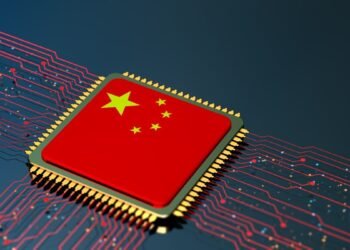
China currently dominates the rare earth market with a stranglehold that concerns policymakers from Washington to Brussels. The country controls approximately 60% of global rare earth mining, but more critically, it processes over 85% of the world’s rare earth oxides and metals. This processing monopoly gives Beijing extraordinary leverage over global supply chains for clean energy technologies, defense systems, and advanced electronics.
The strategic vulnerability became starkly apparent in 2010 when China cut rare earth exports to Japan amid a territorial dispute, sending prices skyrocketing and triggering panic across global supply chains. Since then, the United States, European Union, and allied nations have scrambled to reduce their dependence on Chinese rare earths, but progress has been slow and costly. The infrastructure for rare earth processing — a complex, environmentally challenging industrial process — cannot be replicated overnight.
China’s Dominance and the Western Response
Beijing’s strategy has been deliberate and long-term. Chinese companies, often with state backing, acquired rare earth mines in Myanmar, Vietnam, and Greenland throughout the 2010s. China also invested heavily in downstream processing capabilities, building the world’s most advanced separation facilities and effectively creating a monopoly on the mid-stream processing stage. Any country wanting to mine rare earths still needs to send them to China for processing, giving Beijing effective veto power over non-Chinese rare earth projects.
The United States has responded with a multi-pronged strategy under the Defense Production Act and the Inflation Reduction Act. The Pentagon has awarded hundreds of millions of dollars in grants to companies like MP Materials, which operates the Mountain Pass mine in California — the largest rare earth mine outside China. MP Materials has invested over $700 million in building downstream processing facilities, aiming to create a fully integrated American rare earth supply chain by 2027.
Australia’s Lynas Rare Earths has become the West’s most significant rare earth producer outside China, operating the world’s largest non-Chinese rare earth processing plant in Western Australia. The company has received substantial US government support and is building a new processing facility in Texas to further diversify supply chains. These efforts mirror the broader reshaping of global technology supply chains, much like the central role ASML plays in the global semiconductor equipment ecosystem.
The European Union has launched the Critical Raw Materials Act, setting targets for extracting at least 10% of its annual consumption of strategic minerals domestically by 2030, processing at least 40% domestically, and ensuring no single third country supplies more than 65% of EU consumption of any strategic raw material. European rare earth projects in Sweden, Greenland, and Portugal are being fast-tracked through regulatory processes, though environmental concerns and local opposition remain significant hurdles.
New Frontiers: Deep Sea Mining and Recycling
As land-based rare earth deposits become increasingly contested, attention has turned to two alternative sources: deep sea mining and recycling. The Clarion-Clipperton Zone in the Pacific Ocean contains polymetallic nodules rich in rare earth elements, manganese, cobalt, and nickel. The International Seabed Authority has granted exploration licenses to several countries and private companies, but deep sea mining remains highly controversial due to unknown ecological impacts on fragile deep ocean ecosystems.
The recycling of rare earths from end-of-life products, known as urban mining, presents a more environmentally friendly alternative. Currently, less than 1% of rare earths are recycled globally, but research breakthroughs are improving recycling efficiency. Scientists at the Technical University of Denmark have developed a hydrometallurgical process that can recover over 95% of rare earths from used magnets and electronic waste, a significant improvement over traditional methods.
Japan, which imports nearly all of its rare earth needs, has become a leader in urban mining research. Japanese electronics manufacturers have developed processes to extract rare earths from discarded hard drives, air conditioner compressors, and hybrid vehicle motors. These initiatives are part of a broader Japanese strategy to reduce vulnerability to supply disruptions.
Geopolitical Flashpoints and Future Outlook
The rare earth supply chain is increasingly intertwined with broader geopolitical tensions. China’s export controls on gallium and germanium in 2023, followed by restrictions on rare earth extraction and separation technologies, sent a clear message about Beijing’s willingness to weaponize its mineral dominance. The announcement surprised global markets and forced Western governments to accelerate their diversification strategies.
Greenland has become an unexpected focal point of rare earth geopolitics. The island holds significant deposits of rare earth elements, and both the United States and China have shown intense interest in developing these resources. The Trump administration’s controversial attempt to purchase Greenland in 2019 was driven in part by its strategic mineral potential. Today, the Greenlandic government faces competing proposals from American, Chinese, Australian, and European mining companies, each with different development models and environmental standards.
Vietnam and Myanmar have emerged as potential alternative sources of rare earths, though both face significant challenges. Myanmar’s rare earth industry has been linked to environmental damage and conflict financing, while Vietnam’s regulatory framework for mining remains underdeveloped. The geopolitical dynamics around these deposits mirror the divergent economic trajectories that central banks worldwide are navigating as they balance growth, inflation, and resource security.
Looking ahead, the rare earth landscape will likely remain contested for the foreseeable future. Even optimistic projections suggest it will take until 2030 at the earliest for Western nations to develop meaningful rare earth processing capacity independent of China. In the meantime, stockpiling, trade agreements, and diplomatic maneuvering will define the geopolitics of these critical minerals. The nations that secure reliable, sustainable access to rare earths will hold a significant advantage in the clean energy transition, defense technology, and the broader technology competition that will shape the 21st century. The battle for rare earths is not merely an economic competition — it is a strategic struggle that will define the balance of power in the decades to come.
The Netherlands, for internationals
One email a week: the week's news for internationals in the Netherlands, new practical guides and what changed in the cities. No spam, unsubscribe any time.