The Rise of Automated Officiating
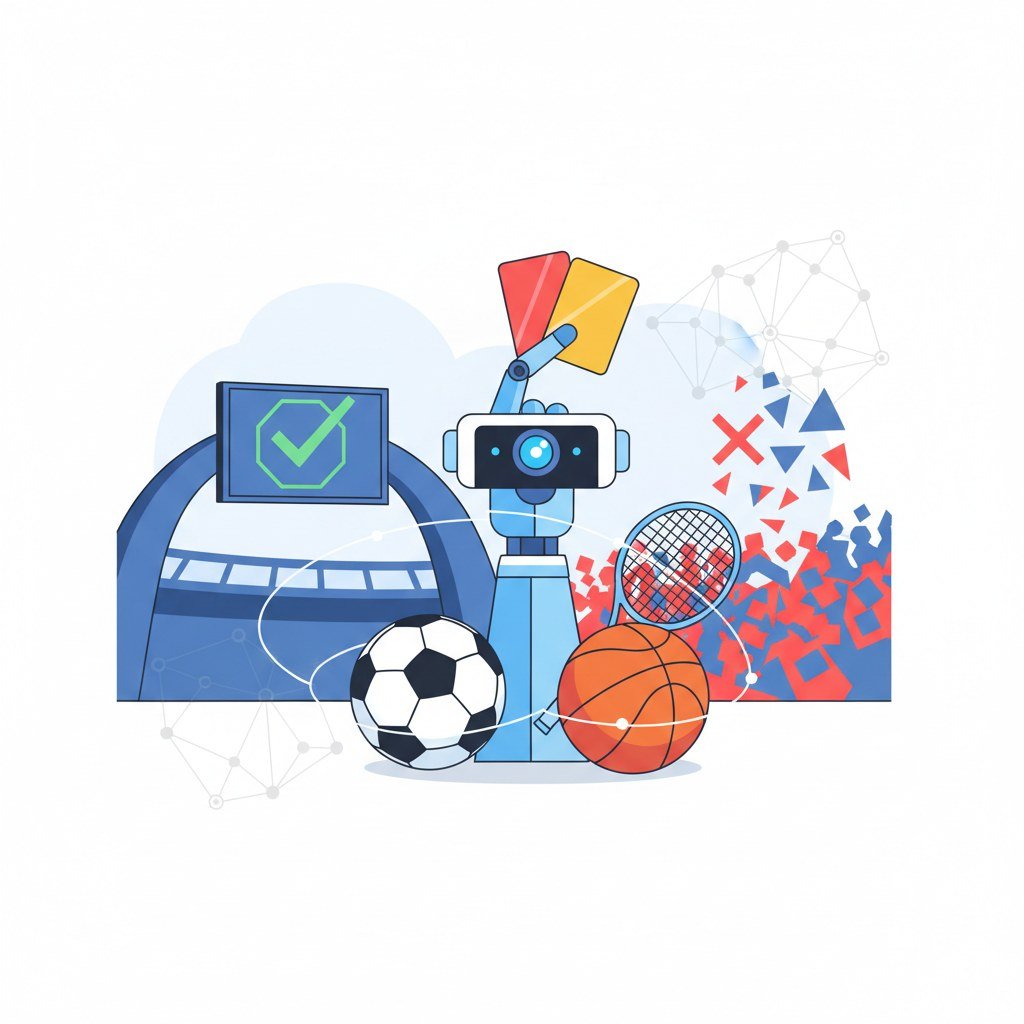
Professional sports in 2026 have entered an unprecedented era of technological transformation, with artificial intelligence increasingly taking center stage in officiating decisions across football, tennis, basketball, and baseball. From semi-automated offside technology in football to AI-powered strike zone calls in baseball, the integration of machine learning into real-time sports adjudication is reshaping how games are played, watched, and debated.
The 2026 FIFA World Cup, currently underway across North America, has become the largest showcase of AI-powered officiating in sports history. Semi-automated offside technology, first introduced at the 2022 Qatar World Cup, has been refined to the point where decisions are delivered in under 10 seconds with sub-centimeter accuracy. Twelve tracking cameras mounted under stadium roofs capture 29 data points on each player 50 times per second, feeding a neural network that instantly flags offside positions and generates 3D animations for broadcast.

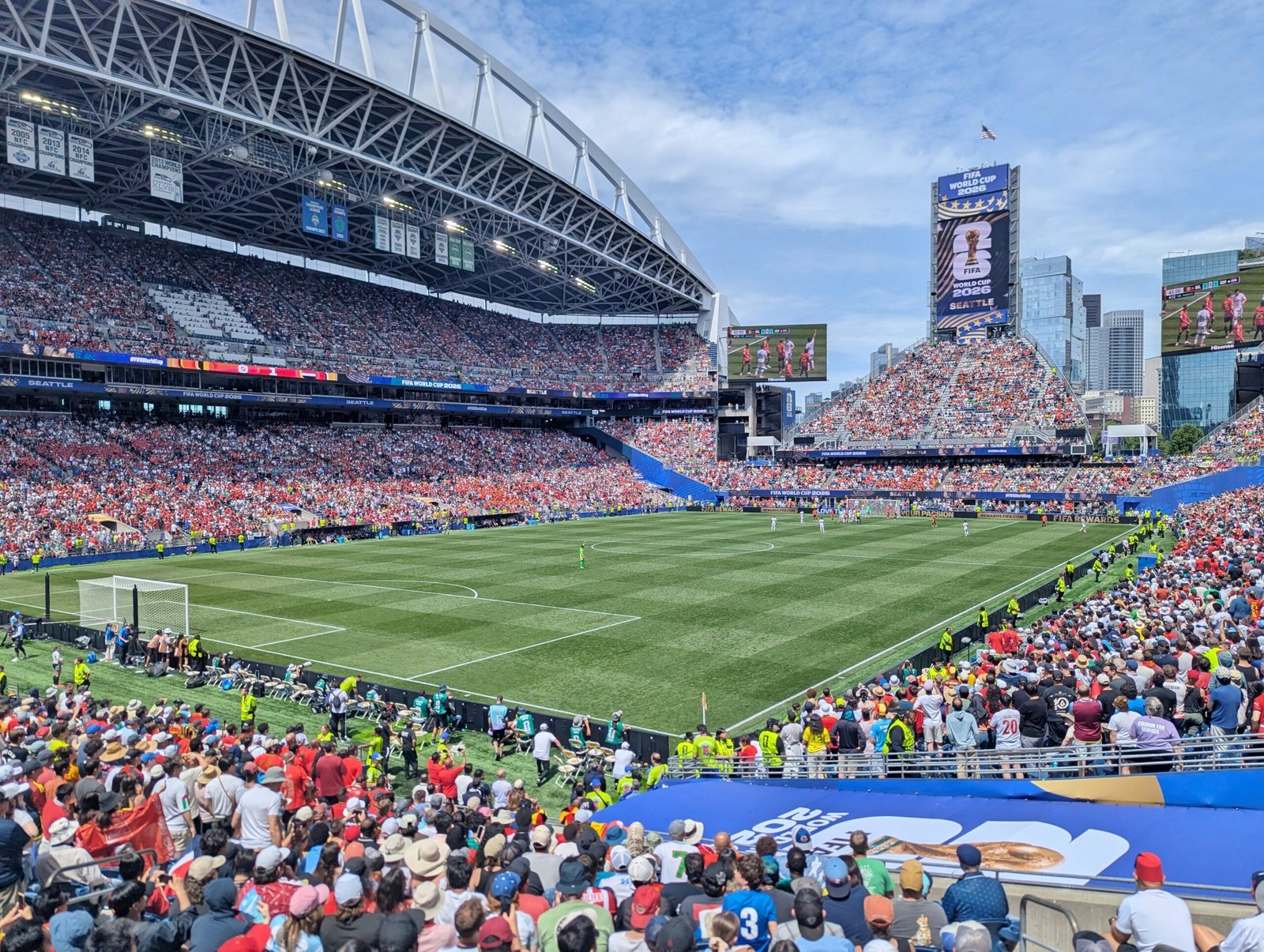
“The technology has become incredibly reliable,” says Pierluigi Collina, FIFA’s head of refereeing. “What took VAR several minutes to review in 2022 now happens automatically. The referee on the pitch receives a notification on their wrist, confirms the data, and play resumes. The interruption to the flow of the game is minimal compared to the old system.”
Yet the rise of AI officiating has not been without controversy. A growing movement of players, managers, and fans argue that the increasing automation of sports is stripping the game of its human element. For an in-depth look at how AI is changing every aspect of professional sports, see our coverage of how AI is transforming professional sports in 2026.
Accuracy vs. Controversy: The Statistical Debate
The data on AI officiating accuracy is compelling. A comprehensive study published in the Journal of Sports Sciences in early 2026 analyzed over 15,000 decisions across five major football leagues and found that AI-assisted officials made correct calls 99.3 percent of the time, compared to 94.1 percent for human-only officiating. In tennis, Hawk-Eye systems operating with AI enhancements now achieve accuracy within 1.7 millimeters — down from 3.6 millimeters a decade ago.
MLB’s automated ball-strike system, now in its third season of full implementation, has reduced blown calls by 74 percent compared to 2023. The system uses radar and camera tracking to determine pitch location within a three-dimensional strike zone customized to each batter’s height and stance. “It has eliminated the guessing game,” says a veteran MLB umpire who requested anonymity. “The system is rarely wrong. But it has also changed the dynamics between pitchers, catchers, and umpires in ways we are still adjusting to.”
Despite the accuracy gains, controversy persists. In football, the semi-automated offside system has faced criticism over its handling of marginal calls. A widely debated incident during the 2026 World Cup group stage saw a goal disallowed because the system detected the attacker’s shoulder was 2.3 centimeters beyond the defender’s hip. Critics argue that such marginal decisions undermine the spirit of the game, where the benefit of the doubt has historically favored the attacker.
“When you are measuring things to the centimeter, you are no longer judging the game — you are measuring it,” says former England international Gary Lineker. “Football is a fluid sport played by humans. There has to be room for interpretation.”
Impact on Training, Tactics, and the Human Element
The proliferation of AI officiating has also transformed how teams prepare and play. Players now study AI-generated officiating patterns to understand how different systems interpret borderline plays. In basketball, teams analyze referee tracking data to determine which officials are more likely to call certain fouls based on their past decisions, adjusting their defensive strategies accordingly. This data-driven approach to officiating awareness has created a new category of analytics specialists within coaching staffs.
Tennis players have adapted their serving strategies based on Hawk-Eye AI patterns, targeting areas of the service box where the system is statistically more likely to give marginal calls in their favor. “It sounds like gamesmanship, and it is,” admits a top-20 ATP player. “But if the technology is going to decide matches, you have to understand how it thinks.”
The psychological dimension is equally significant. Research published by the University of Zurich in 2026 found that players report higher satisfaction with decisions they perceive as fair, but lower tolerance for errors when they know AI is available. “The paradox is that AI increases overall accuracy but decreases tolerance for human error when humans do step in,” explains Dr. Markus Lehmann, the study’s lead author.
At Wimbledon 2026, the All England Club expanded its use of AI-powered line calling to all courts, including the grass surfaces that have historically posed challenges for tracking technology. Our Wimbledon 2026 coverage details how the tournament has integrated these systems while maintaining its traditional character.
What the Future Holds
Looking ahead, several innovations promise to further transform sports officiating. The International Football Association Board is considering a proposal for fully autonomous foul detection, where AI systems would flag potential fouls in real time without human initiation. In basketball, the NBA is testing computer vision systems that can detect traveling, palming, and other violations that have become increasingly difficult for human referees to spot at game speed.
Rugby union is developing AI systems to adjudicate scrum engagements — one of the most complex and controversial areas of the sport. Cricket already uses AI-powered ball-tracking for LBW decisions, and the technology is being extended to detect no-balls and illegal bowling actions automatically.
Perhaps the most ambitious proposal comes from Major League Soccer, which has floated the idea of a fully AI-refereed exhibition match by 2028. While the concept remains controversial, it signals the direction of travel. The technology is improving exponentially, and the question is no longer whether AI will officiate sports, but how much human oversight will remain.
The 2026 World Cup has made one thing clear: AI officiating is here to stay. The debate has shifted from whether to adopt the technology to how to calibrate it — finding the balance between mathematical precision and the human judgment that has always been at the heart of sport. The ideal system, most experts agree, is not one that eliminates referees but one that empowers them with better information, faster analysis, and more consistent standards. In the end, the goal is not a game officiated by machines, but a game where technology and human expertise work together to ensure fairness, and where the controversies that remain are about the sport itself — not about the people meant to safeguard it.
The Netherlands, for internationals
One email a week: the week's news for internationals in the Netherlands, new practical guides and what changed in the cities. No spam, unsubscribe any time.