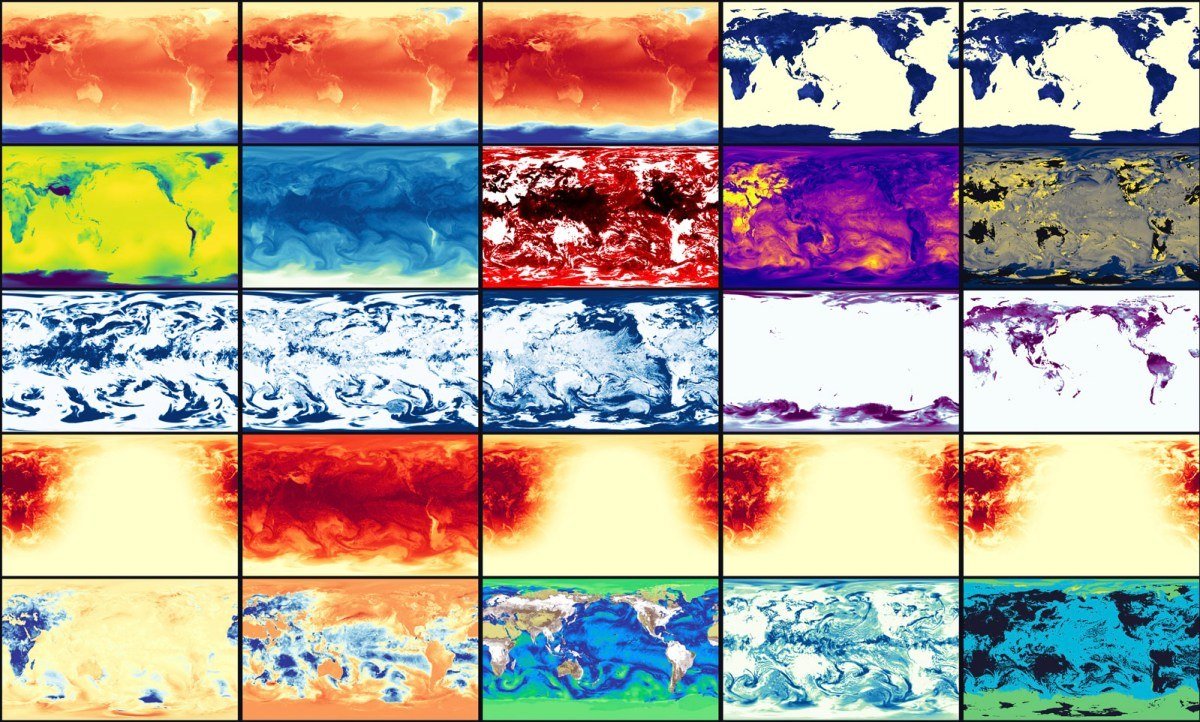
Weather forecasting has always been a strange business. Everyone depends on it, almost nobody pays for it directly, and the best models on Earth are run by government agencies and handed out for free. Into that awkward economics walks WindBorne Systems, a startup betting that a fleet of small balloons and a stack of AI models can turn one of the oldest public services into a company worth backing.
On August 5, 2026, WindBorne announced a $37 million Series B round to scale exactly that ambition. The money goes toward more balloons in the sky and better forecasts coming out of them. The harder question, the one the round is really underwriting, is whether accuracy can be converted into revenue.
Balloons as a data business
Most weather data comes from a thin and uneven web of sources: satellites overhead, radiosondes launched twice a day from a limited number of stations, buoys, aircraft, and ground sensors. Huge stretches of the planet, especially over oceans and the developing world, are barely observed at all. Forecast models are only as good as what they can see, and for large parts of the map they are effectively guessing from a distance.
WindBorne’s pitch starts there. Its long-duration balloons drift through the atmosphere for extended flights, gathering readings from places traditional instruments rarely reach. Each balloon is a moving sensor filling in a blank spot on the map. Feed enough of those readings into the system and the picture of the atmosphere sharpens, particularly in the data-poor regions where conventional forecasting is weakest.
That is the physical half of the company. The other half is software. WindBorne pairs its hardware with AI forecasting models, part of a broader shift that has reshaped the field over the past few years. Machine-learning weather models learn patterns from decades of historical data and can produce forecasts far faster and cheaper than the massive physics simulations that national weather centers have relied on for generations. The interesting move is combining the two: proprietary observations feeding proprietary models, so the company owns both the raw material and the thing it becomes.
Better is not the same as lucrative
Here is the uncomfortable part. AI really has made weather prediction better, and it has done so mostly in the open. Some of the most capable machine-learning forecast models came out of large research labs and were published for anyone to use. Government agencies still produce the backbone forecasts that power your phone’s weather app, and they release that data for free. When the baseline product costs nothing, charging for a better version is a genuinely hard sell.
WindBorne’s answer is to sell to the people for whom small improvements carry real money. A shipping company routing vessels around a storm. An energy trader pricing power against tomorrow’s wind. An insurer modeling a hurricane’s landfall, or an airline deciding whether to cancel or wait. For customers like these, a forecast that is a little sharper or a little earlier is worth paying for, because the cost of being wrong is measured in millions. Consumers will never pay for the weather. Industries with weather-shaped risk already do.
The $37 million is meant to widen the gap between what WindBorne offers and what a free public forecast can. More balloons mean more exclusive data. More exclusive data, the theory goes, means forecasts that competitors leaning only on open models cannot replicate. It is a moat built out of latex and helium, which sounds absurd until you remember that the scarce resource in AI is rarely the model. It is the data nobody else has.
The physical cost of a data moat
Balloons are not free, and they do not last forever. Building, launching, and tracking a global fleet is an operational grind with real recurring expense, closer to running an airline than shipping a software update. Every flight is a unit cost, and the economics only work if the data those flights produce sells for more than the balloons cost to keep aloft. That tension between hardware burn and software margin is the thing investors are watching, and it is why a Series B this size matters. Scale is the whole argument.
Underneath the business question sits a bigger one. A great deal of the world’s weather intelligence has historically been a public good, funded by taxpayers and shared across borders because storms do not respect them. A company that owns unique atmospheric data has an incentive to keep the best of it behind a paywall. That may be exactly what pushes forecasting forward faster. It may also quietly privatize a layer of knowledge that everyone, from farmers to disaster agencies, has always been able to count on.
WindBorne now has $37 million to prove that better forecasts and a real business can be the same thing. Whether it succeeds will say a lot about who owns the sky’s data in the years to come, and how much the rest of us will pay to see the weather coming.
For more coverage of AI and weather technology, visit Mylistingo.
Source: Original Article