AI News
  • Home
  • AI & Tech
  • Machine Learning
  • Startups
  • Tools & Apps
  • Robotics
  • Future Tech
  • AI in Industry
    • AI in Sport ⚽
    • AI in Health
    • AI in Education
    • AI in Finance
    • AI in Business
    • AI in Law
    • AI in Climate
No Result
View All Result
SAVED POSTS
AI News
  • Home
  • AI & Tech
  • Machine Learning
  • Startups
  • Tools & Apps
  • Robotics
  • Future Tech
  • AI in Industry
    • AI in Sport ⚽
    • AI in Health
    • AI in Education
    • AI in Finance
    • AI in Business
    • AI in Law
    • AI in Climate
No Result
View All Result
AI News
No Result
View All Result

How AI is unlocking general-purpose robot workers for the real world

Ramo by Ramo
8 July 2026
in AI & Tech
410 13
0
How AI is unlocking general-purpose robot workers for the real world
585
SHARES
3.3k
VIEWS
Summarize with ChatGPTShare to Facebook

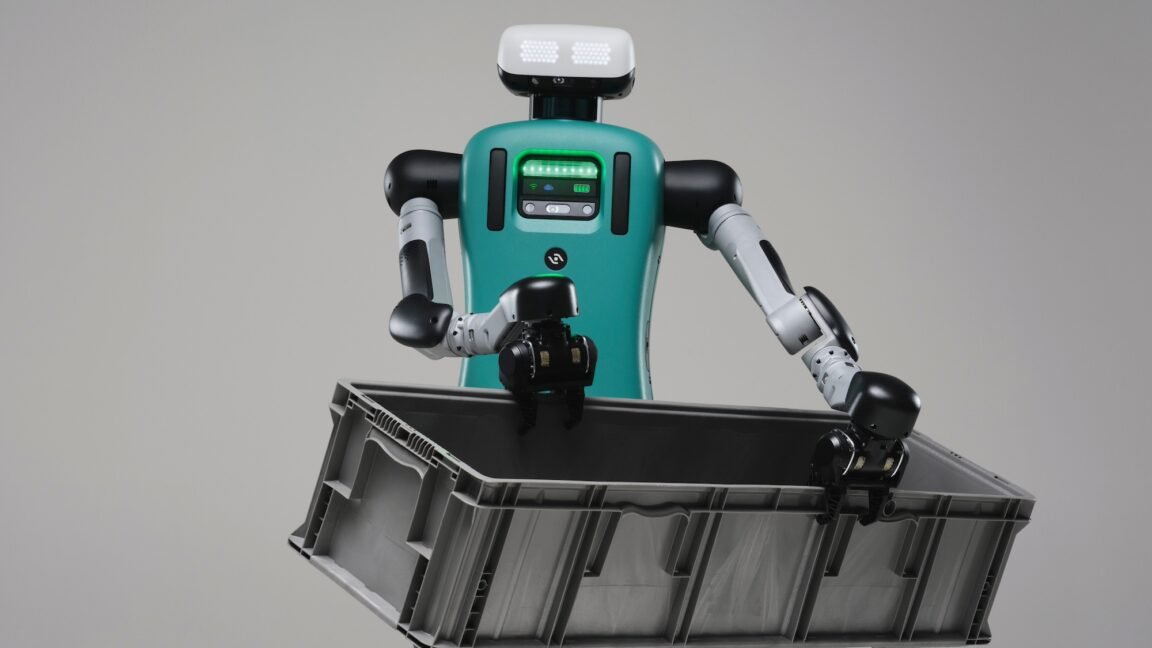
Robotaxis without drivers already roam city streets, delivery drones drop packages at front doors, and the idea of general purpose robots helping humans at work or home no longer seems like science fiction. But turning that vision into reality depends on giving machines a much higher degree of autonomy, powered by modern artificial intelligence. That ambition has drawn billions in investment and turned many researchers into startup founders.

From navigation to autonomous task execution

Matt Malchano, vice president of software at Boston Dynamics, recalls leading a team focused on autonomy about 15 years ago. Back then, the goal was simply getting a robot to move from one point to another. Now the conversation has shifted to a vast range of tasks a robot might handle on its own. The path to general purpose autonomy once seemed impossible when labs were still struggling with basic navigation and balance. In 1979 the Stanford Cart needed five hours to travel 20 meters through a cluttered room. The first bipedal robot that could walk without falling emerged in 1996.

Robot autonomy has always been a moving target, Malchano says. The International Standards Organization defines it as the ability to perform intended tasks based on current state and sensing, without human intervention. Recent AI breakthroughs, especially reinforcement learning in the 2010s and large foundation models in the 2020s, have unlocked new possibilities. Multiple labs and companies are now racing to build robots that can handle a wide variety of tasks in complex, unpredictable environments.

📖
RECOMMENDED READ
The Coming Wave: AI, Power, and the Greatest Dilemma of Our Age
Mustafa Suleyman
The definitive book on where AI is heading - written by one of the field founders.
View on Amazon →affiliate link

Current robots and real world deployments

Not every useful robot needs to be humanoid. Boston Dynamics already sells its four legged Spot robot for autonomous inspections in hazardous settings such as substations and culvert pipes. Spot learned to walk on slippery floors through additional reinforcement training, adapting its gait similarly to how a human crosses ice. The company also supplies Stretch, a wheeled robot with a large arm, for warehouse work and package handling at logistics firms like DHL.

Boston Dynamics is now scaling production of the all electric Atlas humanoid robot. Atlas is being trained at a Hyundai Motor Group facility in Georgia, with the goal of deploying it at the automaker’s EV plant by 2028. The company aims to produce 30,000 humanoid robots per year by then, though it remains to be seen whether workplaces can absorb that many units profitably.

Challenges on the road to general purpose robots

Sergey Levine, a computer scientist at UC Berkeley and cofounder of Physical Intelligence, says the next level of autonomy involves performing tasks reliably in unstructured environments. His startup is working on a general AI model that could power many different robot forms rather than one super humanoid. A small robotic arm might suit a tiny apartment, while a large machine could work on a farm.

Developing such robots requires handling complex perception, robust motor skills, and the ability to recover from mistakes. Levine explains that researchers combine reinforcement learning with pretrained foundation models. Reinforcement learning is like practicing a tennis swing many times, but you first need basic common sense. Foundation models trained on images and text provide that world knowledge.

Still, a data gap remains. Collecting physical training data through teleoperation or real world trials is expensive and slow. World models trained on video can help but are computationally heavy and may not capture all real world physics. Current methods can produce robots that excel at a single task under specific conditions or handle many tasks with mediocre reliability. Levine wants the combination: extreme competence across all tasks, which remains at the frontier of research.

Safety is also a make or break issue. As robots enter human environments, failures could cause harm or damage. Researchers and companies are investing heavily in robust testing and redundant systems. The path to general purpose home robots is still long, but specialized autonomous machines are already proving their value in controlled industrial spaces. For the latest on how these technologies evolve, check out the latest AI news on Mylistingo.

Tags: AI foundation modelsautonomous robotsBoston Dynamicsreinforcement learningrobotics
SummarizeShare234
Ramo

Ramo

Ramo is the editorial voice of Mylistingo — an AI and technology news platform based in The Hague, Netherlands. Covering artificial intelligence, machine learning, robotics, and the future of technology, Ramo delivers accurate, accessible reporting for both general audiences and industry professionals. Every article is fact-checked and written to meet Mylistingo's strict no-fabrication editorial standards.

Related Stories

Amazon Mechanical Turk Is Being Eaten by AI — The End of Artificial Artificial Intelligence

by Ramo
8 July 2026
0

Amazon's Mechanical Turk, once the backbone of AI data labeling, is being replaced by the very AI systems it helped train. Modern LLMs now outperform humans on many...

Humanity and AGI Summit 2026 Brings Global AI Leaders to Stanford

by Ramo
8 July 2026
0

The Humanity & AGI Summit 2026, organized by AIRA, brings together AI, robotics, and ethics leaders at Stanford on July 12. The summit focuses on embodied AI safety,...

Robotics Revolution Transforms Dutch Logistics Sector

by Ramo
8 July 2026
0

From Rotterdam's port to automated fulfillment centers, robots are reshaping the Netherlands' logistics industry. Mid-sized firms are adopting robotics-as-a-service models as AI-powered vision systems solve the 'unknown object'...

Europe’s Semiconductor Push: Chips Act Progress at Mid-2026

by Ramo
8 July 2026
0

The EU Chips Act aims to double Europe's semiconductor production by 2030. With major fab projects underway in Germany and the Netherlands' ASML holding the keys to advanced...

Recommended

ml_feat_72572954

The Hague’s Innovation District is Quietly Building the Netherlands’ Next Tech Hub

8 July 2026
ml feat guardian 14190

ChatGPT Gets Real-Time Voice, Video Understanding, and Deep Research Mode

8 July 2026

Popular Story

  • 46698681

    Inside The Hague’s AI-Powered International Criminal Court: How Machine Learning Is Accelerating Justice

    588 shares
    Share 235 Tweet 147
  • Is Your Home Truly Safe The Smart Security Tech You Need in 2025

    587 shares
    Share 235 Tweet 147
  • Dutch Biking Rules for Beginners — How to Cycle Safely in the Netherlands

    587 shares
    Share 235 Tweet 147
  • OpenAI unveils Lockdown Mode to protect sensitive data from prompt injection attacks

    587 shares
    Share 235 Tweet 147
  • Apple iPhone 18 Launch Date Leaked: What We Know So Far

    587 shares
    Share 235 Tweet 147
Advertise Here
Your Ad Could Be Here

This premium 300×250 spot is available. Reach our AI & tech audience with your product or service.

Book This Space →
logo ainews

We bring you the best Premium WordPress Themes that perfect for news, magazine, personal blog, etc. Check our landing page for details.

Recent Posts

  • Tesla European Sales Face Headwinds as EV Competition Intensifies in 2026
  • Quantum Computing Reaches New Milestone with Error-Corrected Logical Qubits in 2026
  • The Hague Emerges as a Leading Smart City with Digital Infrastructure Plans

Categories

  • AI & Tech
  • AI in Business
  • AI in Climate
  • AI in Education
  • AI in Finance
  • AI in Health
  • AI in Law
  • AI in Sport
  • Economy & Finance
  • Future Tech
  • Machine Learning
  • Politics & Geopolitics
  • Robotics
  • Social Topics
  • Sport
  • Startups
  • The Hague
  • Tools & Apps
  • Uncategorized

Weekly Newsletter

  • Home
  • Advertise
  • Latest News
  • Contact Us
  • Data Deletion Instructions
  • Editorial Policy

Welcome Back!

Login to your account below

Forgotten Password?

Retrieve your password

Please enter your username or email address to reset your password.

Log In
No Result
View All Result
  • Home
  • AI & Tech
  • Machine Learning
  • Startups
  • Tools & Apps
  • Robotics
  • Future Tech
  • AI in Industry
    • AI in Sport ⚽
    • AI in Health
    • AI in Education
    • AI in Finance
    • AI in Business
    • AI in Law
    • AI in Climate