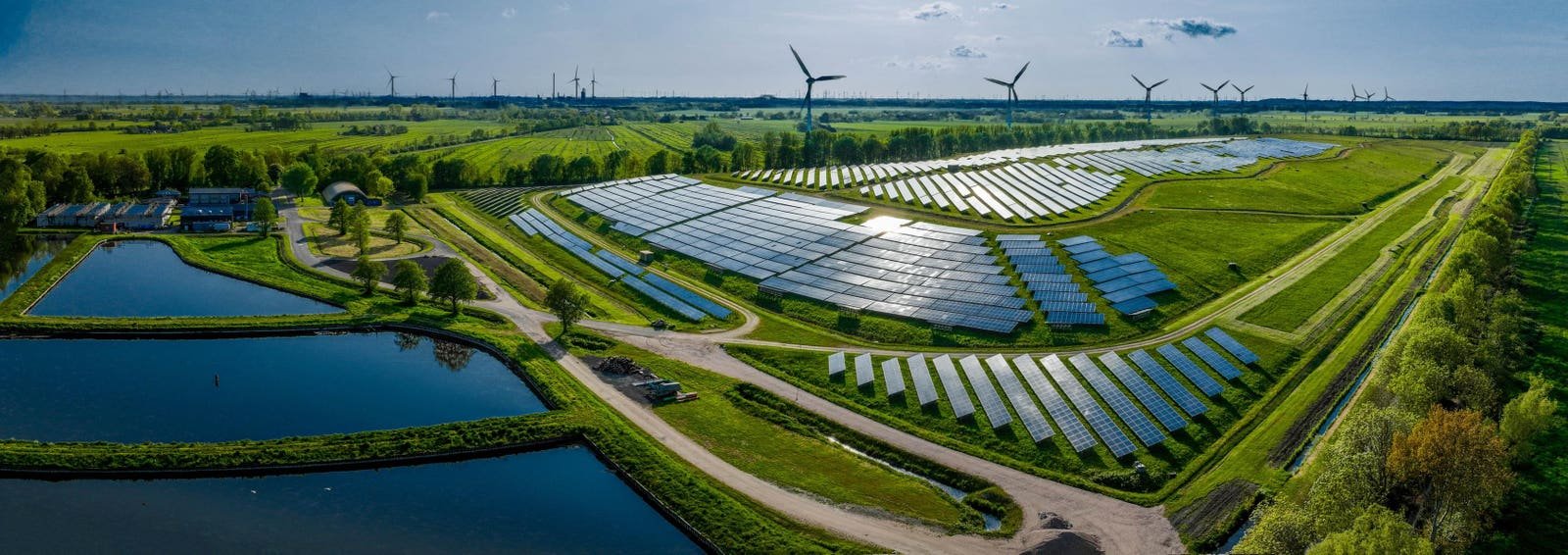
The Netherlands is cementing its position as Europe’s offshore wind powerhouse, with 2026 shaping up to be a landmark year for Dutch renewable energy innovation. The country now generates over 40% of its electricity from offshore wind, and a new wave of technological breakthroughs promises to push that figure significantly higher by the end of the decade.
At the center of this transformation is the Hollandse Kust (west) wind farm zone, where the world’s first commercial-scale floating wind turbines began feeding electricity into the Dutch grid in March 2026. Unlike traditional fixed-bottom turbines that require shallow waters, floating turbines can operate in depths exceeding 60 meters, opening vast new areas of the North Sea to wind energy development.
Floating Wind Goes Commercial
The Hollandse Kust floating array, developed by a consortium led by Shell, Eneco, and Norwegian energy company Equinor, features 45 turbines each rated at 15 megawatts—among the most powerful ever deployed. Together they add 675 MW of capacity to the Dutch grid, enough to power approximately 700,000 homes.
“Floating wind is the game-changer,” said Manon van Beek, CEO of TenneT, the Dutch-German transmission system operator. “We have already maxed out most of the shallow-water sites in the southern North Sea. Floating technology lets us move further offshore where the wind is stronger and more consistent, with minimal visual impact on coastal communities.”
Green Hydrogen Integration
The Netherlands is not just generating clean electricity—it is building the infrastructure to convert surplus wind power into green hydrogen. The H2Gateway project at the Port of Rotterdam, which entered full operation in January 2026, uses a 250 MW electrolyser to produce hydrogen from seawater using offshore wind electricity during periods of oversupply.
This hydrogen is then piped to industrial clusters in Rotterdam, Moerdijk, and Chemelot, replacing natural gas in high-temperature processes that cannot be easily electrified. The Dutch government estimates that green hydrogen could meet up to 20% of the country’s industrial energy demand by 2030.
Exporting Dutch Expertise
Dutch engineering firms are exporting their offshore wind expertise globally. Royal HaskoningDHV, headquartered in Amersfoort, is leading the design of offshore wind ports in Japan, South Korea, and the United States. Damen Shipyards, based in Gorinchem, has developed a new class of service operation vessels specifically designed for floating wind farm maintenance, with 12 vessels already on order for projects worldwide.
The economic returns are significant. The Dutch offshore wind sector now employs over 35,000 people directly and generates approximately €8 billion in annual revenue. With global offshore wind capacity expected to grow tenfold by 2035, the Netherlands’ first-mover advantage in floating wind technology and green hydrogen integration positions it as a key exporter in the global energy transition.
As Europe races to meet its 2030 climate targets, the North Sea is increasingly looking less like a body of water and more like Europe’s largest power plant—and the Netherlands sits at its centre.
For more insights on related topics, explore our article on The Rise of Edge Computing.
The Netherlands, for internationals
One email a week: the week's news for internationals in the Netherlands, new practical guides and what changed in the cities. No spam, unsubscribe any time.