
AI News
  • Home
  • AI & Tech
  • Machine Learning
  • Startups
  • Tools & Apps
  • Robotics
  • Future Tech
  • AI in Industry
    • AI in Sport ⚽
    • AI in Health
    • AI in Education
    • AI in Finance
    • AI in Business
    • AI in Law
    • AI in Climate
No Result
View All Result
SAVED POSTS
AI News
  • Home
  • AI & Tech
  • Machine Learning
  • Startups
  • Tools & Apps
  • Robotics
  • Future Tech
  • AI in Industry
    • AI in Sport ⚽
    • AI in Health
    • AI in Education
    • AI in Finance
    • AI in Business
    • AI in Law
    • AI in Climate
No Result
View All Result
AI News
No Result
View All Result

Ai regulation gap grows as industry outpaces policy

Ramo by Ramo
10 July 2026
in AI & Tech
419 4
0
AI regulation gap industry outpaces policy
585
SHARES
3.3k
VIEWS
Summarize with ChatGPTShare to Facebook
Ai regulation gap grows as industry outpaces policy

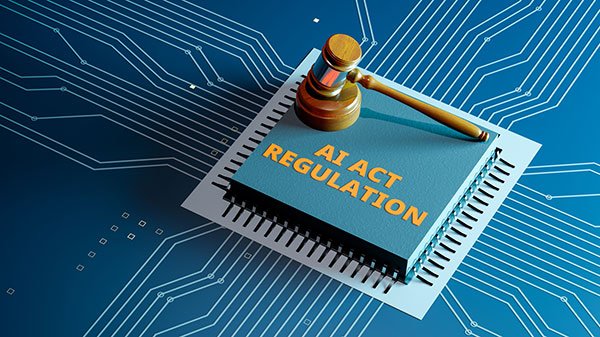
The rapid acceleration of artificial intelligence capabilities is creating a significant and widening gap between what the technology can do and the rules that govern it. Policymakers around the world are struggling to keep up with the speed of innovation, leaving critical questions about safety, ethics, and accountability unanswered. This tension between innovation and oversight has become one of the defining challenges of the current technological era.

The speed of AI advancement outstrips legislative action

Over the past 18 months, major advancements in large language models, generative image systems, and autonomous decision making tools have pushed the boundaries of what machines can accomplish. However, legislative processes have not matched this pace. In most jurisdictions, laws governing AI were written years or even decades ago, long before modern machine learning systems existed. As a result, many regulatory frameworks lack the specificity needed to address issues like deepfake creation, algorithmic bias, and data privacy in AI training sets.

European Union lawmakers have made notable progress with the AI Act, a comprehensive piece of legislation aimed at categorizing AI applications by risk level. Yet even this ambitious framework is facing delays in implementation, and critics argue that it may already be outdated by the time it fully takes effect. Across the Atlantic, the United States has taken a more fragmented approach, with individual states proposing their own regulations while federal action remains stalled. This patchwork of rules creates confusion for companies operating across multiple regions.

📖
RECOMMENDED READ
The Coming Wave: AI, Power, and the Greatest Dilemma of Our Age
Mustafa Suleyman
The definitive book on where AI is heading - written by one of the field founders.
View on Amazon →affiliate link

Industry self regulation and its limitations

In the absence of clear government mandates, many major AI developers have established voluntary commitments to safety and transparency. These pledges often include promises to test models for dangerous capabilities, watermark AI generated content, and allow external researchers to audit systems. While these efforts are welcome, they lack the enforcement power of law. There is no penalty for companies that fail to uphold their voluntary promises, and the public has limited ability to verify compliance.

Some experts argue that self regulation is inherently insufficient because it prioritizes corporate interests over public welfare. Without binding rules, companies may cut corners on safety testing to bring products to market faster. Additionally, the competitive pressure to release more capable AI systems can discourage thorough risk assessment. The recent proliferation of open source AI models further complicates oversight, as these systems can be modified and deployed by anyone with the technical skills, bypassing any corporate guardrails entirely.

Calls for global coordination and adaptive governance

Recognizing the need for more responsive policy, a growing number of researchers and policymakers are advocating for adaptive governance structures. Rather than attempting to write static laws for a fast moving target, they propose frameworks that can be updated more frequently, perhaps through specialized regulatory agencies with technical expertise. International coordination is also seen as essential, since AI systems do not respect national borders and can be developed or deployed from anywhere in the world.

Organizations like the OECD and the United Nations have initiated dialogues on shared principles for AI development, but translating these into enforceable treaties has proven difficult. Disagreements over values such as free speech, surveillance, and economic competition create significant barriers to consensus. Meanwhile, the window for meaningful intervention is closing. As AI systems become more embedded in critical infrastructure, healthcare, finance, and law enforcement, the risks of inadequate oversight grow exponentially. The gap between technology and regulation will not close on its own. It will require sustained effort from lawmakers, technologists, and the public to build governance systems that are as dynamic and capable as the AI they aim to control. For those looking to stay informed on how these policies evolve, tracking global AI regulations has become an essential practice for businesses and citizens alike.


Tags: AI policyAI regulationAI safetyregulatory gaptechnology governance
SummarizeShare234
Ramo

Ramo

Ramo is the editorial voice of Mylistingo — an AI and technology news platform based in The Hague, Netherlands. Covering artificial intelligence, machine learning, robotics, and the future of technology, Ramo delivers accurate, accessible reporting for both general audiences and industry professionals. Every article is fact-checked and written to meet Mylistingo's strict no-fabrication editorial standards.

Related Stories

Neuromorphic computing chip design and AI hardware architecture

The Rise of Neuromorphic Computing: How Brain-Inspired Chips Are Transforming AI in 2026

by Ramo
15 July 2026
0

Neuromorphic chips that mimic the human brain are moving from research labs to real-world applications in 2026. From drones to medical devices, brain-inspired computing delivers AI that runs...

Semiconductor wafer manufacturing for AI and computing chips

Anthropic Turns to Samsung as It Preps for October IPO

by Ramo
15 July 2026
0

Anthropic is in talks with Samsung for a custom AI chip and has filed confidentially for an October Nasdaq IPO that could raise over $60 billion.

OpenAI's first hardware device - a screenless moving speaker concept

Openai’s first hardware device is a screenless moving speaker

by Ramo
15 July 2026
0

OpenAI reportedly builds a screenless smart speaker with moving parts and a personality, aiming to be an AI home companion. Apple sues over trade secrets.

Anthropic's J-space discovery analysis revealing AI reasoning patterns

Anthropic’s J-space discovery: what it tells us about AI reasoning

by Ramo
15 July 2026
0

Anthropic found a hidden space inside its Claude model where unseen words influence reasoning. Here is what the discovery does and does not prove.

Recommended

Editorial photo for: Best AI Tools for Lawyers in 2026

Best AI Tools for Lawyers in 2026

10 July 2026
Remote work, AI displacement, and the four-day week in 2026

The Future of Work in 2026: Remote Work, AI Displacement, and the Four-Day Week

7 July 2026

Popular Story

  • ml_feat_56193023

    ASML’s Next-Gen High-NA EUV Machines Drive Eindhoven Expansion, Creating 20,000 New Jobs

    590 shares
    Share 236 Tweet 148
  • Best Cafes and Coffee Shops in The Hague 2026: A Digital Nomad’s Guide

    589 shares
    Share 236 Tweet 147
  • The New Space Arms Race in 2026: Satellite Warfare and the Geopolitics of Orbital Dominance

    588 shares
    Share 235 Tweet 147
  • Inside The Hague’s AI-Powered International Criminal Court: How Machine Learning Is Accelerating Justice

    588 shares
    Share 235 Tweet 147
  • Is Your Home Truly Safe The Smart Security Tech You Need in 2025

    587 shares
    Share 235 Tweet 147
Advertise Here
Your Ad Could Be Here

This premium 300×250 spot is available. Reach our AI & tech audience with your product or service.

Book This Space →
logo ainews

We bring you the best Premium WordPress Themes that perfect for news, magazine, personal blog, etc. Check our landing page for details.

Recent Posts

  • Global Stock Markets in 2026: Record Highs, Rate Decisions, and the AI Bubble Debate
  • How Digital Nomads Are Reshaping Global Economies in 2026
  • The Rise of Neuromorphic Computing: How Brain-Inspired Chips Are Transforming AI in 2026

Categories

  • AI & Tech
  • AI in Business
  • AI in Climate
  • AI in Education
  • AI in Finance
  • AI in Health
  • AI in Law
  • AI in Sport
  • Economy & Finance
  • Future Tech
  • Machine Learning
  • Politics & Geopolitics
  • Robotics
  • Social Topics
  • Sport
  • Startups
  • The Hague
  • Tools & Apps

Weekly Newsletter

  • Home
  • Advertise
  • Latest News
  • Contact Us
  • Data Deletion Instructions
  • Editorial Policy

Welcome Back!

Login to your account below

Forgotten Password?

Retrieve your password

Please enter your username or email address to reset your password.

Log In
No Result
View All Result
  • Home
  • AI & Tech
  • Machine Learning
  • Startups
  • Tools & Apps
  • Robotics
  • Future Tech
  • AI in Industry
    • AI in Sport ⚽
    • AI in Health
    • AI in Education
    • AI in Finance
    • AI in Business
    • AI in Law
    • AI in Climate