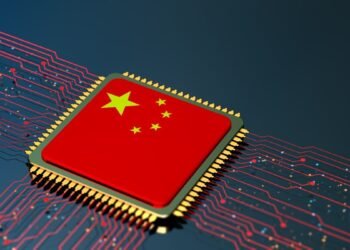
The Escalating US-China Semiconductor Conflict
The battle for semiconductor supremacy between the United States and China has entered a critical new phase in 2026, with both sides intensifying export controls, investment restrictions, and technology development programs at an unprecedented pace. What began as targeted sanctions on Huawei Technologies in 2019 has evolved into a comprehensive technology war that now encompasses advanced chip design, semiconductor manufacturing equipment, electronic design automation software, talent flows, and even cloud computing infrastructure. The breadth and depth of these measures have no modern precedent, drawing comparisons to the technology cold war dynamics of the late twentieth century.
The stakes could not possibly be higher. Semiconductors are the indispensable foundation of virtually every modern technology that drives economic growth and national security, from artificial intelligence and 5G telecommunications to electric vehicles, advanced defense systems, and medical devices. Control over the semiconductor supply chain translates directly into economic competitiveness and military capability. Both Washington and Beijing have therefore made semiconductor autonomy a top strategic priority, deploying hundreds of billions of dollars in government subsidies, tax incentives, and research funding through initiatives like the US CHIPS and Science Act and China’s National Integrated Circuit Industry Investment Fund.
How US Export Controls Have Evolved in 2026
The Biden administration’s October 2022 export controls on advanced semiconductors and chipmaking equipment marked a watershed moment in US technology policy. Since that initial salvo, the regulatory framework has been progressively tightened through multiple rounds of expansion. In 2026, the controls now cover not only chips exceeding specific performance thresholds measured in teraflops and interconnect bandwidth but also a much broader range of semiconductor manufacturing equipment, electronic design automation software, and certain types of advanced chip substrates and packaging technologies used in high-performance computing.
The most significant escalation in 2026 has been the sweeping expansion of the foreign direct product rule, which extends US legal jurisdiction over foreign-manufactured chips and equipment that incorporate even small amounts of US-origin technology. This extraterritorial reach now captures a far wider range of products than ever before, including advanced chips fabricated in Taiwan by TSMC, in South Korea by Samsung, and in Europe by companies like Infineon and STMicroelectronics, provided they use US-origin EDA tools or semiconductor manufacturing equipment controlled under the Export Administration Regulations. Industry compliance officers describe the regulatory environment as increasingly difficult to navigate, with overlapping requirements from multiple US government agencies.
China’s Countermeasures and Indigenous Innovation Strategy
China has not remained passive in the face of mounting US restrictions. The Chinese government has dramatically accelerated its push for semiconductor self-sufficiency under the long-standing strategic banner of indigenous innovation, pouring massive financial resources into domestic chip design companies, semiconductor equipment startups, and advanced packaging research centers. The China Integrated Circuit Industry Investment Fund, commonly known as the Big Fund, has raised its third tranches totaling approximately $50 billion with a specific mandate to target semiconductor equipment and materials.
Chinese companies have made meaningful progress in mature-node chips fabricated at 28 nanometers and above, where they now supply a growing share of domestic demand for automotive microcontrollers, power management integrated circuits, and Internet of Things processors. However, the technology gap remains vast at the leading edge of semiconductor manufacturing. SMIC, China’s largest foundry, continues to struggle producing 7-nanometer chips reliably using deep ultraviolet lithography equipment, while TSMC and Samsung have already moved to high-volume production at 3-nanometer and 2-nanometer process nodes. Without access to extreme ultraviolet lithography systems, which ASML is legally barred from exporting to China under both Dutch and US export controls, closing this technology gap will require fundamental scientific breakthroughs.
Perhaps most significantly, Beijing has moved to leverage its global dominance in critical minerals and rare earth elements as a counter-lever in the technology conflict. In early 2026, China announced comprehensive export controls on gallium and germanium, two materials essential for advanced semiconductor production and defense applications. These export restrictions have prompted urgent concerns in Washington and European capitals about critical supply chain vulnerabilities. China currently controls roughly 80 percent of global gallium production and 60 percent of germanium refining capacity, giving Beijing significant economic leverage that could be expanded further in any future escalation scenario.
The Impact on Allied Nations and Global Supply Chains
Third countries and allied nations find themselves caught in an increasingly uncomfortable position in the middle of the US-China chip war, forced to navigate a rapidly polarizing technology landscape that demands difficult strategic choices. The Netherlands, home to ASML as the world’s only manufacturer of extreme ultraviolet lithography systems essential for leading-edge chip production, has become a central focal point of the entire conflict. The Dutch government has walked a careful diplomatic line between implementing aligned export controls and resisting pressure to expand restrictions to older deep ultraviolet lithography systems.
Taiwan’s strategic position is particularly precarious. The island produces over 60 percent of the world’s total semiconductor output and more than 90 percent of the most advanced chips used in artificial intelligence and defense applications. Any significant disruption to TSMC’s operations would have catastrophic and immediate consequences for the global economy, potentially exceeding the economic damage of the 2022 supply chain crisis by several orders of magnitude. This extreme concentration risk has prompted massive investment efforts in the United States, Europe, Japan, and India to build domestic chip production capacity. Meanwhile Vietnam, Malaysia, and India have all seen a surge in semiconductor investment as multinational companies urgently seek to diversify production capacity outside of China and Taiwan.
Scenarios for 2027 and Beyond
The future trajectory of the US-China semiconductor conflict will depend heavily on political developments in both countries over the coming years. In the most optimistic scenario, the two sides eventually reach a negotiated framework that balances legitimate US national security concerns with China’s right to technological development, perhaps modeled on the Wassenaar Arrangement. In the pessimistic scenario, restrictions escalate further into a full technology decoupling with China retaliating by restricting rare earth exports. The most likely outcome is a prolonged strategic standoff in which both sides make incremental gains but the fundamental technology gap largely persists, driving a gradual decoupling that reshapes the global technology industry for years to come. Learn more about Europe’s semiconductor strategy and Chips Act progress.
The Netherlands, for internationals
One email a week: the week's news for internationals in the Netherlands, new practical guides and what changed in the cities. No spam, unsubscribe any time.