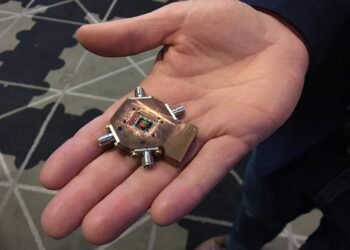
Solid-State Batteries Finally Enter Mass Production in 2026
After years of promises and prototypes, solid-state battery technology has finally entered mass production in 2026, marking what industry analysts are calling the most significant advance in energy storage since the lithium-ion battery itself. The implications for electric vehicles, consumer electronics, and grid storage are profound.
Chinese battery giant CATL began volume production of its first-generation solid-state cells in April 2026, targeting an energy density of 500 watt-hours per kilogram — nearly double that of today’s best lithium-ion cells. Toyota, which has invested heavily in solid-state technology for over a decade, followed closely with its own production line launch in Japan, initially supplying cells for a premium Lexus electric sedan slated for late 2026.
What Makes Solid-State Different
Traditional lithium-ion batteries use a liquid electrolyte to ferry ions between the anode and cathode. Solid-state batteries replace that liquid with a solid electrolyte — typically a ceramic or polymer material. This seemingly simple substitution unlocks several game-changing advantages: higher energy density, faster charging times, dramatically reduced fire risk, and longer cycle life. In laboratory conditions, solid-state cells have demonstrated the ability to charge from 10% to 80% in under 10 minutes.
The safety benefits alone could reshape consumer perception of electric vehicles. With no flammable liquid electrolyte, the thermal runaway events that occasionally make headlines with conventional EV batteries become virtually impossible. This also simplifies battery pack design — bulky cooling systems and protective structures can be reduced, further improving vehicle range and reducing manufacturing costs.
Challenges Remain
Mass production has not been without hurdles. Manufacturing yields for solid-state cells remain lower than for conventional lithium-ion, and the cost per kilowatt-hour is still roughly 40% higher. CATL and Toyota are both working to close this gap, with analysts projecting cost parity by 2028-2029 as production scales and manufacturing processes mature.
Dendrite formation — where lithium metal filaments grow through the solid electrolyte and cause short circuits — remains an area of active research. While current production cells have mitigated this through electrolyte material engineering and pressure management systems, achieving the full theoretical lifespan of solid-state technology will require further advances.
Beyond Cars
The impact extends well beyond automotive applications. Consumer electronics manufacturers are evaluating solid-state cells for next-generation smartphones and laptops, where the combination of thinner form factors and longer battery life is compelling. Grid-scale energy storage — critical for renewable energy integration — stands to benefit from solid-state batteries’ longer cycle life and improved safety profile, potentially accelerating the transition away from fossil fuel peaker plants.
As production volumes ramp up through 2027, the solid-state era of energy storage is no longer a question of “if” but “how fast.”
The Netherlands, for internationals
One email a week: the week's news for internationals in the Netherlands, new practical guides and what changed in the cities. No spam, unsubscribe any time.