The Great Thaw: A New Frontier Emerges
The Arctic is warming nearly four times faster than the global average, a phenomenon known as Arctic amplification that is fundamentally redrawing the geopolitical map of the twenty-first century. As the region’s sea ice recedes at an unprecedented rate, what was once an impassable frozen wilderness is becoming a navigable arena of global competition. In 2026, the Arctic stands at the epicentre of a new great game defined by melting ice, shifting energy markets, military posturing, and the urgent imperatives of climate change.
The implications are staggering. The Arctic Circle harbours an estimated 13 percent of the world’s undiscovered oil reserves, 30 percent of its untapped natural gas, and vast deposits of rare earth minerals essential for modern technology from smartphones to electric vehicle batteries to advanced military hardware. As global demand for these resources intensifies, the Arctic has become a theatre of strategic competition between the world’s major powers.

The Northern Sea Route: A Commercial Revolution
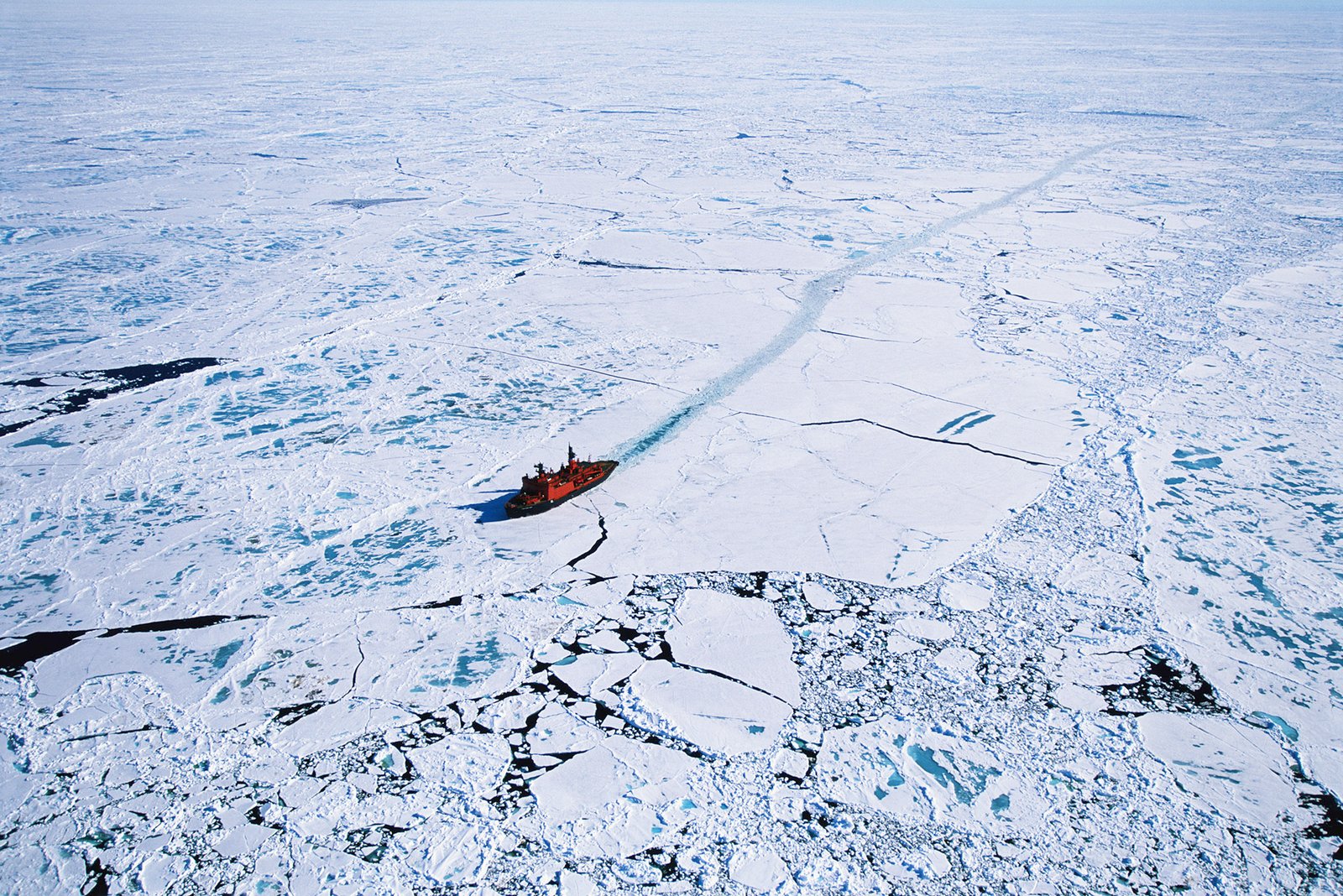
The most immediate consequence of Arctic ice melt is the gradual opening of the Northern Sea Route (NSR) along Russia’s Siberian coast. What once required powerful icebreakers and risked months-long entrapment in pack ice is now a viable commercial corridor for a growing portion of the year. In summer 2025, the NSR saw record traffic with over 40 million tonnes of cargo transiting its waters, a figure projected to double by 2030.
The economic logic is compelling. A container ship travelling from Shanghai to Rotterdam via the NSR completes the journey in roughly 25 days compared to 35 days through the Suez Canal and 40 days via the Cape of Good Hope. This translates into significant fuel savings, reduced carbon emissions per voyage, and faster supply chains for energy-hungry economies like China, India, and the European Union. The NSR represents a strategic hedge against chokepoint vulnerabilities in the South China Sea and the Strait of Malacca.
Russia has invested billions in developing port infrastructure along the NSR, constructing a fleet of nuclear-powered icebreakers the largest in the world, and establishing search-and-rescue stations along the route. The Kremlin’s 2035 Arctic Strategy envisions the NSR handling 130 million tonnes of cargo annually, transforming it into a year-round shipping artery. However, Western sanctions imposed since 2022 have complicated Russia’s ability to secure foreign investment and technology for these ambitious projects.
Resource Wars: The Battle for Arctic Riches
Beneath the melting ice lies a treasure trove of natural resources attracting intense competition. The Arctic holds an estimated 90 billion barrels of oil and 1,670 trillion cubic feet of natural gas according to the U.S. Geological Survey. Norway, Canada, and the United States have all expanded offshore drilling programmes, while Russia’s Gazprom and Novatek continue to develop LNG projects despite Western sanctions.
Even more significant than hydrocarbons are rare earth mineral deposits. Greenland possesses some of the world’s largest deposits of rare earth elements critical for green energy technologies and defence applications. China controls over 60 percent of global rare earth production, making alternative sources a strategic urgency for Western nations. In 2025, the United States and Denmark signed a landmark mineral cooperation agreement for developing Greenland’s Kvanefjeld and Citronen Fjord deposits. However, extraction faces formidable obstacles from extreme weather, fragile ecosystems, and legal challenges from environmental activists and indigenous communities.
Military Buildup: The Arctic as a Theatre of Strategic Competition
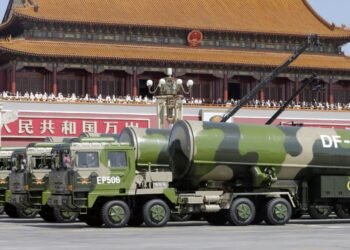
The Arctic has become one of the most heavily militarised regions on Earth with all eight Arctic nations expanding their military capabilities in the High North. Russia has led this buildup, reopening Soviet-era bases along its Arctic coastline, deploying advanced S-400 air defence systems, and conducting regular naval exercises involving nuclear-powered submarines and surface vessels. Moscow views the Arctic as both a strategic buffer zone and a launch platform for power projection into the North Atlantic.
NATO has responded in kind. Finland’s accession to the alliance in 2023 and Sweden’s in 2024 fundamentally altered the Arctic security landscape, transforming the Baltic Sea into a de facto NATO lake and extending the alliance’s Arctic front line. NATO’s Exercise Cold Response, held biennially in Norway, now involves over 40,000 troops from more than 30 nations testing the alliance’s ability to operate in extreme cold-weather conditions. The United States has reactivated its Second Fleet responsible for the North Atlantic and Arctic, and has invested in ice-hardened naval vessels.
Read also: The Global Shift to Digital Currencies: How CBDCs Are Reshaping Finance in 2026
China’s Polar Ambitions
Although not geographically an Arctic nation, Beijing has aggressively positioned itself as a near-Arctic state with legitimate interests in the region. China’s Polar Silk Road, integrated into the broader Belt and Road Initiative, includes investments in the Yamal LNG project in Siberia and a fleet of research vessels maintaining year-round Arctic presence. Beijing’s purchase of an abandoned military communications station in the Faroe Islands and its commercial lease of the Port of Kirkenes in Norway have raised concerns about strategic encirclement among Western intelligence agencies.
China’s growing partnership with Moscow on Arctic matters including joint naval exercises and technology transfers further complicates the security picture. While China maintains its Arctic activities are purely scientific and commercial, its dual-use research infrastructure capable of supporting both civilian and military operations has become a flashpoint in Sino-Western relations.
Indigenous Communities and Environmental Justice
The region’s indigenous peoples the Inuit, Saami, Nenets, Chukchi, and dozens of other groups have inhabited these lands for millennia. For these communities, the melting ice is not an abstract geopolitical trend but an immediate threat to traditional ways of life built around hunting, fishing, and reindeer herding on sea ice. Indigenous organisations such as the Inuit Circumpolar Council and the Saami Council have become increasingly vocal participants in Arctic governance, demanding Free, Prior, and Informed Consent in resource extraction decisions.
The 2025 controversy over the Pajala iron ore mine in Swedish Sapmi highlighted the growing tension between green energy transitions and indigenous land rights. The concept of FPIC, enshrined in the United Nations Declaration on the Rights of Indigenous Peoples, has become a central demand in disputes over Arctic development projects.
The Arctic Council at a Crossroads
The Arctic Council, established in 1996 as the primary forum for intergovernmental cooperation, faced unprecedented challenges after suspending activities following Russia’s invasion of Ukraine. Since Russia holds the chairmanship until 2025, this has raised fundamental questions about the Council’s effectiveness. While limited cooperation has resumed on scientific and environmental matters, security issues remain off the table by design leaving a dangerous governance gap.
In 2026, there is growing consensus that the current institutional framework is insufficient. Proposals range from a binding Arctic Treaty modelled on the Antarctic Treaty System to a formal Arctic security forum. However, deep divisions between Russia and NATO members, China’s contested role, and competing corporate interests make any grand bargain exceptionally difficult.
Conclusion: A Fragile Balance
The Arctic in 2026 is a region of profound transformation and escalating tensions. The melting ice is creating unprecedented economic opportunities and strategic vulnerabilities, drawing in global powers with competing visions for the region’s future. The challenge for policymakers is to navigate this new landscape in a way that prevents conflict, protects indigenous rights, safeguards fragile ecosystems, and maintains the Arctic as a zone of peaceful cooperation.
The choices made in the coming years on shipping governance, resource management, military deployment, and climate action will determine whether the Arctic becomes a model of international cooperation or a flashpoint for great-power confrontation. As the ice continues to recede, the world watches and the stakes could not be higher.
The geopolitical significance of the Arctic extends far beyond the eight nations that border the Arctic Ocean. The region’s transformation affects global trade patterns, energy security, and the strategic calculus of every major power. The United Nations Convention on the Law of the Sea provides the legal framework for resolving competing territorial claims, with Russia, Canada, and Denmark all filing overlapping claims regarding the Lomonosov Ridge. These submissions are pending review by the UN Commission on the Limits of the Continental Shelf.
The environmental stakes are equally high. The Arctic acts as the planet’s refrigerator, with its white ice caps reflecting solar radiation back into space. As the ice melts, darker ocean water absorbs more heat in the albedo effect feedback loop, accelerating warming across the entire Northern Hemisphere. Scientists warn that an ice-free Arctic summer could arrive as early as the 2030s with catastrophic consequences for global weather systems, sea levels, and biodiversity. International cooperation through the Arctic Council’s working groups continues to produce valuable climate research, demonstrating that functional cooperation remains possible even in a contested environment.