The Rise of Multipolarity
The international political landscape of 2026 bears little resemblance to the unipolar world that emerged after the Cold War or even the bipolar US-China dynamic that defined the early 2020s. Today’s global order is fundamentally multipolar, with at least five major power centers — the United States, China, the European Union, India, and a resurgent Russia — competing and cooperating in a complex web of overlapping alliances, economic partnerships, and strategic rivalries. This multipolar reality is reshaping everything from trade policy and military strategy to technology standards and climate diplomacy.
The shift toward multipolarity has been underway for over a decade, but 2026 marks the year when the new configuration became undeniable. The BRICS+ bloc, which expanded significantly in 2024 and 2025, now represents over 45 percent of global GDP when measured by purchasing power parity and includes more than half the world’s population. This expanded grouping has begun to function as a genuine counterweight to Western-dominated institutions, developing alternative payment systems, development banks, and dispute resolution mechanisms.
Meanwhile, the European Union has accelerated its strategic autonomy agenda in response to both the Ukraine conflict and growing uncertainty about US security guarantees. The EU’s Strategic Compass initiative, combined with joint defense procurement programs and a rapidly expanding European defense industrial base, has transformed the union into a more credible geopolitical actor. France and Germany, despite their internal disagreements, have driven forward with proposals for a European security architecture that is complementary to but increasingly independent of NATO.
Technology as the New Geopolitical Battleground
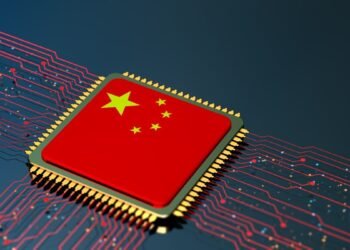
In 2026, technology has replaced ideology as the primary axis of geopolitical competition. The battle for supremacy in artificial intelligence, quantum computing, semiconductor manufacturing, and clean energy technology now defines the strategic priorities of major powers. The US CHIPS and Science Act and its European and Asian equivalents have triggered a global race to build domestic semiconductor fabrication capacity, with over $500 billion in government subsidies committed worldwide since 2022.
The most visible manifestation of this technology competition is the accelerating decoupling of technology supply chains between the US-led bloc and the China-Russia axis. Export controls on advanced semiconductors and semiconductor manufacturing equipment have tightened further in 2026, with both sides expanding their restricted lists. The Netherlands, home to ASML — the world’s only manufacturer of extreme ultraviolet lithography machines — has found itself at the center of this technological cold war, balancing its economic interests against pressure from both Washington and Beijing.
AI governance has emerged as a distinct arena of geopolitical competition, with three competing regulatory models vying for global influence. The European Union’s comprehensive AI Act, which entered full enforcement in August 2026, represents a rights-based approach focused on risk classification and consumer protection. The United States has pursued a more industry-led, innovation-friendly framework emphasizing voluntary commitments and sector-specific guidelines. China, meanwhile, has implemented a state-centric model that prioritizes social stability and party control while aggressively investing in AI capabilities.
Each model has attracted adherents among other nations, creating what analysts call “AI blocs” that could fragment the global technology ecosystem. India has charted a middle path, adopting elements of all three approaches while emphasizing its own Digital Public Infrastructure framework. The open source AI models challenging big tech trend provides additional context on how these competing governance models are shaping the technology landscape globally.
Economic Realignment and the New Trade Architecture
The global trading system is undergoing its most significant transformation since the establishment of the World Trade Organization in 1995. The fragmentation of global supply chains, accelerated by pandemic-era disruptions and geopolitical tensions, has given way to a new architecture of regional trading blocs and strategic corridors. The Indo-Pacific Economic Framework (IPEF), the African Continental Free Trade Area (AfCFTA), and the EU’s network of trade agreements with Latin American and Asian partners are creating parallel trading systems that increasingly bypass traditional multilateral frameworks.
Currency dynamics are also shifting. The dominance of the US dollar, while still significant, has been incrementally eroded by the growth of bilateral swap agreements and alternative payment systems. China’s cross-border interbank payment system (CIPS) processed over $25 trillion in transactions in 2025, representing approximately 15 percent of global trade settlement. India and Russia have established a rupee-ruble trade mechanism, while BRICS+ members have explored the creation of a common settlement currency for intra-bloc trade.
The global energy transition adds another dimension to economic realignment. Countries rich in critical minerals needed for batteries, solar panels, and wind turbines — lithium, cobalt, rare earth elements, and copper — have gained new geopolitical leverage. The scramble for critical mineral access has triggered a wave of resource nationalism, with producing countries imposing export restrictions, raising royalties, and demanding domestic processing requirements. This dynamic was explored in depth earlier this year, when the geopolitics of rare earth minerals emerged as a defining issue in international relations.
The Diplomacy of Complex Interdependence
Despite the intensifying competition, the 2026 global order is characterized not by isolation but by what international relations scholars call “complex interdependence.” Major powers maintain competitive relationships in some domains while cooperating in others, creating a nuanced diplomatic landscape that defies simple categorization. The United States and China, for example, compete fiercely over technology and military influence in the Indo-Pacific, yet cooperate on climate change, pandemic preparedness, and financial stability.
This selective engagement has given rise to new diplomatic formats. Minilateral groupings — small, purpose-built coalitions of like-minded states — have proliferated as alternatives to unwieldy multilateral institutions. The Quad (US, Japan, Australia, India), AUKUS (Australia, UK, US), and the Nordic-Baltic Eight are examples of minilateral arrangements that enable focused cooperation on specific issues without requiring consensus among 190-plus nations. Critics argue that these formats undermine the universality of international law, while proponents counter that they are more effective at producing concrete results.
The United Nations system continues to face challenges to its relevance and legitimacy. The UN Security Council’s permanent membership has not changed since 1945, despite dramatic shifts in global power distribution. Reform proposals, including the expansion of both permanent and non-permanent seats, have gained momentum in 2026, with the African Union, India, Brazil, Germany, and Japan all making credible cases for permanent membership. However, agreement on the specific reform package remains elusive, as existing permanent members guard their privileges and potential new members disagree on the terms of inclusion.
Regional Flashpoints and Conflict Dynamics
The multipolar order has not reduced the frequency or intensity of regional conflicts. The war in Ukraine continues into its third year, having evolved from a conventional invasion into a protracted war of attrition characterized by drone warfare, electronic warfare, and long-range missile strikes. The conflict has fundamentally altered European security arrangements, prompted Finland and Sweden to join NATO, and accelerated the militarization of European Union defense policy. Peace negotiations, while intermittent, have made limited progress due to fundamental disagreements over territorial integrity and security guarantees.
The Indo-Pacific remains the most likely theater for great-power conflict. Tensions across the Taiwan Strait have fluctuated throughout 2026, with periodic military exercises by both China and the US-led coalition. The South China Sea continues to be a flashpoint, with competing claims from China, Vietnam, the Philippines, Malaysia, Brunei, and Taiwan. The AUKUS submarine pact and enhanced US basing arrangements in the Philippines, Guam, and Australia have reinforced deterrence but also raised the stakes of any miscalculation.
Instability in the Sahel region of Africa, driven by climate change, demographic pressure, and extremist violence, has created humanitarian crises that ripple across the Mediterranean and into European politics. The Middle East remains volatile, though the Abraham Accords and the gradual normalization of relations between Israel and Saudi Arabia have opened new possibilities for regional cooperation. In Latin America, political polarization and governance challenges in several countries have created openings for both Chinese and Russian influence, complicating US efforts to maintain hemispheric dominance.
The Future of Global Governance
The central question facing the international community in 2026 is whether existing institutions can adapt to the multipolar reality or whether they will be replaced by new structures. The G20 has emerged as the most representative forum for global economic coordination, encompassing both established and rising powers. Its expanded agenda now covers digital governance, AI safety, pandemic preparedness, and debt restructuring, alongside traditional economic and financial issues.
However, the G20’s effectiveness is limited by its consensus-based decision-making and lack of enforcement mechanisms. Reform proposals range from creating a G20 secretariat with implementation capacity to establishing issue-specific coalitions of the willing within the G20 framework. Some scholars advocate for a “global minilateralism” approach, where small groups of key states forge ahead on specific issues and others join later — an approach that has proven effective in areas like climate action through the Major Economies Forum.
Ultimately, the trajectory of global governance in the multipolar era will depend on whether major powers can agree on foundational principles for international order. Issues like cybersecurity norms, outer space governance, AI safety standards, and pandemic response protocols require collective action but are also arenas for strategic competition. The challenge for diplomats and policymakers is to design institutions that can accommodate diverse interests while maintaining the coherence necessary for effective global problem-solving. The alternative — a world of competing blocs with minimal cooperation — would leave the international community ill-equipped to address the transnational challenges that no single nation can solve alone.