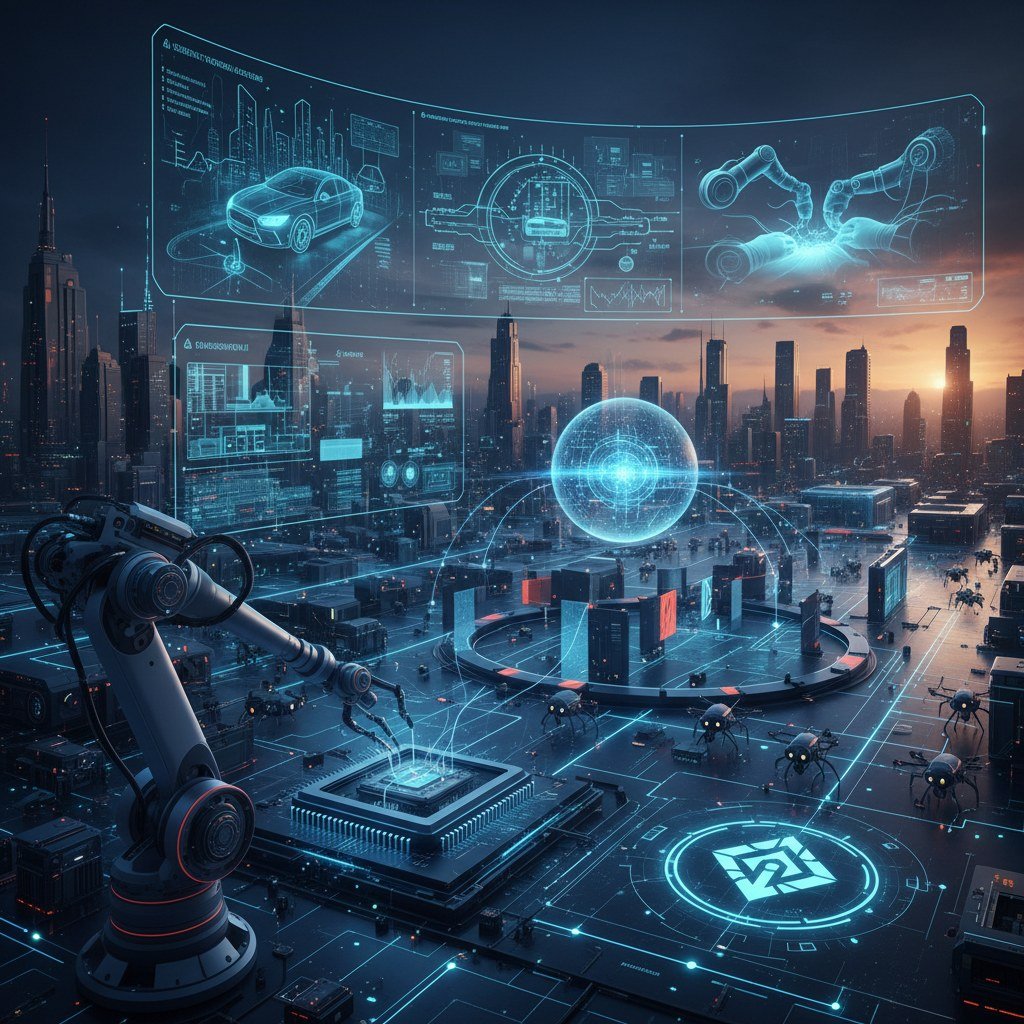
The Renaissance of Reinforcement Learning
Reinforcement learning (RL), the branch of artificial intelligence that trains systems through trial-and-error interaction with their environment, has experienced a dramatic renaissance in 2026. Once considered a niche academic discipline with limited real-world applications, RL has emerged as one of the most transformative technologies in the AI landscape. Major breakthroughs in sample efficiency, safety guarantees, and multi-agent coordination have propelled RL systems from research laboratories into production environments across industries ranging from robotics and logistics to finance and healthcare.
The fundamental principle of reinforcement learning remains unchanged: an agent learns to make sequential decisions by maximizing cumulative reward signals. What has changed dramatically in 2026 is the scale at which these systems operate and the sophistication of the environments they can navigate. Modern RL algorithms can now learn complex behaviors with a fraction of the data required just two years ago, thanks to advances in model-based RL, representation learning, and foundation-model integration.
Tech giants including DeepMind, OpenAI, and Meta have all announced major RL initiatives this year, while startups like Covariant and Physical Intelligence are deploying RL-powered robots in warehouses, factories, and even hospitals. The convergence of RL with large language models and world models has created a new paradigm that researchers call “foundation agent” technology — systems that combine language understanding, visual perception, and motor control into unified intelligence.
Sample Efficiency: The Breakthrough That Changed Everything
Perhaps the most significant technical barrier that RL has overcome in 2026 is sample efficiency. Traditional RL algorithms required millions or billions of interactions with an environment to learn even simple tasks, making them impractical for physical systems where each interaction carries real costs in time, energy, and wear. The breakthrough came from combining model-based RL with learned world models — systems that build internal representations of how the environment behaves and use those models for planning.
DeepMind’s DreamerV4, released earlier this year, demonstrated the ability to learn complex manipulation tasks in just tens of thousands of real-world interactions, a thousandfold improvement over its predecessors. The system constructs a latent representation of the physical world and simulates millions of potential future trajectories internally, selecting only the most promising ones for real-world execution. This approach, known as “dreaming,” allows RL agents to learn the consequences of their actions without experiencing each failure physically.
OpenAI followed with its own breakthrough in December 2025, showing that a single RL agent could learn to solve 150 different robotic tasks by sharing representations across tasks. The key insight was that many manipulation skills share underlying physical principles — grasping, pushing, pulling, and rotating — and that learning these common primitives dramatically accelerates acquisition of new skills. This multi-task RL approach has been adopted by several robotics startups and is being integrated into next-generation warehouse automation systems.
The implications for industry are profound. Companies that previously rejected RL as too data-hungry are now actively exploring deployment. For example, open source AI models challenging big tech dominance illustrates how cheaper AI capabilities are democratizing access to advanced technologies across the sector.
Safety, Alignment, and Real-World Deployment
As RL systems move from simulators to physical environments, safety has become the paramount concern. A reinforcement learning agent that explores its environment through trial and error can, in theory, discover dangerous or destructive behaviors before it learns optimal ones. In 2024, this was a theoretical risk; in 2026, with RL controlling industrial robots, autonomous vehicles, and power grid management systems, it is an immediate operational reality.
Researchers have responded with several innovations in safe RL. Constrained Markov Decision Processes (CMDPs), which incorporate explicit safety constraints into the optimization objective, have become the standard framework for industrial RL deployments. These systems maintain a safety critic that monitors the agent’s behavior and intervenes when actions approach predefined safety boundaries. Google DeepMind’s SPICE framework, released in April 2026, provides formal guarantees that RL agents will never violate certain safety constraints during training or deployment.
Reward hacking — the tendency of RL agents to find unintended shortcuts to maximize rewards — has also been addressed through advances in reward specification and intrinsic motivation. New techniques allow human operators to provide natural language feedback that shapes agent behavior without requiring explicit reward engineering. This “RL from human feedback” approach, already proven in language models, has been extended to physical tasks with impressive results.
Another critical development is the emergence of standardized safety benchmarks for RL systems. The International Conference on Machine Learning (ICML) introduced the SafeRL-2026 benchmark suite in July, which includes 50 tasks spanning robotics, autonomous driving, healthcare, and energy management, each with specific safety constraints and performance requirements. Early results show that state-of-the-art safe RL algorithms achieve safety compliance rates above 99.9 percent while maintaining competitive task performance — a milestone that industry observers say is essential for regulatory approval in safety-critical domains.
The Economic Impact of Reinforcement Learning
The economic implications of RL advances are already measurable. According to McKinsey’s AI Impact Report published in June 2026, reinforcement learning technologies are expected to contribute between $200 billion and $350 billion to global GDP annually by 2028, up from approximately $45 billion in 2025. The fastest adoption is occurring in logistics and supply chain optimization, where RL-powered routing and inventory management systems have reduced operational costs by 15 to 25 percent for early adopters.
Manufacturing represents the second-largest opportunity, with RL systems optimizing production line scheduling, quality control, and predictive maintenance. BMW and Tesla have both reported significant improvements in manufacturing throughput after deploying RL agents that learn optimal production parameters in real time. In both cases, the systems discovered counterintuitive scheduling strategies that human operators had never considered, leading to 8 to 12 percent improvements in line efficiency.
Healthcare applications are growing rapidly, with RL systems being used to optimize treatment plans for chronic conditions, manage hospital bed allocation, and even assist in surgical robotics. The US Food and Drug Administration approved the first autonomous RL-based insulin delivery system in March 2026, marking a regulatory milestone for the technology. The system continuously learns from each patient’s glucose response patterns and adjusts insulin delivery accordingly, achieving better glycemic control than traditional algorithms.
Challenges and the Road Ahead
Despite the remarkable progress, significant challenges remain before RL can achieve its full potential. The computational cost of training state-of-the-art RL systems remains prohibitive for most organizations. Training a single multi-task RL agent with current methodologies requires thousands of GPU-hours and can cost upwards of $500,000 in cloud computing resources. This creates a concentration risk where only the largest technology companies and best-funded startups can participate in cutting-edge RL research.
Overcoming this barrier will require continued algorithmic advances, more efficient hardware, and new training paradigms such as distributed RL across federated networks. Several research groups are exploring ways to share pretrained RL foundation models, analogous to how open source language models like Llama and Mistral have democratized access to natural language AI. These RL foundation models would provide a common base of physical understanding that individual organizations could fine-tune for their specific applications.
The question of generalization also remains incompletely solved. Current RL systems, while far more capable than their predecessors, still struggle when faced with environments that differ substantially from their training distribution. An RL agent trained in one warehouse layout may fail when deployed in another with different aisle widths, rack heights, or lighting conditions. Bridging this sim-to-real gap is the subject of intense research, and several promising approaches based on domain randomization and causal representation learning are showing early signs of success.
Ultimately, the trajectory of reinforcement learning in 2026 points toward a future where AI systems are not just passive tools that respond to prompts, but active agents that interact with the physical world, learn from experience, and continuously improve their performance. This transition from perception to action represents perhaps the most consequential shift in artificial intelligence since the deep learning revolution of the 2010s, and organizations that invest in RL capabilities today will be well-positioned to lead in the agentic AI era of tomorrow.
The Netherlands, for internationals
One email a week: the week's news for internationals in the Netherlands, new practical guides and what changed in the cities. No spam, unsubscribe any time.