ASML’s Dominance in Global Chip Manufacturing Continues to Shape Netherlands’ Economy
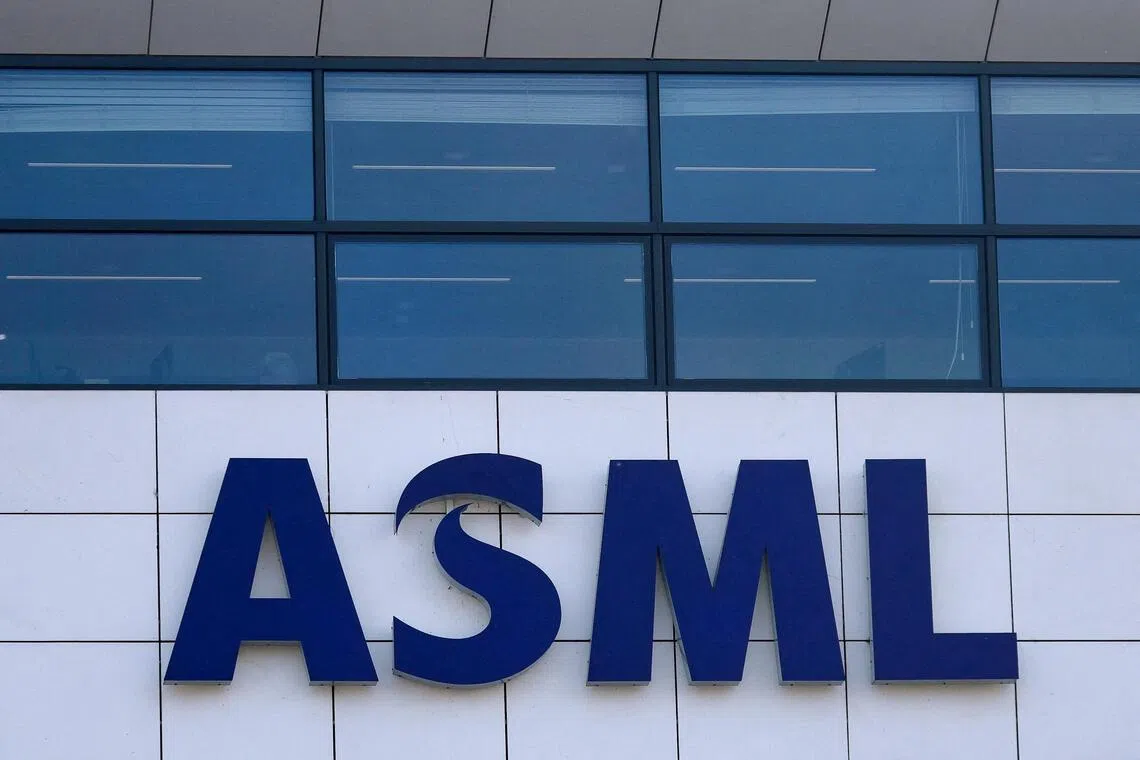
Veldhoven-based ASML Holding remains the undisputed leader in semiconductor lithography equipment, with its extreme ultraviolet (EUV) machines powering the world’s most advanced chip factories. As of mid-2026, the company’s market capitalization exceeds €350 billion, making it the most valuable technology firm in Europe and one of the ten most valuable companies globally. ASML’s dominance in the semiconductor supply chain has far-reaching implications for the Dutch economy, European technological sovereignty, and the global balance of power in high-tech manufacturing. The Dutch company’s near-monopoly on EUV lithography — a technology essential for manufacturing chips at 3nm and below — has placed the Netherlands at the center of global geopolitics, with the United States, China, and the European Union all having vested interests in ASML’s export policies.

Record Orders and Expansion Plans
ASML reported a backlog of over €40 billion in orders at the start of 2026, driven by demand from TSMC, Samsung, and Intel for its next-generation High-NA EUV systems. Each High-NA machine costs approximately €380 million and takes 13 shipping containers and 250 crates to transport. The complexity of these machines is staggering — each unit contains over 100,000 components, 3,000 cables, and 40 kilometers of wiring, requiring a team of 60 engineers over three months to assemble and calibrate on-site at the customer’s fabrication facility. The company is expanding its Veldhoven campus with a €2 billion investment, adding 20,000 square meters of cleanroom space and creating an estimated 5,000 new high-skilled jobs in the Brainport Eindhoven region.
Geopolitical Tensions and Export Controls
Dutch export controls, aligned with U.S.-led restrictions, limit ASML’s ability to sell its most advanced equipment to China. While the company can still ship older DUV systems to Chinese customers, the restrictions on EUV and advanced DUV tools have become a flashpoint in trade negotiations. China has responded by accelerating its domestic semiconductor equipment development programs, though analysts estimate Chinese competitors remain at least 5-7 years behind ASML’s technology. For the Dutch government, balancing economic interests with national security concerns remains a persistent challenge. ASML generates approximately €8 billion in annual revenue from China, and a complete cutoff would have significant implications for both the company and the Dutch treasury.
Impact on the Dutch Tech Ecosystem
ASML’s success has catalyzed a broader high-tech ecosystem in the Netherlands. The Brainport region around Eindhoven now hosts over 5,000 technology companies, from semiconductor equipment suppliers to AI and photonics startups. The Dutch government has earmarked €2.5 billion in “Project Beethoven” funding to support education, infrastructure, and housing in the region. The spillover effects extend beyond Eindhoven — Dutch universities have seen a surge in demand for electrical engineering and physics programs, with TU Eindhoven reporting a 45% increase in first-year enrollments since 2022. For more on how technology is transforming the Dutch economy, read about Dutch AI Startups and Innovation.

Technological Leadership and R&D Investment
ASML’s technological leadership is built on massive and sustained R&D investment. The company spent approximately €4.7 billion on research and development in 2025, representing roughly 15% of its annual revenue. This R&D intensity places ASML among the top corporate investors in innovation globally. The company’s research spans multiple fields including precision optics, mechatronics, computational lithography, and advanced materials science, with collaborations extending to 40 universities and research institutes worldwide. The next frontier for ASML is hyper-NA EUV lithography, which the company expects to commercialize in the early 2030s. This technology will enable chip features smaller than 1 nanometer, opening the door to entirely new computing paradigms including more powerful AI accelerators, neuromorphic processors, and quantum computing control chips.
Workforce Development and Skills Challenges
ASML’s rapid growth has created significant demand for highly skilled technical workers in the Netherlands. The company is actively recruiting engineers in fields including optics, mechatronics, software engineering, and data science, with over 2,000 open positions as of mid-2026. To address the skills shortage, ASML has partnered with Dutch universities to create specialized master’s programs in semiconductor engineering, and has established its own corporate training academy that trains approximately 1,500 employees annually. The company also sponsors STEM education programs in Dutch secondary schools, aiming to inspire the next generation of engineers and scientists. These workforce development initiatives are critical not just for ASML but for the broader Dutch high-tech sector, which faces similar talent shortages as it continues to expand.
Global Market Position and Competitive Landscape
ASML holds a unique position in the global semiconductor equipment market as the sole supplier of EUV lithography systems, giving it extraordinary pricing power and strategic importance. The company’s nearest competitors in the lithography space include Nikon and Canon of Japan, but neither has been able to develop commercially viable EUV technology despite years of research and development investments. This technological moat ensures that ASML will remain indispensable to the global semiconductor industry for the foreseeable future, with analysts projecting continued market share growth as chipmakers transition to increasingly advanced manufacturing nodes that require EUV and High-NA EUV systems for production.
The competitive dynamics extend beyond lithography to the broader semiconductor ecosystem. ASML’s success has inspired a wave of Dutch and European semiconductor equipment startups, creating a virtuous cycle of innovation that benefits the entire region. The company’s supply chain includes hundreds of Dutch and European suppliers, many of which have become global leaders in their own specialized niches. This ecosystem effect amplifies ASML’s economic impact far beyond its own revenues and employment figures, making it a true cornerstone of European technological competitiveness in the 21st century global economy.
The Netherlands, for internationals
One email a week: the week's news for internationals in the Netherlands, new practical guides and what changed in the cities. No spam, unsubscribe any time.