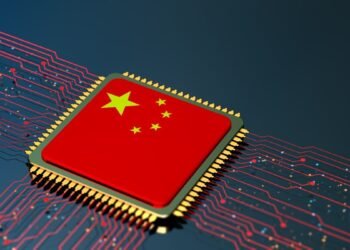
Southeast Asia has become the primary theater of the technological cold war between the United States and China. The region, home to more than 680 million people and some of the world’s fastest-growing digital economies, is no longer a passive bystander caught between two superpowers. It is the prize. Both Washington and Beijing are pouring diplomatic capital, investment dollars, and strategic resources into winning influence over the region’s technology infrastructure, and the competition is reshaping everything from semiconductor supply chains to undersea cable routes to digital payment systems.
The semiconductor battleground
No sector illustrates the intensity of the competition more clearly than semiconductors. The United States has made Southeast Asia a central pillar of its chip strategy through the CHIPS and Science Act, which allocated $52 billion in subsidies for domestic semiconductor production and, critically, incentivized allied countries to build their own chip manufacturing capacity as part of what the Biden administration called a trusted supply chain network. The strategy has been continued and expanded under the current administration. Malaysia, which already handles roughly 13 percent of global semiconductor packaging and testing, has received more than $15 billion in new chip-related investment commitments from American and allied companies since 2023, including major expansions by Intel, Micron, and GlobalFoundries.
China has responded with its own approach. Rather than trying to compete directly for chip fabrication capacity, which would require access to advanced lithography equipment that the United States and its allies have denied to China through export controls, Beijing has focused on dominating the downstream assembly, testing, and packaging segments that are less capital-intensive but strategically critical. Chinese companies have invested heavily in semiconductor packaging facilities in Vietnam, the Philippines, and Thailand, building a presence that could give Beijing leverage over the final stages of chip production even if it cannot control the upstream fabrication steps.
Thailand has become a particular focus of this competition. The Thai Board of Investment reports that approved applications for semiconductor-related investment more than doubled in 2025, reaching $8.7 billion, with roughly equal contributions from US-allied and Chinese-linked companies. The Thai government has strategically avoided taking sides, offering incentives to both blocs and positioning itself as a neutral manufacturing hub. That balancing act is becoming harder to sustain as both sides demand clearer alignment on technology standards and export controls.
Digital infrastructure as a geopolitical lever
Beyond semiconductors, the competition extends to the digital infrastructure that will underpin Southeast Asia’s technology economy for decades. Undersea cable routes, which carry the vast majority of intercontinental internet traffic, have become a frontline of the rivalry. The United States has funded and promoted cable projects that bypass China, linking Southeast Asian hubs directly to the American West Coast and to allied submarine cable networks. The Fiber Optic Link Around the Globe extension to Southeast Asia and the Southeast Asia-Middle East-Western Europe 5 cable, both backed by US-allied consortia, represent billions of dollars in infrastructure designed to reduce the region’s dependence on cable hubs located in Hong Kong and mainland China.
China, meanwhile, has been building its own submarine cable network through Chinese state-owned enterprises like Huawei Marine Networks, which has laid cables connecting Southeast Asian countries to each other and to China. The cables come with Chinese financing terms that bundle construction, maintenance, and data routing agreements, creating dependencies that Beijing can leverage over time. Western intelligence agencies have raised concerns about potential data interception capabilities built into Chinese-laid cables, though China has denied these allegations.
Cloud infrastructure is another dimension of the competition. Amazon Web Services, Microsoft Azure, and Google Cloud have all announced major data center investments in Southeast Asia over the past two years, committing a combined total of roughly $25 billion to new cloud regions in Singapore, Malaysia, Indonesia, and Thailand. These hyperscale data centers are not just commercial facilities; they are sovereignty anchors, because data stored on American cloud infrastructure is subject to US laws and, in emergency situations, to US government demands. China’s Alibaba Cloud and Huawei Cloud are making parallel investments, offering cloud services that comply with Chinese data governance requirements and that are integrated with Beijing’s Digital Silk Road initiative.
For a broader perspective on how artificial intelligence investment is reshaping the technology sector globally, see our coverage of Meta’s massive AI restructuring and workforce realignment.
The 5G and telecom calculation
The 5G infrastructure battle in Southeast Asia has evolved significantly since the early Huawei ban of the Trump era. While countries like Australia and Japan followed the United States in excluding Huawei from 5G networks, Southeast Asian nations have been more pragmatic. Singapore allowed Huawei to participate in its 5G rollout alongside Ericsson, creating a dual-vendor model. Malaysia and Thailand initially restricted Huawei’s role but have gradually relaxed those restrictions as Chinese investment in local manufacturing has increased. The Philippines, under the Marcos administration, has been the most explicitly pro-American in its telecom policy, awarding major 5G contracts to Nokia and Ericsson and positioning itself as a testbed for open radio access network technology, a US-backed alternative to traditional telecom equipment.
The strategic importance of 5G extends beyond faster phone downloads. Modern telecommunications networks are the nervous system of smart manufacturing, autonomous transportation, and military command and control. Which country’s equipment providers build Southeast Asia’s 5G and eventual 6G infrastructure will determine which government has technical leverage over those networks for decades. Both Washington and Beijing understand this viscerally, and both are investing accordingly.
Diplomatic and security dimensions
The technology competition in Southeast Asia is inseparable from the broader security landscape. The United States has deepened its alliance structure in the region through the AUKUS pact with Australia and the United Kingdom, the Quadrilateral Security Dialogue with Japan, India, and Australia, and expanded rotational military deployments in the Philippines and Singapore. These security arrangements are explicitly linked to technology cooperation, with AUKUS including provisions for sharing advanced AI, quantum computing, and undersea warfare technology among the three member countries, and the Quad focusing on semiconductor supply chain resilience and secure 5G deployment.
China has responded by deepening its economic integration with Southeast Asia through the Regional Comprehensive Economic Partnership, the world’s largest free trade agreement by GDP, and through the Lancang-Mekong Cooperation framework, which funnels development aid to Cambodia, Laos, Myanmar, Thailand, and Vietnam. China is also the largest trading partner of most Southeast Asian countries, a fact that gives Beijing enormous economic leverage that no amount of American diplomatic engagement can fully offset.
The region’s own agency
Southeast Asian nations are not passive objects of great-power competition. ASEAN, the region’s primary multilateral organization, has pursued a strategy of strategic autonomy, refusing to choose between the United States and China and instead extracting concessions from both. ASEAN’s Outlook on the Indo-Pacific, adopted in 2019 and reaffirmed in subsequent summits, explicitly calls for the region to maintain its centrality in regional architecture and to resist being forced into binary alignments. In practice, this means individual ASEAN members are making pragmatic choices based on their own economic and security interests, rather than aligning uniformly with either bloc.
Vietnam offers the clearest example of this balancing act. Hanoi has deepened security cooperation with the United States, including port visits by American aircraft carriers and expanded intelligence sharing, while simultaneously maintaining strong economic ties with China and avoiding any public condemnation of Beijing’s South China Sea claims. Vietnam has welcomed American semiconductor investment and Chinese manufacturing relocation simultaneously, playing both sides off each other to maximize its own industrial development.
What the outcome means for global technology
The outcome of the US-China competition in Southeast Asia will determine far more than which country’s tech companies win market share in the region. It will determine the architecture of the global technology system for the middle of the century. If the United States succeeds in building a trusted, US-aligned technology supply chain and digital infrastructure network in Southeast Asia, it will reinforce a liberal, interoperable global technology order organized around American standards and values. If China succeeds in building a parallel system in the region, with Chinese hardware, Chinese routing infrastructure, Chinese cloud services, and Chinese data governance standards, the global technology landscape will become increasingly fragmented into two competing spheres.
Most likely, the region will remain contested for the foreseeable future, with neither side achieving decisive dominance. That outcome carries its own risks, including the potential for technological decoupling that forces countries and companies to maintain duplicate systems, one aligned with American standards and one with Chinese, at enormous cost. But it also means that Southeast Asian nations will retain greater agency than either Washington or Beijing would prefer, a dynamic that has already produced surprising policy outcomes in areas from data localization to AI regulation. The technology competition in Southeast Asia is not a proxy war that will be won by one side. It is a structural realignment of the global technology landscape, and it is happening in real time.
The Netherlands, for internationals
One email a week: the week's news for internationals in the Netherlands, new practical guides and what changed in the cities. No spam, unsubscribe any time.