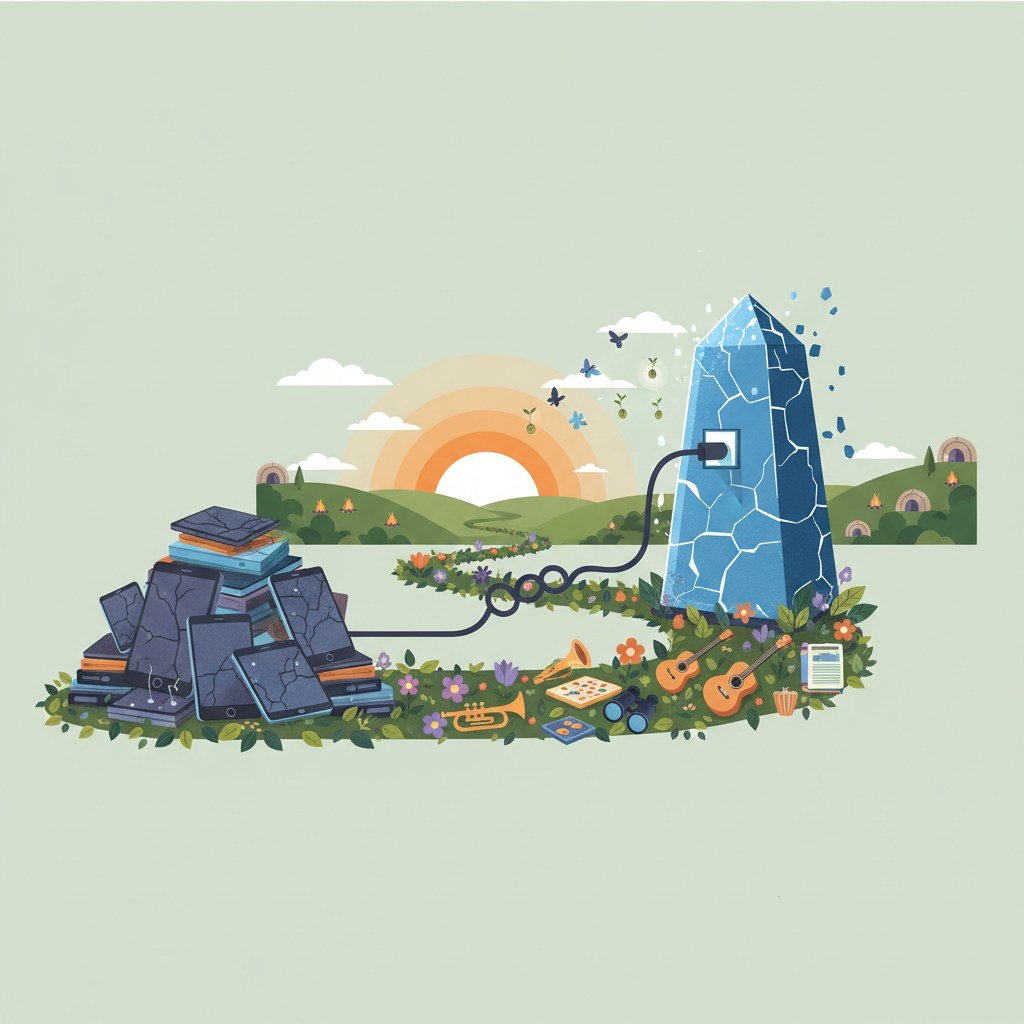
In a striking reversal of the narrative that young people are hopelessly addicted to their screens, Generation Z is quietly leading a cultural movement toward digital minimalism and intentional unplugging. In 2026, the “Great Unplugging” has become a mainstream phenomenon, with millions of young adults deliberately reducing their screen time, deleting social media apps, and rediscovering analog experiences that previous generations feared were lost forever.
Gen Z’s Complicated Relationship with Technology
Born between 1997 and 2012, Generation Z is the first cohort to have grown up entirely in the era of smartphones, social media, and ubiquitous internet access. Yet surveys consistently show that Gen Z reports higher levels of stress, anxiety, and dissatisfaction with social media than any other generation. According to a 2026 Pew Research Center study, 67 percent of Americans aged 18 to 25 say social media has a mostly negative effect on their lives, compared to just 38 percent of those aged 50 and older.
This discontent is translating into action. The same study found that 43 percent of Gen Z respondents have deleted at least one social media platform in the past year, with TikTok, Instagram, and X (formerly Twitter) leading the exodus. “I realized I was spending four hours a day on apps that made me feel worse about myself,” says Maya Chen, a 22-year-old university student from Portland, Oregon. “Deleting Instagram was hard for the first week, but after a month I felt like I had gotten my life back.”
What makes this trend different from previous calls for digital detox is its structural nature. Rather than simply taking a weekend break from their phones, many young people are making permanent, lifestyle-level changes: switching to “dumb phones” that only call and text, moving their social lives onto encrypted messaging platforms that lack algorithmic feeds, and adopting physical media like books, vinyl records, and printed photographs in place of their digital counterparts.
The Rise of Intentional Communities
The desire for genuine human connection has sparked a resurgence of intentional communities and third places. Cafés that ban laptops and phones have proliferated in major cities, with establishments in London, Berlin, New York, and Tokyo reporting year-over-year revenue growth of 30 to 50 percent. These “analog spaces” prioritize conversation, board games, and face-to-face interaction over digital engagement.
More dramatically, a growing number of young adults are joining low-tech intentional communities that resemble the communes of the 1960s but are motivated by 21st-century concerns about digital overload. The “Luddite Club” movement, which began in Brooklyn in 2022, has expanded to chapters in 80 cities worldwide. Members commit to using only flip phones, reading physical books, and spending at least one full day per week entirely screen-free. The clubs organize hiking trips, book circles, art workshops, and community dinners.
“We’re not anti-technology,” explains James Okonkwo, a 24-year-old software engineer who co-founded a Luddite Club chapter in San Francisco. “I work in tech, and I see firsthand how these products are designed to be addictive. The Luddite Club is about reclaiming agency over our own attention. It’s a conscious choice to use technology on our own terms rather than being used by it.”
The Economics of Unplugging
The Great Unplugging has created new economic opportunities. The market for analog and low-tech products has exploded. Sales of film cameras increased 280 percent between 2020 and 2026, while physical book sales continue to grow despite the dominance of digital publishing. Vinyl record revenue surpassed CD revenue in 2023 and continues to climb, with Gen Z making up the largest demographic of vinyl buyers.
Dumb phone sales have seen a remarkable renaissance. Nokia reported selling 4 million feature phones in 2025, up from fewer than 500,000 in 2022. Startups like Punkt and Light Phone have carved out a niche premium market for minimalist devices that offer only essential functions. The Light Phone III, released in 2025, sold out its initial production run of 50,000 units within weeks. These devices are priced between $300 and $600, proving that consumers are willing to pay a premium for intentional disconnection.
The hospitality industry has adapted to this trend as well. “Digital detox retreats” have become a booming niche in the wellness tourism sector, with packages ranging from weekend getaways to month-long programs priced at $5,000 and up. Resorts in remote locations — including the Scottish Highlands, the Japanese Alps, and the Australian Outback — advertise complete disconnection from cellular and internet networks as a premium feature rather than a drawback.
Education and the Screen-Free Movement
The education sector is also feeling the effects of the screen-free revolution. A growing number of schools in the United States, Europe, and Asia have implemented “phone-free” policies requiring students to store their devices in lockable pouches during the school day. Spain passed national legislation in 2025 restricting smartphone use in primary and secondary schools. France and the Netherlands have similar laws at various stages of implementation.
Studies on these policies show encouraging results. A 2026 study published in the Journal of Educational Psychology found that schools with comprehensive phone bans reported average improvements of 15 percent in math and reading scores, alongside reductions in bullying incidents and disciplinary referrals. Critics argue that blanket bans fail to teach responsible digital citizenship, but proponents counter that academic performance and student well-being must take priority over device access.
At the university level, “digital wellness” courses have become some of the most popular electives on campuses across America. Stanford University’s “Screen and Society” course, which examines the psychological and social effects of digital technology, had a waitlist of 400 students in the 2025 fall semester. Harvard, MIT, and the University of California system have all introduced similar offerings.
The Mental Health Connection
Mental health is arguably the most powerful driver of the screen-free revolution. The US Surgeon General’s 2023 advisory on social media and youth mental health catalyzed a national conversation about the harmful effects of digital platforms on adolescent well-being. Since then, a cascade of research has confirmed that heavy social media use is associated with increased rates of depression, anxiety, sleep disruption, and negative body image among young people.
The release of journalist Jonathan Haidt’s book “The Anxious Generation” in 2024 further amplified these concerns, particularly among parents, educators, and policymakers. Haidt argues that the “great rewiring” of childhood by smartphones and social media has created an epidemic of mental illness that is fundamentally altering the developmental trajectory of an entire generation. His thesis has been both influential and controversial, but it has undeniably shifted the public conversation about children’s relationship with technology.
“We grew up online, and we know exactly what it did to us,” says Dr. Sarah Mitchell, a 27-year-old clinical psychologist specializing in digital wellness. “My generation is saying: we don’t want this for ourselves, and we definitely don’t want it for our kids. The Great Unplugging isn’t a rejection of progress. It’s an insistence on humanity in an increasingly inhuman digital environment.”
What Comes Next
As the screen-free revolution matures, its future trajectory will depend on how technology companies respond and whether regulatory frameworks adapt. Some tech giants have already introduced features designed to promote digital wellness, such as Apple’s Screen Time and Android’s Digital Wellbeing tools. Critics argue these measures are insufficient and that the business models of major platforms are fundamentally incompatible with user well-being.
Legislative action is accelerating. The UK’s Online Safety Act, the EU’s Digital Services Act, and proposed US legislation like the Kids Online Safety Act represent efforts to hold technology companies accountable for the design of their platforms. Whether these regulations will meaningfully reduce screen time or simply create compliance burdens remains an open question.
What is clear is that the Great Unplugging is more than a fad or a passing trend. It is a generational reckoning with the costs of constant connectivity and a deliberate effort to rebuild the boundaries between digital life and real life. Generation Z, far from being passive consumers of technology, is actively reshaping what a healthy relationship with screens looks like. In doing so, they may be laying the groundwork for a more balanced, intentional relationship with technology that benefits all generations to come.
Related: The Remote Work Revolution in 2026: How Hybrid Models Are Reshaping Cities and Communities
Also read: How Digital Nomads Are Reshaping Global Economies in 2026
The Netherlands, for internationals
One email a week: the week's news for internationals in the Netherlands, new practical guides and what changed in the cities. No spam, unsubscribe any time.