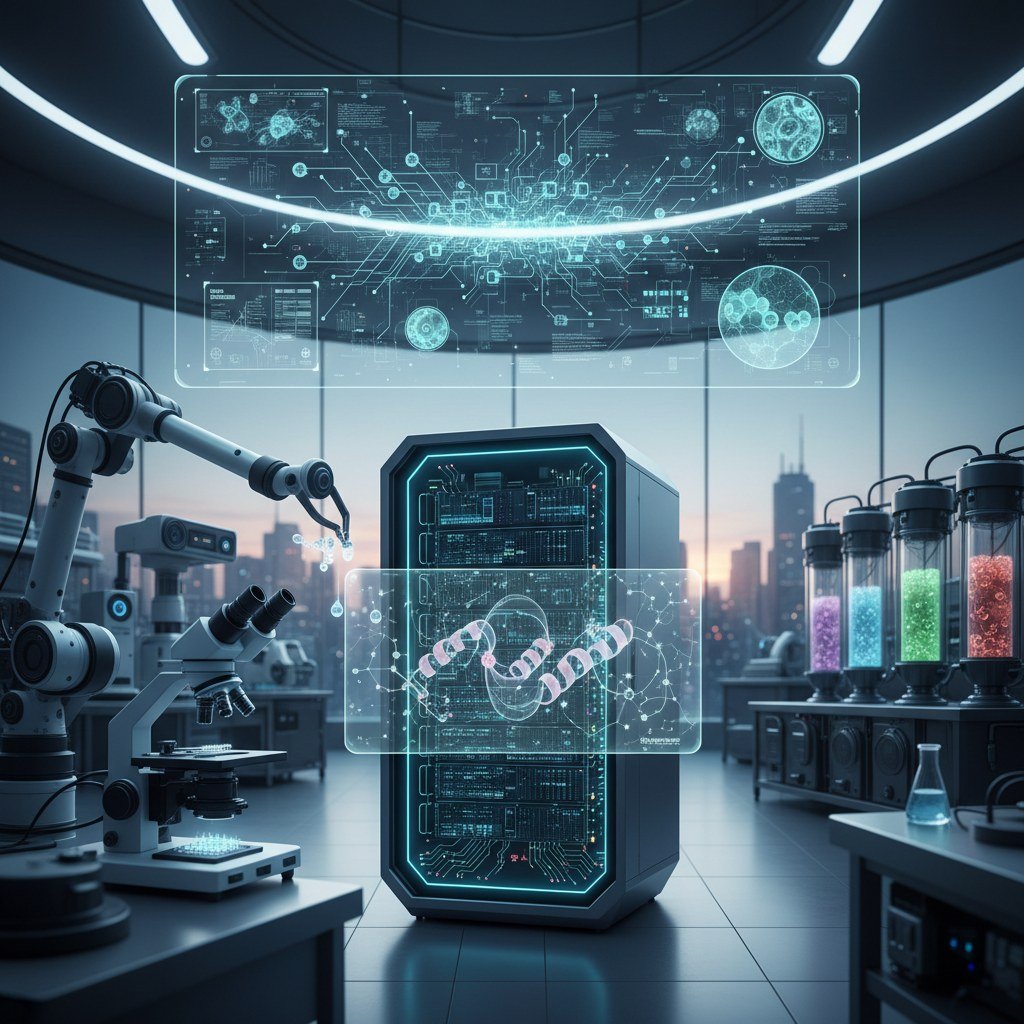
The new era of pharmaceutical research
The pharmaceutical industry is undergoing a profound transformation, driven by advances in artificial intelligence and machine learning. Drug discovery, once a painstaking process that could take over a decade and cost billions of dollars, is being accelerated by algorithms that can analyze vast chemical spaces in hours rather than years. In 2026, AI-powered drug discovery has moved from experimental to mainstream, with dozens of AI-discovered compounds entering clinical trials and several already receiving regulatory approval.
The traditional drug development pipeline faces significant challenges. On average, it takes 10 to 15 years and costs approximately $2.6 billion to bring a new drug to market. The failure rate is staggering, with approximately 90 percent of drugs that enter Phase 1 clinical trials never reaching patients. AI is addressing these inefficiencies at every stage, from target identification and lead optimization to preclinical testing and clinical trial design.
Major pharmaceutical companies have embraced AI as a core component of their research and development strategies. Pfizer, Novartis, Roche, and AstraZeneca have all established dedicated AI units or formed strategic partnerships with AI-native biotechnology firms. These collaborations are producing tangible results, with AI-designed molecules entering human trials at a rate unprecedented in the industry’s history.
How machine learning accelerates target identification
The first and perhaps most critical step in drug discovery is identifying the right biological target, typically a protein or gene, associated with a disease. Traditional methods rely on laborious experimental screening and decades of accumulated scientific literature. Machine learning approaches can process this same information in minutes, identifying promising targets that human researchers might overlook.
Deep learning models trained on genomics data, protein structures, and clinical records can predict which molecular targets are most likely to produce therapeutic effects. These models identify patterns across millions of data points, uncovering relationships between genes, proteins, and disease pathways that would be impossible for humans to detect manually. AlphaFold and similar protein structure prediction tools have been particularly transformative, providing researchers with accurate three-dimensional structures of proteins that were previously unknown.
The integration of multi-omics data, combining genomics, proteomics, metabolomics, and transcriptomics, has further enhanced target identification. AI systems can analyze these layered datasets simultaneously, identifying complex biological signatures that correlate with disease states. This holistic approach is leading to the discovery of novel drug targets for conditions that have historically been difficult to treat, including neurodegenerative diseases and rare genetic disorders.
Generative AI for molecular design
Once a target is identified, the next challenge is designing molecules that can interact with it effectively. Generative AI models, similar to those used for creating images and text, are now being applied to molecular design. These models can generate novel chemical structures optimized for specific properties, including potency, selectivity, solubility, and safety.
Companies like Insilico Medicine, Recursion Pharmaceuticals, and BenevolentAI have developed generative chemistry platforms that can design thousands of candidate molecules in a single day. Each candidate is evaluated by predictive models that estimate its likelihood of success based on historical data and physicochemical properties. The most promising candidates are then synthesized and tested experimentally, dramatically reducing the number of compounds that need to be physically created and screened.
One notable success story is Insilico Medicine’s INS018_055, an AI-designed drug for idiopathic pulmonary fibrosis that became the first AI-discovered molecule to enter Phase 2 clinical trials. The molecule was designed using the company’s end-to-end AI platform, which identified the target, generated the candidate molecule, and predicted its safety profile, all within 18 months, a fraction of the traditional timeline.
The cost savings are substantial. Traditional high-throughput screening can cost millions of dollars and screen only a few million compounds. AI-driven virtual screening can evaluate billions of compounds in silico for a fraction of the cost, prioritizing only the most promising candidates for physical testing. This efficiency is particularly valuable for rare diseases, where the potential commercial return may not justify traditional drug development costs.
Clinical trial optimization with AI
The benefits of AI extend beyond the laboratory into clinical trials, where approximately 80 percent of drug development costs are incurred. Machine learning models are being used to design more efficient trials, identify suitable patient populations, and predict outcomes before costly human studies begin.
Patient recruitment, one of the most challenging aspects of clinical trials, is being transformed by AI. Natural language processing algorithms analyze electronic health records to identify patients who meet trial criteria, reducing recruitment times by as much as 50 percent. These systems can screen thousands of patient records in hours, flagging potential candidates who might otherwise be overlooked by manual review processes.
AI is also improving trial design through digital twin technology. Researchers can create virtual patient populations that simulate how real patients might respond to a treatment, allowing them to optimize dosing regimens, identify potential safety issues, and determine optimal trial sizes before enrolling a single patient. This approach has been shown to reduce trial costs by up to 30 percent while increasing the likelihood of success.
The regulatory landscape is evolving to accommodate these innovations. The U.S. Food and Drug Administration and the European Medicines Agency have both published frameworks for the use of AI in drug development, providing clearer pathways for AI-discovered and AI-designed therapies to reach patients. The FDA alone has received over 300 submissions involving AI components in drug development applications, a number that continues to grow rapidly.
As 2026 progresses, the convergence of AI, genomics, and precision medicine is opening new frontiers in drug discovery. Machine learning models trained on increasingly large and diverse datasets are becoming more accurate in their predictions. Generative AI is designing molecules with properties that were previously unattainable. And the regulatory infrastructure is adapting to evaluate these innovations effectively. The result is a pharmaceutical pipeline that is more productive, more efficient, and more responsive to patient needs than at any point in history.
Related: The Rise of Neuromorphic Computing: How Brain-Inspired Chips Are Transforming AI in 2026
The Netherlands, for internationals
One email a week: the week's news for internationals in the Netherlands, new practical guides and what changed in the cities. No spam, unsubscribe any time.