Microsoft’s New Sales Pitch: “Our AI Is Cheaper, Trust Us”
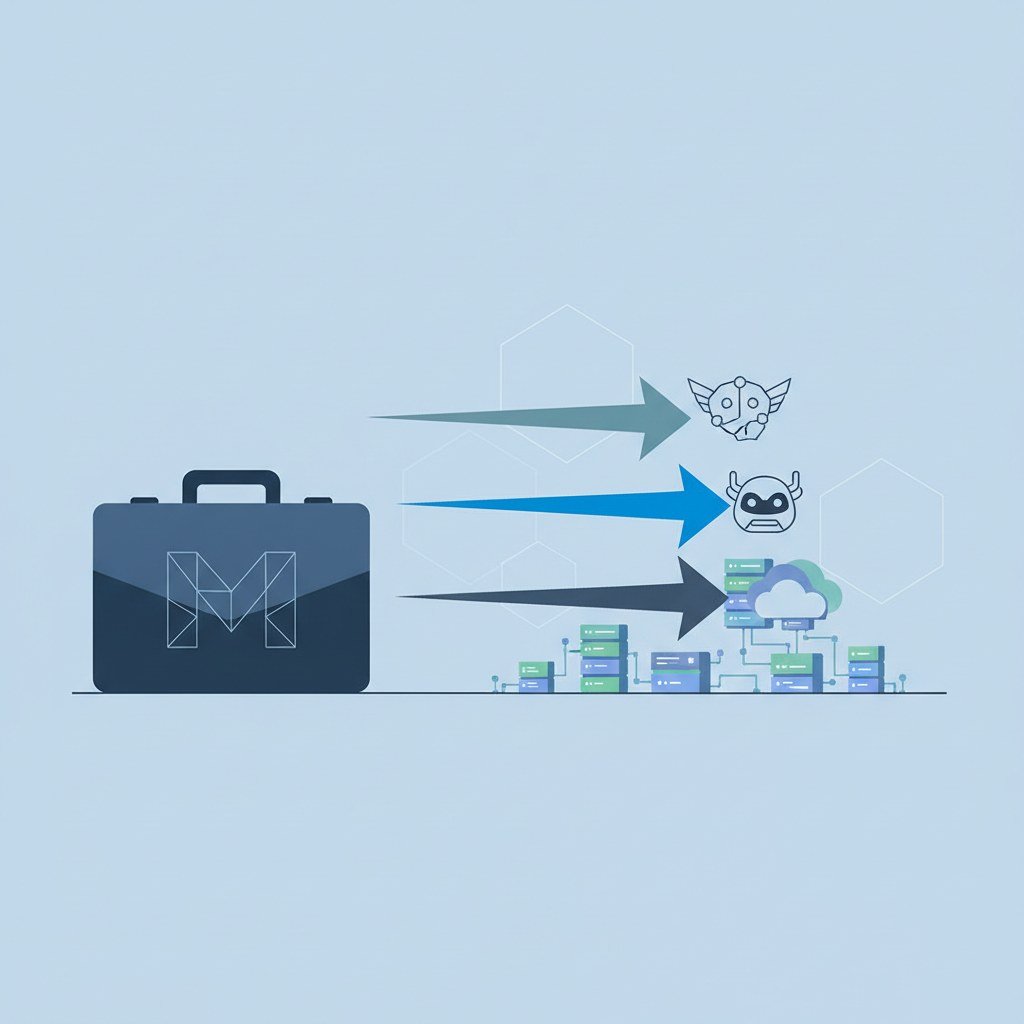
Turns out the AI arms race isn’t just about who has the smartest chatbot anymore. According to a recent report, Microsoft has quietly started coaching its sales teams on how to steer enterprise clients away from OpenAI and Anthropic models and toward its own in-house AI systems instead. Yes, the same Microsoft that poured billions into OpenAI is now apparently telling its reps to talk that very partnership down when it’s convenient.
The pitch, as described, centers on efficiency and cost. Microsoft’s internal models are reportedly being positioned as leaner, cheaper to run, and better suited for specific enterprise workloads than the flashier, more resource-hungry models from OpenAI and Anthropic. It’s a classic “why pay for the Ferrari when the Civic gets you there just as fast” argument, except in this case the Ferrari is GPT and the Civic has Microsoft’s logo stamped on the hood.
Why This Is Kind of a Big Deal
Microsoft has invested an enormous amount of money and reputation into its relationship with OpenAI. The two companies have been treated as practically inseparable in the public imagination for years now. So the idea that Microsoft’s own sales force is being trained to downplay OpenAI’s strengths in favor of homegrown alternatives signals something important: Microsoft wants options, and it wants leverage.
This isn’t entirely shocking if you’ve been paying attention. Microsoft has been building out its own AI capabilities through teams like Microsoft AI, led by Mustafa Suleyman, and has been developing smaller, task-specific models under names like Phi. These models aren’t necessarily trying to beat GPT-5 or Claude at general intelligence benchmarks. Instead, they’re aimed at doing specific jobs well, cheaply, and without the massive compute overhead that comes with running frontier-scale models.
For enterprise customers, that pitch can actually be pretty compelling. Not every business needs a model that can write poetry, debug code, and philosophize about consciousness in the same conversation. Sometimes you just need something that can summarize documents, sort customer service tickets, or automate a workflow without burning through your entire cloud budget in a month.
The Awkward Position Microsoft Is In
Here’s where things get a little messy. Microsoft’s relationship with OpenAI has always had an undercurrent of tension beneath the partnership headlines. Microsoft is a major investor and infrastructure provider for OpenAI, but it’s also clearly hedging its bets by building competing technology in-house. That’s smart business, sure, but it puts sales reps in an odd spot when they’re expected to sell Azure OpenAI Service on one call and then pitch a client toward Microsoft’s own models on the next.
There’s also the Anthropic angle. Microsoft has reportedly been expanding its relationship with Anthropic as well, integrating Claude models into some of its products as a hedge against over-reliance on OpenAI. So now you’ve got a company that partners with both major AI labs, invests in one of them heavily, and is simultaneously training its team to say “actually, ours is better” to potential customers. It’s the corporate equivalent of dating two people while also insisting you’re happier alone.
What This Means for Businesses Shopping for AI
If you’re a business trying to figure out which AI tools actually make sense for your operation, this kind of internal jockeying is honestly useful context. It means the “best” model isn’t always the one being pushed hardest by the biggest sales team. Cost, latency, integration complexity, and actual task performance often matter more than raw benchmark scores.
Companies evaluating AI vendors right now should probably keep a few things in mind:
- Bigger and more expensive doesn’t always mean better for your specific use case.
- Vendor incentives matter. A sales rep’s recommendation isn’t always purely about what fits your needs.
- Smaller, specialized models can outperform general-purpose giants on narrow tasks while costing a fraction of the price.
- It’s worth testing multiple providers rather than assuming brand recognition equals quality.
This kind of comparison shopping has become increasingly common across the AI content and automation space, where platforms like aicontentempire.nl have built entire strategies around picking the right tool for the right job rather than defaulting to whichever brand has the loudest marketing push.
The Bigger Picture
What this whole situation really reveals is that the AI industry has entered a new, more mature phase. It’s no longer just about who can build the most impressive model. It’s about who can sell it most convincingly, package it most cheaply, and lock in enterprise customers before the competition does. Microsoft training its salespeople to talk down its own partners is a strange but very telling sign of just how competitive and financially motivated this space has become.
Whether this strategy pays off for Microsoft remains to be seen. Enterprise clients tend to be savvy, and internal contradictions like partnering with OpenAI while quietly undercutting it
Source: Original Article
The Netherlands, for internationals
One email a week: the week's news for internationals in the Netherlands, new practical guides and what changed in the cities. No spam, unsubscribe any time.