Robots have conquered the warehouse, the factory floor, and increasingly the fast-food fryer. The construction site has stayed stubbornly human. Gritt thinks that ends now, and it has $34 million to prove the point.
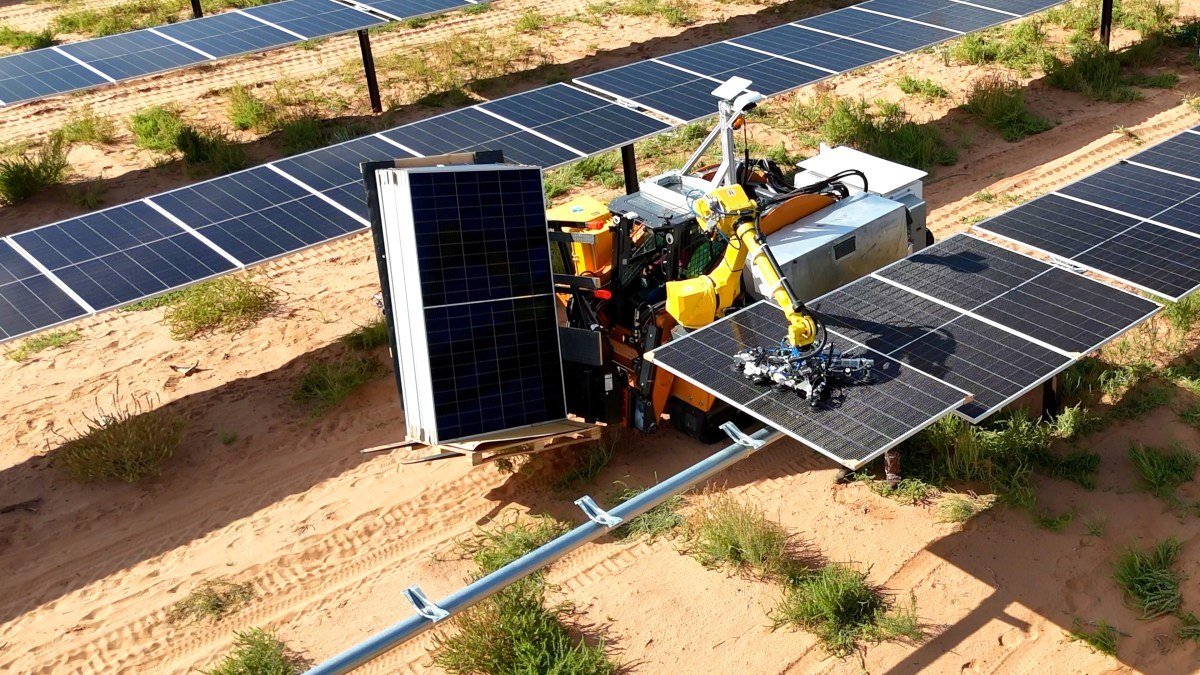
The company came out of stealth on July 21, 2026, with a plan that sounds almost reckless in its ambition: build robots that take on the hardest, most punishing jobs on a construction site. Not the easy stuff. Not the tasks that are already half-automated. The grinding, dangerous, back-breaking work that has kept the industry human long after other sectors handed their heavy lifting to machines. Gritt is starting with solar plants. After that, in its own framing, everything else.
Why solar is the wedge
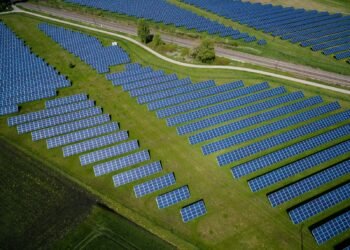
Picking solar as the first target is a smart piece of strategy. A utility-scale solar farm is one of the most repetitive large construction projects on the planet. Workers install the same racking, drive the same piles, and bolt down the same panels thousands of times across hundreds of acres of open, flat land. There are no staircases, no plumbing, no finicky interior finishes. For a robot trying to learn the physical world, that combination of scale and sameness is close to ideal.
It is also a market with a demand problem that automation is well suited to solve. Solar developers keep signing bigger projects, but the crews who assemble them are finite, and the work is exhausting under a desert sun. When the constraint on how fast you can build is how many people you can get to swing a tool in the heat, a machine that does not tire starts to look less like a novelty and more like the only way to hit the schedule. Gritt is betting that the economics of a solar buildout will pull its robots onto the site rather than the other way around.
Solar is the wedge, not the destination. Prove the hardware and the software on the simplest hard problem, then carry what you have learned into messier environments where the geometry changes every few feet. That is a familiar playbook in robotics, and it is usually the sane one. The graveyard of construction-tech startups is full of companies that tried to automate everything at once and shipped nothing.
The hardest problem in robotics is the real world
Here is the thing about construction that has humbled a decade of well-funded robotics teams. A factory is a controlled world. The lighting is constant, the parts arrive in the same orientation, and the floor does not turn to mud when it rains. A construction site is the opposite of all of that. The ground shifts, the weather refuses to cooperate, materials show up scratched and bent, and no two days look alike. A robot that works beautifully in a demo video can fall apart the first time a delivery truck parks in the wrong spot.
Any company promising robots for the messiest environment in physical labor is making a bet on generalization, on machines that can handle variation rather than memorize a single choreographed routine. That is exactly the capability modern AI has started to unlock, and it is why a wave of investors has grown comfortable writing checks for hardware again after years of treating robotics as a money pit. Gritt’s $34 million says at least some of those investors believe the timing has finally caught up to the ambition.
Whether that belief survives contact with an actual job site is the open question. Money buys runway, engineers, and prototypes. It does not buy the thousands of hours of grinding field iteration that separate a robot that works in the lab from one a project manager will trust with a deadline. That gap has swallowed better-funded companies than Gritt.
What the raise really signals
Strip away the stealth-exit theater and a $34 million bet on construction robots tells you something about where capital is flowing in 2026. Investors are hunting for AI applications that touch the physical economy, not just another chatbot or coding assistant. Construction is one of the largest industries on earth and one that has barely moved the needle on productivity in a generation, which makes it exactly the kind of enormous, unglamorous, unautomated market that draws ambitious founders and the money that follows them.
Gritt is also making a labor argument, whether it says so out loud or not. The pitch is not really about replacing workers. It is about doing the jobs that are hardest to staff, most likely to injure someone, and least appealing to the shrinking pool of people willing to do them. If the robots handle the pile-driving and the panel-hauling, the human crews move up toward supervision and the work that still demands judgment. That is the optimistic reading, and it is the one Gritt will need to sell to developers, regulators, and the trades alike.
The company has money and a clear first target. What it does not yet have, at least not publicly, is a track record of robots surviving a full construction season in the field. Watch for the first real solar deployment and how the machines hold up when the wind kicks up dust and the schedule slips. That is where this story gets decided, not in a funding announcement.
For more coverage of construction robotics, visit Mylistingo.
Source: Original Article
The Netherlands, for internationals
One email a week: the week's news for internationals in the Netherlands, new practical guides and what changed in the cities. No spam, unsubscribe any time.