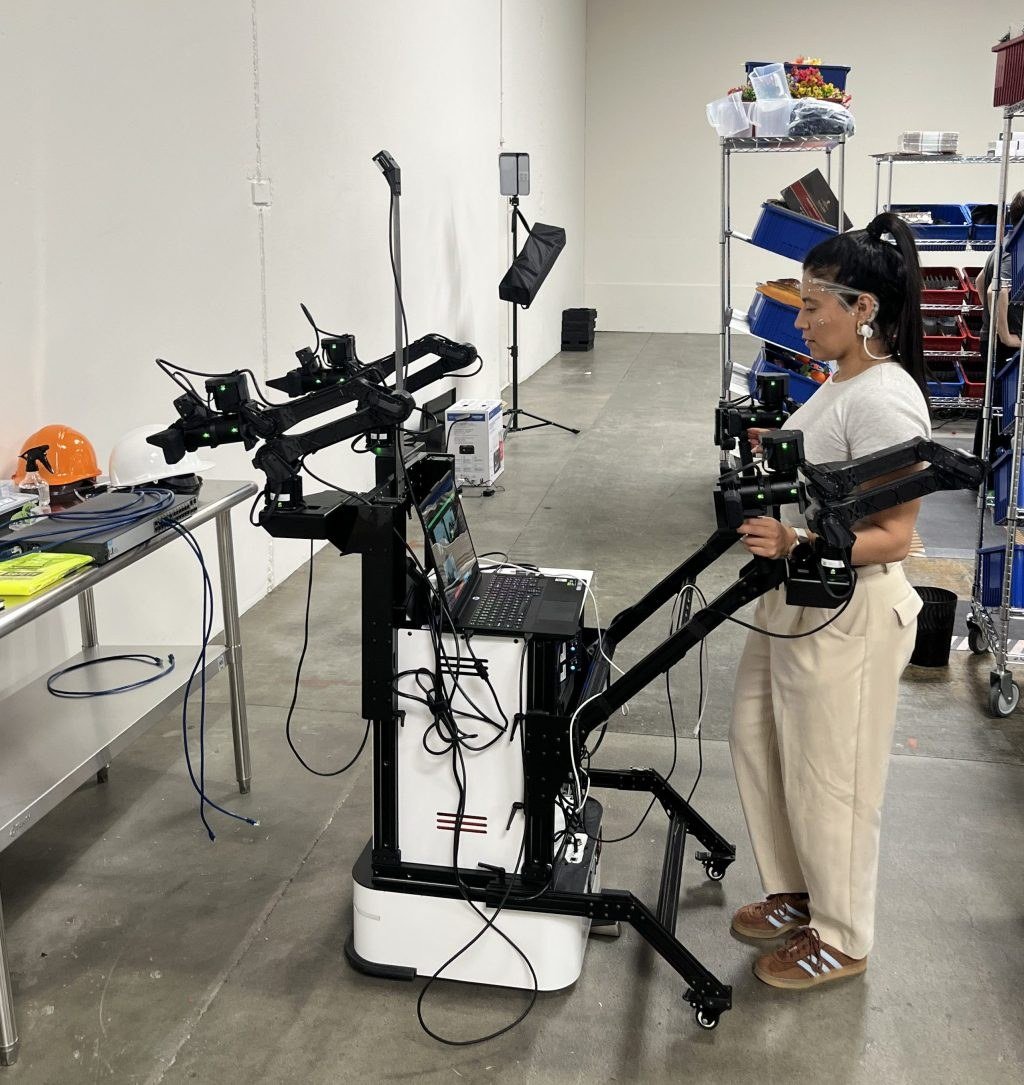
The recipe for training a robot used to sound almost lazy: point it at the internet, feed it a firehose of YouTube videos, and let it absorb how humans move through the world. That shortcut is running out of road. The frontier of physical AI, the kind that controls robots and machines rather than chatbots, is now hungry for something video alone can’t give it. Multiple synchronized camera angles. Dense, painstaking annotation. And, if a growing camp of researchers is right, a signal pulled straight from the human skull.
TechCrunch’s framing of the moment is blunt. Forget YouTube videos. The models that aim to give machines a working grasp of physics and intent need richer data than a flat clip filmed from one angle, and the next candidate on the list is brain wave readings.
Why video stopped being enough
A YouTube clip is a beautiful thing for a language model and a frustrating one for a robot. It shows you the outcome of a movement without the depth, the geometry, or the forces behind it. Watch a person pour coffee and you see the arm swing and the liquid land. You do not see the grip pressure, the wrist angle relative to the mug, or the split-second correction when the pour starts to overshoot. For a system that has to reproduce that action in the real world, the missing information is exactly the information that matters.
That gap explains the shift toward multiple camera angles. One viewpoint flattens a three-dimensional act into a guess; several viewpoints, captured at once, let a model reconstruct where things actually are in space. Pair that with dense annotation, the slow human work of labeling what is happening frame by frame, and you get training data that carries meaning rather than just pixels. It is more expensive to produce than scraping the web. It is also far closer to what a physical system needs to learn.
The case for brain waves
Here is where the idea gets genuinely strange, and interesting. Cameras, however many you stack around a scene, only ever capture the outside of an action. They record the hand moving. What they cannot record is the intention that fired a fraction of a second before the muscle did. Brain wave data promises to close that loop by capturing the signal at its source, the moment a person decides to reach, grip, or pull back.
Think about what that could mean for a robot learning from a human demonstrator. Instead of inferring intent backward from motion, the model could be trained on the intent and the motion together. The neural signal becomes a kind of ground truth for why a body did what it did. For tasks where timing and anticipation separate a smooth action from a clumsy one, that head start on intention is not a minor upgrade. It is a different category of data.
None of this is trivial to collect. Brain wave readings are noisy, personal, and hard to standardize across people and sessions. Building a dataset large and clean enough to train a frontier model on neural signals is a research problem before it is a product. But the direction of travel is clear enough that it has moved from science fiction to a serious question worth asking out loud: are brain waves the next unlock?
What this says about the data race
Step back and a pattern emerges across the whole field. The first wave of modern AI was won largely by whoever could scrape and process the most existing text and video. Physical AI is turning that logic on its head. The valuable data increasingly does not exist yet, which means it has to be manufactured, one multi-camera capture and one annotation pass at a time. Brain wave collection sits at the far end of that spectrum, the most deliberate and most difficult kind of data to gather.
That reframes what a competitive advantage looks like. It stops being about crawling the biggest slice of the public web and starts being about who can build the instrumentation, recruit the demonstrators, and run the capture pipelines that produce signals nobody else has. Data becomes something you engineer rather than something you find.
The companies willing to invest in that harder, slower kind of data are placing a bet that the ceiling on physical AI is set by input quality, not model size. If they are right, the robots that feel genuinely capable a few years from now will trace back to a training set that started with several cameras in a room and, quite possibly, electrodes on a human head.
Whether brain waves become a standard ingredient or a research curiosity is the open question. What is already settled is the premise underneath it: the easy data is spent, and the next leap in physical AI will be paid for in the effort of collecting what the internet never captured.
For more coverage of physical AI and robotics, visit Mylistingo.
“`
Source: Original Article