AI News
  • Home
  • AI & Tech
  • Machine Learning
  • Startups
  • Tools & Apps
  • Robotics
  • Future Tech
  • AI in Industry
    • AI in Sport ⚽
    • AI in Health
    • AI in Education
    • AI in Finance
    • AI in Business
    • AI in Law
    • AI in Climate
No Result
View All Result
SAVED POSTS
AI News
  • Home
  • AI & Tech
  • Machine Learning
  • Startups
  • Tools & Apps
  • Robotics
  • Future Tech
  • AI in Industry
    • AI in Sport ⚽
    • AI in Health
    • AI in Education
    • AI in Finance
    • AI in Business
    • AI in Law
    • AI in Climate
No Result
View All Result
AI News
No Result
View All Result

DesignArena Raises $7.9M to Teach AI Good Taste

Ramo by Ramo
3 August 2026
in Startups
419 4
0
DesignArena creators raise $7.9 million to bring taste to AI models
586
SHARES
3.3k
VIEWS
Summarize with ChatGPTShare to Facebook

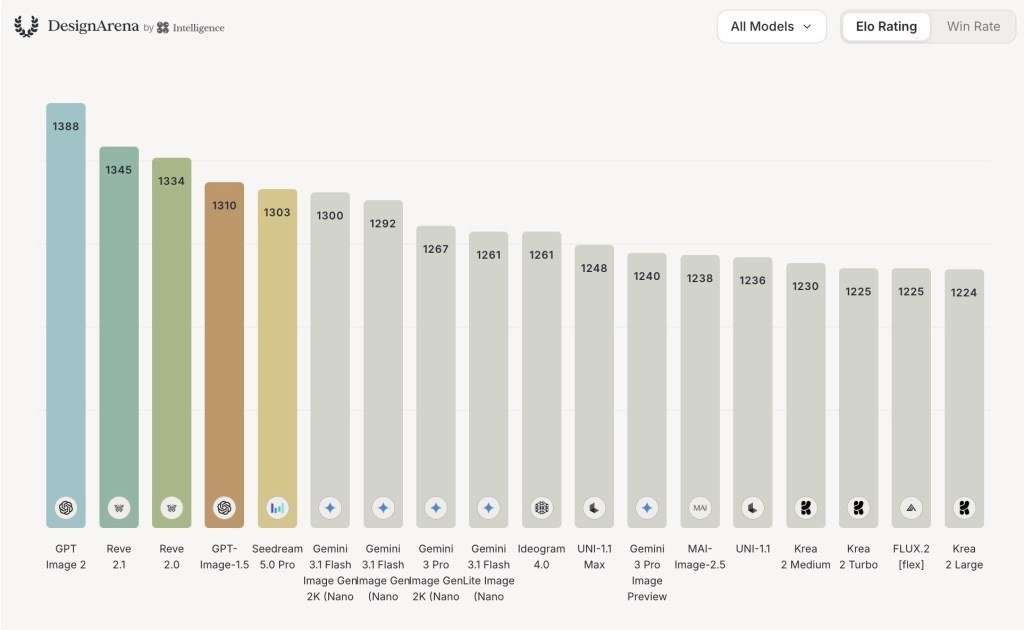
Taste is the thing nobody can benchmark. You can measure how fast a model generates a webpage, how cleanly it writes code, how accurately it answers a trivia question. What you can’t easily measure is whether the result looks good, feels right, or lands the way a designer intended. DesignArena built a business on that gap, and investors just bet $7.9 million that the gap is only getting wider.

The company behind DesignArena raised the round to do something the AI industry has quietly struggled with for years: teach models something closer to human judgment. Not correctness. Taste. And the pitch is working, because 5.3 million people around the world already use DesignArena, and the human evaluations they generate feed directly into the frontier labs building the biggest models on the planet.

Why the labs keep coming back for humans

Frontier models are trained on staggering amounts of data, but the last mile of quality still runs through people. Someone has to look at two AI-generated designs and decide which one is better. Someone has to say this layout breathes and that one feels cramped, this color pairing works and that one screams. Automated metrics can approximate a lot, but they fall apart on questions of aesthetic preference, where the right answer is a matter of felt experience rather than a score on a test.

That is the void DesignArena fills. Its users act as a distributed panel of judges, comparing outputs and voting on what looks better, and those verdicts become training signal for the labs. With 5.3 million people participating, the platform has assembled something rare: human preference data at a scale that actually matters to models trained on the entire internet. A handful of expert reviewers can’t move the needle on a system that size. Millions of them can.

The $7.9 million round tells you how the market values that supply. Human evaluation was once treated as a cost center, a necessary annoyance bolted onto the end of a training run. Now it looks more like the scarce resource. Compute is expensive but buyable. Data is abundant if messy. Calibrated human taste, delivered at volume and structured so a model can learn from it, is genuinely hard to manufacture.

From correctness to craft

For most of the modern AI era, progress meant getting answers right. Solve the math problem. Return working code. Summarize the document without hallucinating. Those are questions with knowable answers, and the field got very good at chasing them.

Design lives somewhere else. Ask two talented designers to build the same landing page and you get two defensible, different results. There is no answer key. That ambiguity is exactly why AI has lagged on creative and visual work even as it raced ahead on logic and language, and it is why a platform organized around comparative human judgment has become valuable to the labs. You cannot grade taste against a rubric. You can only ask enough people what they prefer and watch the pattern emerge.

DesignArena’s approach treats preference as data. Every head-to-head comparison a user makes is a small, honest signal about what humans actually respond to, and millions of those signals aggregate into something a model can be tuned against. It is a bet that the next competitive edge in AI won’t come from a bigger cluster or a cleverer architecture, but from output people genuinely want to look at.

The scarce ingredient nobody can fake

Consider where this leaves the industry. Every major lab is racing to make models that don’t just work but feel considered, and the ingredient they can’t synthesize is the opinion of a real person looking at a real result and reacting. DesignArena has turned that reaction into infrastructure.

There’s a strategic wrinkle worth watching, too. The frontier labs are DesignArena’s customers, but they are also, in a sense, its dependents. The better their models get at design, the more they need fine-grained human feedback to push past the point where automated metrics stop being useful. That dynamic tends to deepen rather than fade, which helps explain why a company selling human judgment could command $7.9 million in a market obsessed with automation.

The obvious question is how long human evaluators stay in the loop before models learn to approximate the crowd. For now the answer is clear enough: taste has been the hardest thing to teach a machine, and the labs are paying real money to borrow it from 5.3 million people who already know it when they see it. Whether that arrangement holds as models improve, or whether the next generation finally internalizes what good looks like, is the story worth tracking from here.

For more coverage of AI model development, visit Mylistingo.

Source: Original Article

SummarizeShare234
Ramo

Ramo

Ramo is the editorial voice of Mylistingo — an AI and technology news platform based in The Hague, Netherlands. Covering artificial intelligence, machine learning, robotics, and the future of technology, Ramo delivers accurate, accessible reporting for both general audiences and industry professionals. Every article is fact-checked and written to meet Mylistingo's strict no-fabrication editorial standards.

Related Stories

A Marc Benioff-backed startup thinks AI can solve the AI deployment problem

June Raises $20M to Fix the AI Deployment Problem

by Ramo
3 August 2026
0

Marc Benioff has written checks for a lot of software companies. His latest bet is on a company that wants to fix the mess those companies keep running...

AI chip startup Etched defies skeptics, hits $10.3B valuation from big-name investors

Etched Hits $10.3B Valuation on GPU-Free AI Chips

by Ramo
25 July 2026
0

Etched hits $10.3B valuation building GPU-free AI chips, convincing top investors it can challenge Nvidia without traditional GPU architecture.

Glow emerges from stealth at $1.2B valuation to challenge endpoint security in the AI era

Glow Exits Stealth at $1.2B to Rethink Endpoint Security

by Ramo
22 July 2026
0

A new security startup steps out of the shadows A company almost nobody had heard of last week is suddenly worth $1.2 billion. Glow emerged from stealth on...

Neil Rimer thinks the AI money is coming back out

Why an Index Ventures Founder Says AI Wealth Won’t Last

by Ramo
18 July 2026
0

Few people have watched Silicon Valley manufacture wealth as closely as Neil Rimer. The venture capitalist co-founded Index Ventures, one of the firms whose early bets turned founders...

Recommended

Global Inflation Trends and Central Bank Strategies in Mid-2026

Global Inflation Trends and Central Bank Strategies in Mid-2026

22 July 2026
Trump's Stargate AI plan faces big hurdles in Europe and Asia

Trump’s Stargate AI plan faces big hurdles in Europe and Asia

10 July 2026

Popular Story

  • ml_feat_56193023

    ASML’s Next-Gen High-NA EUV Machines Drive Eindhoven Expansion, Creating 20,000 New Jobs

    590 shares
    Share 236 Tweet 148
  • PixVerse closes $439m series C extension at $2b valuation

    589 shares
    Share 236 Tweet 147
  • Best Cafes and Coffee Shops in The Hague 2026: A Digital Nomad’s Guide

    589 shares
    Share 236 Tweet 147
  • The Rise of Neuromorphic Computing: How Brain-Inspired Chips Are Transforming AI in 2026

    588 shares
    Share 235 Tweet 147
  • Inside The Hague’s AI-Powered International Criminal Court: How Machine Learning Is Accelerating Justice

    588 shares
    Share 235 Tweet 147
Advertise Here
Your Ad Could Be Here

This premium 300×250 spot is available. Reach our AI & tech audience with your product or service.

Book This Space →
logo ainews

We bring you the best Premium WordPress Themes that perfect for news, magazine, personal blog, etc. Check our landing page for details.

Recent Posts

  • DesignArena Raises $7.9M to Teach AI Good Taste
  • Google’s Gemini Robotics 2 Gives Robots Whole-Body Control
  • June Raises $20M to Fix the AI Deployment Problem

Categories

  • AI & Tech
  • AI in Business
  • AI in Climate
  • AI in Education
  • AI in Finance
  • AI in Health
  • AI in Law
  • AI in Sport
  • Economy & Finance
  • Future Tech
  • Machine Learning
  • Politics & Geopolitics
  • Robotics
  • Social Topics
  • Sport
  • Startups
  • The Hague
  • Tools & Apps
  • Uncategorized

Weekly Newsletter

  • Home
  • Advertise
  • Latest News
  • Contact Us
  • Data Deletion Instructions
  • Editorial Policy

Welcome Back!

Login to your account below

Forgotten Password?

Retrieve your password

Please enter your username or email address to reset your password.

Log In
No Result
View All Result
  • Home
  • AI & Tech
  • Machine Learning
  • Startups
  • Tools & Apps
  • Robotics
  • Future Tech
  • AI in Industry
    • AI in Sport ⚽
    • AI in Health
    • AI in Education
    • AI in Finance
    • AI in Business
    • AI in Law
    • AI in Climate