Mark Zuckerberg spent 6,500 words this week arguing that the safest path for artificial intelligence is to hand it to everyone at once. The essay, titled “The Future Is for Everyone: The Path to a Positive AI Future,” went up on Meta’s corporate blog on August 10 and reads less like a product announcement and more like a rebuttal, aimed squarely at the safety-first philosophy coming out of Anthropic.
Zuckerberg never names Dario Amodei directly. He doesn’t have to. Anthropic’s chief executive has spent the past year warning that AI could trigger what commentators have dubbed a “white collar bloodbath,” with Amodei telling Axios last year that automation could wipe out half of entry-level white-collar jobs within five years. Zuckerberg’s essay reads as a direct answer to that worldview. “I do not understand why anyone who believes that AI will eliminate most jobs and much of humanity’s relevance would rush to build that future,” he wrote. It reads like a jab aimed straight at the company building the model that produced that warning in the first place.
Three principles, one target
The essay rests on three claims: that individual empowerment, not institutional control, drives prosperity; that AI’s real contribution is helping people invent things rather than automating the jobs they already have; and that safety comes from spreading power so widely that no single lab, government, or algorithm can dominate the field. That last point is where Zuckerberg draws his sharpest contrast with Anthropic, which has built its entire public identity around the idea that a small number of trustworthy labs need to control frontier AI while it’s aligned safely.
“The notion that AI is so dangerous that the only safe path is an extreme concentration of power seems inherently problematic,” Zuckerberg wrote. It’s a clean line, and on its face a reasonable one. Concentrated power has a poor track record throughout history, and Zuckerberg isn’t wrong to point that out.
Where the argument gets shaky
YouTuber Matthew Berman, whose channel covers AI industry news to nearly 630,000 subscribers, published a lengthy breakdown of the essay on August 11 and landed on the same flaw independently: giving everyone access to the same AI model doesn’t mean everyone gets the same result. Zuckerberg’s own thought experiment makes the point for him. He argues that if only one person had a superintelligent lawyer, that would be unfair, but if everyone had one, justice would actually improve. Berman’s counter is straightforward: two lawyers running the same model still aren’t equal if one side can afford to throw far more computing power at it. Whoever has more capital buys more compute, and more compute means the model can research deeper, work faster, and simply out-argue the other side. Access to intelligence stops being the deciding factor. Access to money for compute becomes the deciding factor instead.
That tension surfaces again and again in the essay. Zuckerberg promises free tiers alongside a paid, auction-based system for people who want more computing power, then argues in the same breath that distributing intelligence widely prevents any one actor from dominating the economy. Those two ideas don’t fully square with each other, since a paid tier by definition rewards whoever can spend the most.
Chips, distillation, and a swipe at export controls
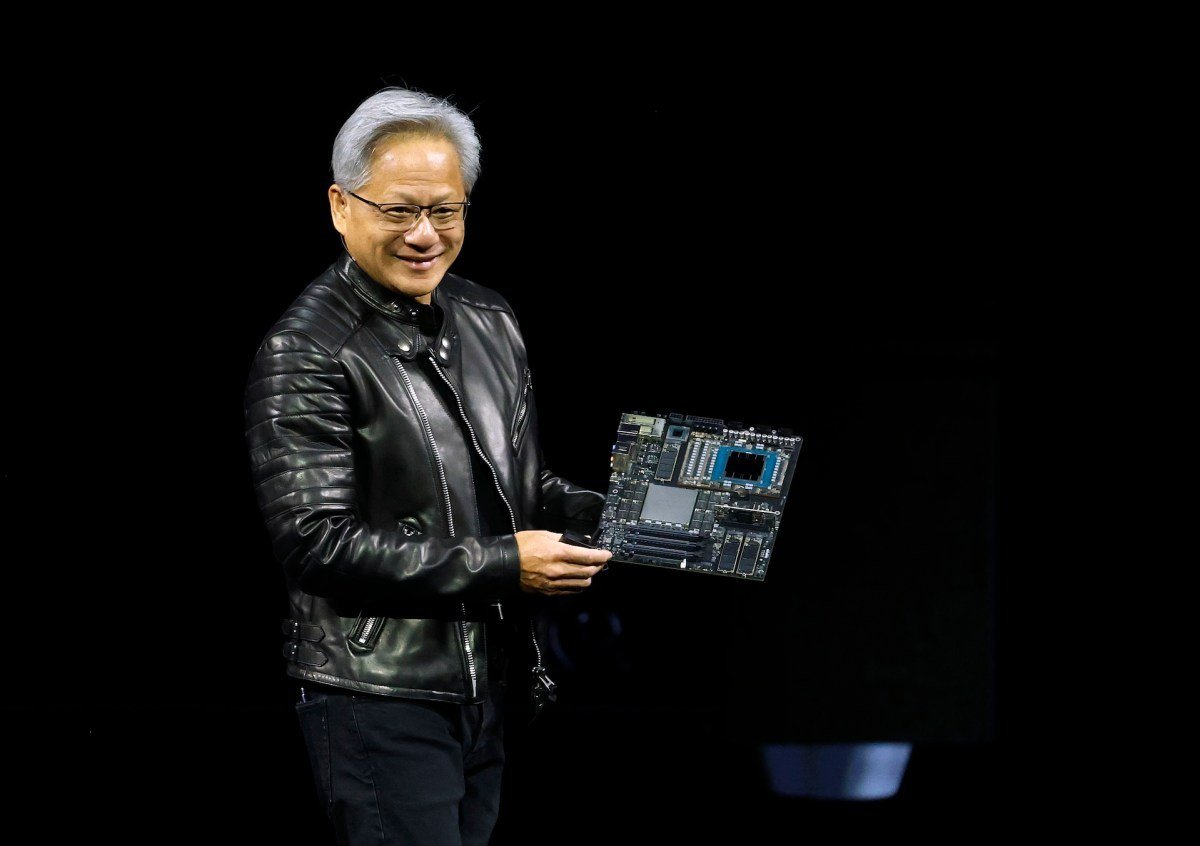
Away from the philosophy, the essay stakes out concrete policy positions. Zuckerberg backs continued US export controls on advanced chips to China, a stance that puts him at odds with Nvidia CEO Jensen Huang, who has argued that restricting chip sales only accelerates China’s push to build domestic alternatives. Zuckerberg also calls for looser rules around model distillation, the practice of training a smaller model on the outputs of a larger one, arguing that open-source developers need the same freedom that closed labs already used to train on the open internet.
He leans on a concrete example to make his case for local buy-in on data centers: in Richland Parish, Louisiana, where Meta has been expanding a data center project, he wrote that rising tax revenue let the district raise teacher bonuses to $50,000 this year, up from $10,000 the year before. Meta has separately pledged a $1 billion fund for communities hosting its data centers, part of a broader effort to soften local opposition to the water and power demands these facilities bring.
What to watch next
Anthropic has not issued a formal response to the essay as of this week, and it may not need to. The company’s entire pitch to regulators and customers rests on the argument that concentrated, careful control beats broad distribution, so Zuckerberg’s essay effectively asks the industry to pick a side. Whether Meta’s own actions, its data center spending, its compute allocation, its pricing for paid tiers, actually match the “superintelligence for everyone” framing is the question worth tracking over the next few months, long after the essay itself stops trending.
For more coverage of the AI industry’s biggest fights over safety and access, visit Mylistingo.
Source: “Mark Zuckerberg just called out Dario (and Anthropic)” by Matthew Berman on YouTube.