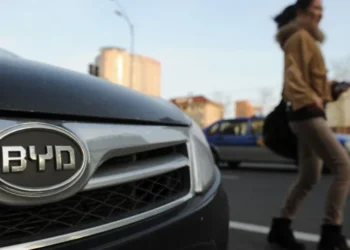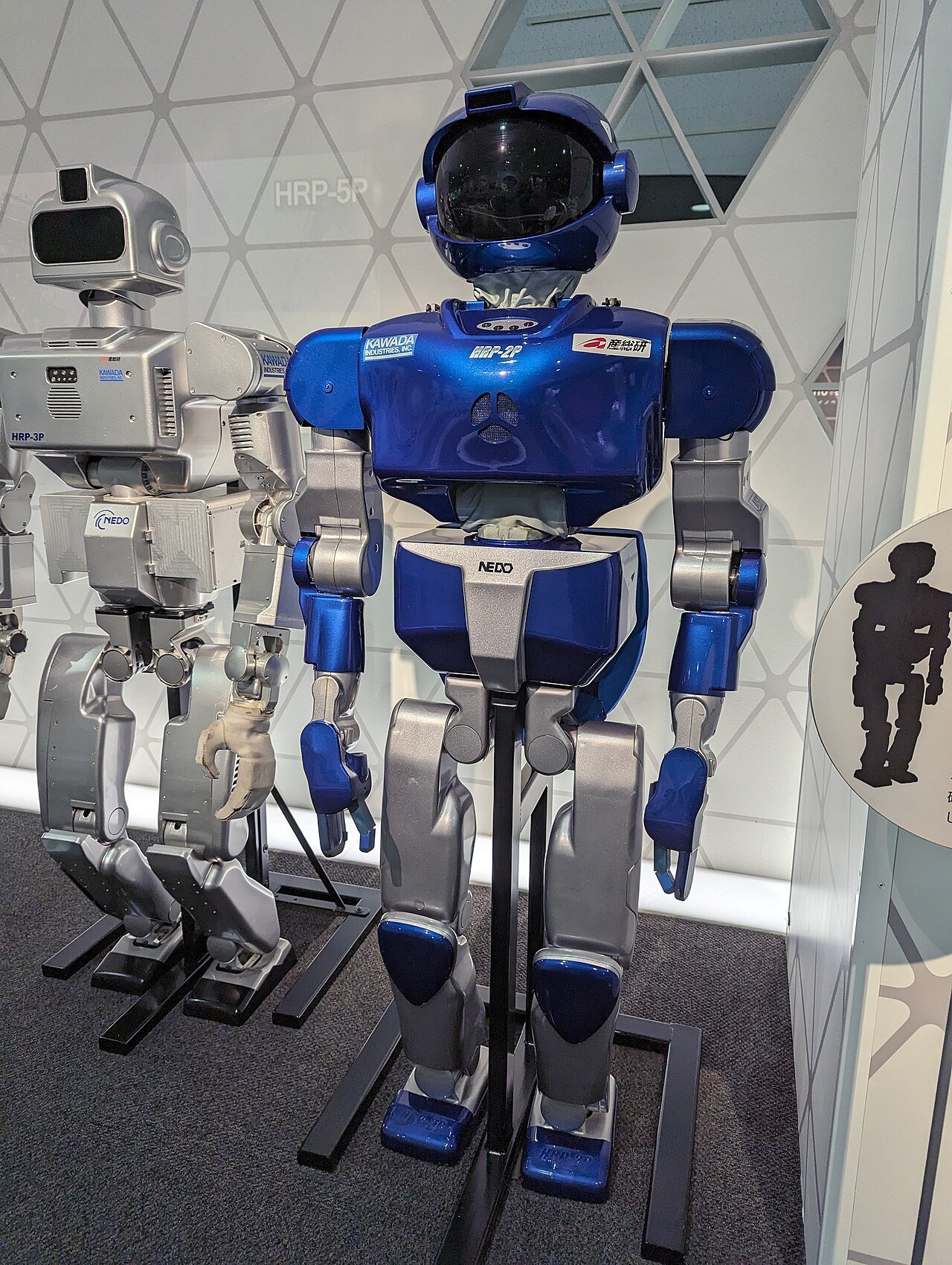
A robot 1.61 metres tall spent the first week of August introducing cars to strangers in Zhengzhou. Its name is Xiao Di, it handles six Chinese dialects and six foreign languages, and it works for a carmaker. BYD, the largest producer of electric vehicles in the world, has entered the humanoid robot business through the front door of its own shops.
The debut took place at Di Space, BYD’s network of experience centres designed to feel more theatrical than an ordinary dealership. Zhengzhou got the first machine, with Shenzhen and Shanghai next. BYD had confirmed the plan in late July, and the way it framed the reveal was telling. There was no spec sheet, no torque figures, no video of the machine doing backflips in a car park. Xiao Di was presented as something you talk to.
A sales floor, not a factory floor
Most humanoid programmes announce themselves with warehouse footage. Boxes get lifted, bins get sorted, a voiceover explains that labour shortages are coming. BYD skipped all of it. Its robot greets visitors, explains vehicle features, and is meant eventually to run live demonstrations of what a car can do. That is a customer service job, and it is a far easier one than picking parts off a moving line.
The choice looks modest until you think about the failure modes. A robot that drops a component in a factory costs money and stops production. A robot that stumbles over a sentence in a showroom is merely awkward, and it is standing in a controlled, well lit, flat floored room full of people who already walked in wanting to look at something. BYD picked the environment where a humanoid can look competent today rather than the one where it might look competent in three years.
Why a carmaker is a plausible robot company
None of this is accidental. The components that make a humanoid expensive are the ones BYD already builds at enormous volume: electric motors, battery packs, power electronics, motion control software, and the sensor stacks that stop a moving object from hitting people. A company that manufactures those by the million has a cost structure no robotics startup buying parts on the open market can match.
That is the quiet argument underneath the Xiao Di reveal. BYD does not need to win a technology race. It needs the bill of materials to fall far enough that putting two or three humanoids in every showroom stops being a marketing expense and becomes ordinary equipment. Vertical integration is the company’s oldest habit, and it is the reason it went from batteries to buses to one of the best selling electric car brands on the planet.
The plan was already public
Back in May, BYD executive vice president Stella Li laid out the strategy without much ceremony: two or three humanoid robots in every showroom, handling greetings, walking customers through features, and running vehicle demonstrations, with mass rollout targeted within one to two years. August did not change the plan. It supplied the hardware.
Scale is the part worth watching. BYD’s retail footprint runs to thousands of locations. If even a fraction of them take two robots each, the resulting order book would dwarf almost every humanoid deployment announced so far, and it would be funded out of a retail budget rather than a research one. That is a very different financing model from the one most humanoid companies are working with.
What BYD did not say
Plenty. There is no public information on Xiao Di’s actuators, degrees of freedom, battery life, payload, or the model running its conversation. There is no price. There is no statement about whether the robot will ever move beyond greeting duty into assembly work, which is where the real economics of humanoids are supposed to live. A machine that talks to shoppers is a demonstration of intent, not of capability.
The Tesla comparison is unavoidable, and coverage of the launch has leaned on it hard. Both companies argue that building cars teaches you how to build robots. The difference is what each is asking the robot to do first. Tesla has aimed Optimus at factory work from the beginning. BYD has aimed Xiao Di at customers, which is a smaller promise and a much shorter path to a machine that earns its keep.
The next real signal will not be a taller robot or a longer language list. It will be whether BYD starts moving Xiao Di units onto its own production lines, and whether it ever publishes anything resembling a specification. Until then, the most interesting thing about the machine is not what it can do, but who is paying for it. For more coverage of robotics and automation, visit Mylistingo.
The Netherlands, for internationals
One email a week: the week's news for internationals in the Netherlands, new practical guides and what changed in the cities. No spam, unsubscribe any time.