Before ChatGPT arrived, teachers and editors leaned on anti-plagiarism tools. These services compare a piece of writing against a giant database of online content. Tools like Turnitin return a percentage that claims to show how much work overlaps with other sources. Between false positives and unclear intent, some educators have already backed away from that tool.
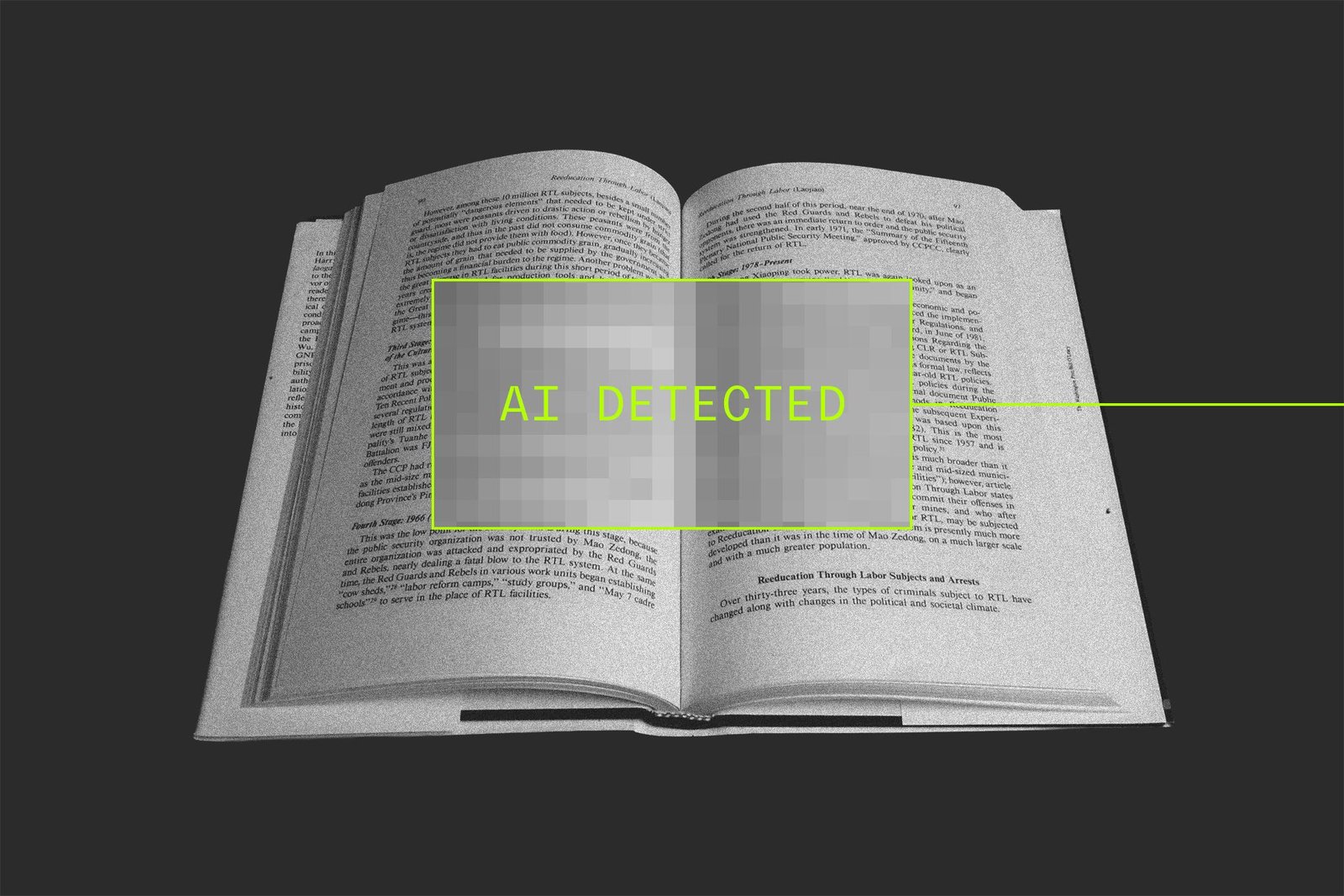
Now the hunt for copied content has turned into a war on AI-generated writing. Students adopted ChatGPT, Google Gemini, and Microsoft Copilot quickly. Teachers adopted so-called AI detectors just as fast. A survey from the Center for Democracy and Technology found that 43 percent of US teachers in grades six through twelve used AI detectors between 2024 and 2025. Some universities using Turnitin found the service switched on AI detection automatically when it launched in 2023.
The way these tools work is murkier than an old plagiarism check. Instead of matching text on the web, detectors like GPTZero, Pangram, and Turnitin’s own tool rely on their own AI models. They guess whether a piece of writing might not be human. That guess can be wrong in both directions.
The result is a new layer of suspicion in classrooms and newsrooms. A student who writes clearly may get flagged by mistake. A writer who leans on a grammar tool may suddenly look like a machine. As The Verge reports, the promise of these detectors is shaky, yet educators and publishers keep using them anyway.
The larger question is about trust. If a machine decides what counts as human, who does the writer answer to? Tools that promise certainty often deliver doubt instead. For now, the people grading papers and editing stories are caught in the middle.
We have tracked this shift closely. Read about Pangram’s $9 million round for AI content detection, and the wider classroom debate over AI adoption.
The Netherlands, for internationals
One email a week: the week's news for internationals in the Netherlands, new practical guides and what changed in the cities. No spam, unsubscribe any time.