Bill Gates has spent close to two decades, and a good chunk of his fortune, insisting that the future of nuclear power would look nothing like its past. TerraPower, the company he founded to prove it, is now finding out whether that conviction pays off in the one market that suddenly cannot get enough steady electricity: artificial intelligence.
The pitch to data center operators isn’t just that TerraPower can deliver clean power around the clock. Plenty of reactors do that. Its advantage is stranger and, for a computing industry with a spiky appetite, more useful. TerraPower’s plant can hold energy back and then surge when it’s needed most.
The trick is heat, not just power
TerraPower’s design, called Natrium, is a sodium-cooled fast reactor bolted to something conventional nuclear plants don’t have: a bank of molten salt that stores heat. In an ordinary reactor, the heat produced goes more or less straight to a turbine, which turns it into electricity at a fairly constant rate. Ramping that up and down is slow and inefficient, which is why nuclear has always been treated as steady baseload rather than a dial you can turn.
Natrium breaks that pattern. The reactor runs at a consistent clip, but instead of sending all its heat to the turbine at once, it can divert some into giant tanks of molten salt. That stored heat becomes a reserve. When demand climbs, the plant taps the reserve and pushes output well above its baseline for several hours before settling back down. TerraPower’s published specifications put the steady output at roughly 345 megawatts and the boosted peak at around 500 megawatts, a jump of nearly half again on top of the base load.
Think of it as a nuclear plant with a battery built into its plumbing, except the storage medium is heat rather than lithium. That flexibility is the “secret weapon” the reporting points to, and it changes what a reactor can be worth to a buyer.
Why data centers are the prize
Consider what an AI campus actually demands from the grid. Training runs and inference workloads consume electricity by the tens of megawatts, they run day and night, and their draw is anything but flat. A plant that can lift its output during a crunch and ease off when the load lightens is far more valuable to that kind of customer than one locked to a single number.
Hyperscalers have already gone shopping for nuclear power, signing deals to restart old plants and reserve capacity from reactors that don’t exist yet. Most of what’s on offer is conventional, meaning it delivers a fixed slab of electricity and leaves the customer to handle the peaks some other way. TerraPower is selling something a rival with a standard reactor can’t easily match. When two developers show up chasing the same data center contract, the one that can flex its output has a real edge at the negotiating table.
That’s the strategic argument, and it explains why a company founded on reactor physics keeps ending up in conversations about server racks.
Wyoming is the test
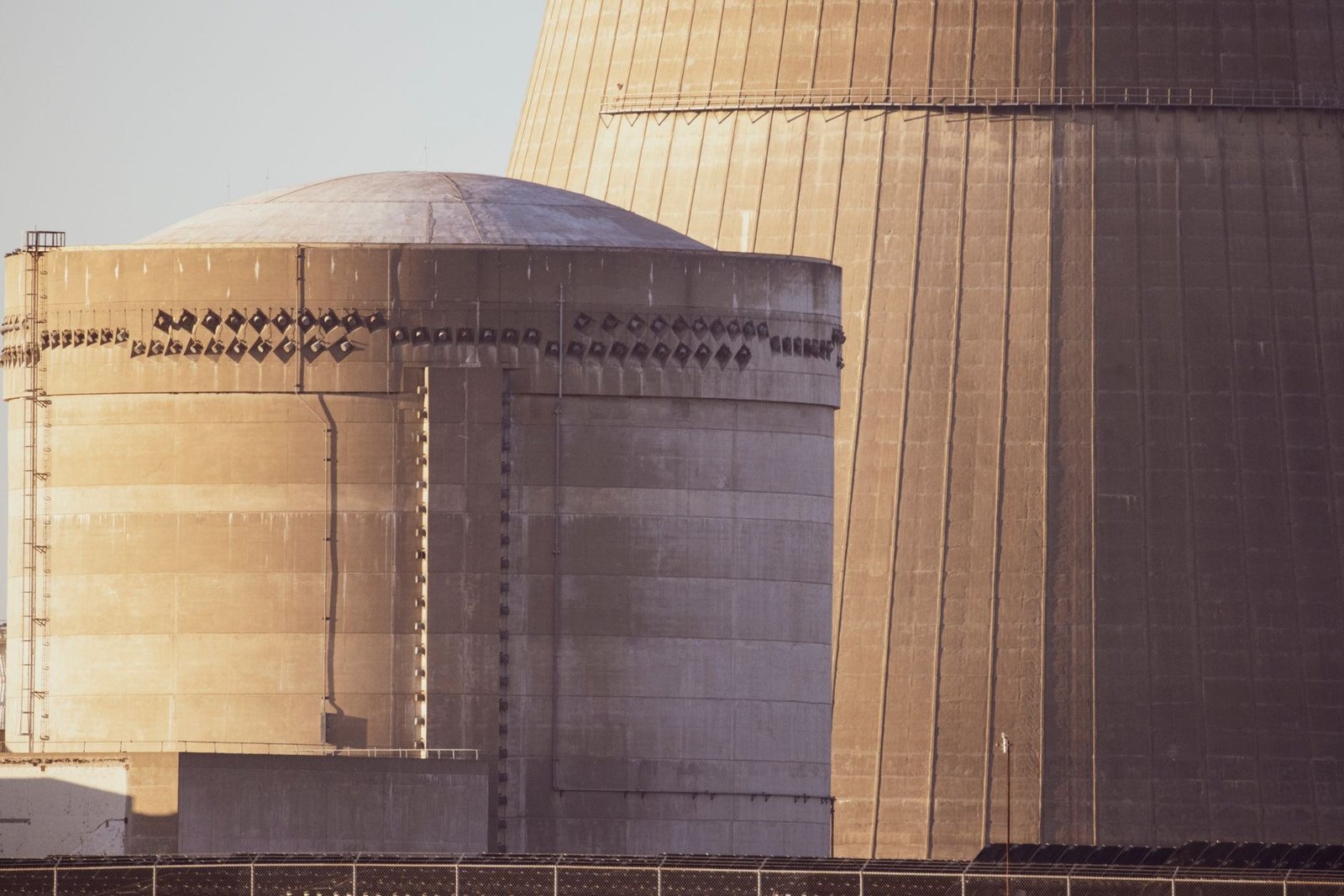
The theory has to survive contact with concrete and steel, and that reckoning is happening near Kemmerer, Wyoming, where TerraPower broke ground on the non-nuclear portions of its first plant in 2024. The site sits next to a retiring coal operation, which lets the project reuse workers, transmission lines, and a community that already knows how to run a power station. General Electric’s nuclear arm is a partner on the reactor itself.
None of this is cheap or fast. First-of-a-kind nuclear projects have a long history of running over budget and behind schedule, and TerraPower still needs its reactor design to clear federal regulators before the nuclear island can come online later this decade. The storage advantage only matters if the plant gets built at a price data center operators are willing to pay.
Gates spent years arguing that a smarter reactor could earn its place in a grid full of cheap solar and wind. He probably didn’t expect the buyer that finally validated the idea to be a warehouse full of AI chips. Whether TerraPower can pour concrete quickly enough to meet a demand curve that’s rising by the quarter is the question worth watching, and it’s the one no amount of clever engineering can answer on its own.
For more coverage of nuclear power and AI infrastructure, visit Mylistingo.
Source: Original Article
The Netherlands, for internationals
One email a week: the week's news for internationals in the Netherlands, new practical guides and what changed in the cities. No spam, unsubscribe any time.