The bottleneck was never the chip
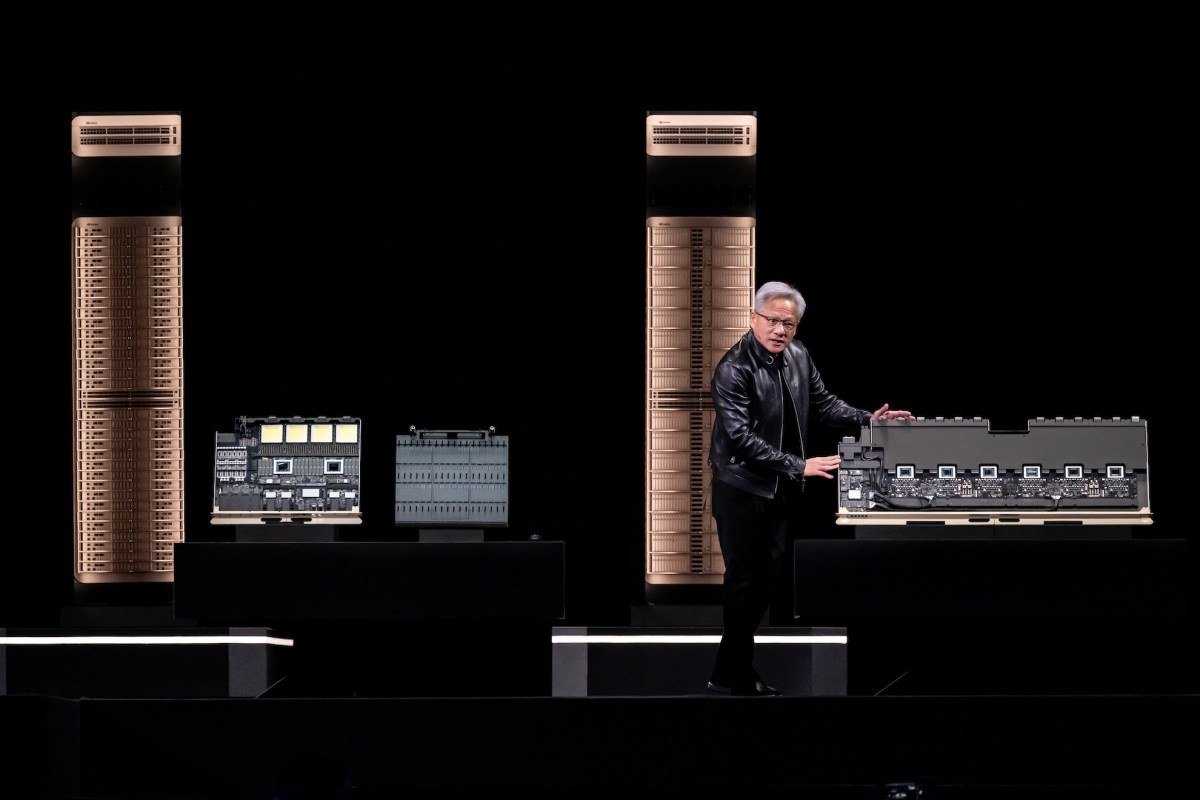
Nvidia spent a decade convincing the world that the graphics processing unit was the beating engine of artificial intelligence, and it worked. The company’s GPUs became the currency of the AI boom, so scarce that startups bragged about their allocation the way oil firms brag about reserves. Now Nvidia is quietly telling a different story. According to TechCrunch, the company’s real advantage is moving beyond the GPU itself, into the far less glamorous business of moving data around a data center without wasting a single cycle.
That shift matters more than it sounds. For years the assumption baked into AI infrastructure was simple: want more performance, buy more processors. Nvidia’s newest generation of data center systems complicates that math. The gains are coming from smarter traffic control, from the way thousands of chips talk to one another, rather than from cramming in more raw compute. When you are training a model across tens of thousands of accelerators, the time those chips spend waiting on data can dwarf the time they spend actually calculating. Fix the waiting, and you get more work out of silicon you already paid for.
Why the network became the product
Think about what a modern AI cluster actually is. It is not one enormous brain but a warehouse full of processors that have to behave like one. Every training run splits a model into pieces, scatters those pieces across the hardware, and then constantly reconciles the results. If the connective tissue between chips is slow or congested, the most expensive processors on Earth sit idle, blinking, waiting for their neighbors to catch up.
Nvidia’s answer, as TechCrunch frames it, is to treat that connective tissue as the product rather than an afterthought. Smarter traffic control means the system decides how information flows, which paths it takes, and how to avoid the digital equivalent of a highway pileup at rush hour. The efficiency comes from orchestration, not brute force. It is a subtle reframing of what a data center company sells, and it explains why Nvidia keeps talking about full systems instead of individual boards.
There is a competitive logic here too. Rivals can design a fast chip. Cloud providers are building their own silicon, and AMD keeps closing the gap on raw performance. What is harder to copy is an entire architecture where the processors, the switches, the software, and the interconnects are tuned to work as a single machine. If the advantage lives in the whole system rather than any one component, it becomes far stickier. A competitor selling you a faster GPU cannot easily sell you the coordination that makes a thousand of them useful.
Efficiency is the new performance
The timing is not accidental. AI infrastructure has run into hard physical limits that no marketing slide can wish away. Data centers consume staggering amounts of electricity, and the grid is not expanding fast enough to keep pace with the industry’s appetite. When you cannot simply add more power, the pressure moves to using the power you have more intelligently. Squeezing more useful computation out of the same energy budget stops being a nice engineering flourish and starts being the whole game.
This reframes how buyers should evaluate what they are getting. A GPU’s headline specifications tell you what a chip can do in isolation, in a benchmark, on a good day. They tell you very little about what a cluster of ten thousand of them will actually deliver once real workloads and real congestion enter the picture. Nvidia’s pitch is that the gap between those two numbers is where the money leaks out, and that closing it is worth more than another generational bump in peak throughput.
For everyone else building in this space, the lesson lands somewhere uncomfortable. Chasing the fastest processor may be optimizing the wrong variable. The companies that win the next phase could be the ones who master coordination, the boring plumbing that decides whether expensive hardware runs hot or runs half-empty.
What to watch next
Keep an eye on how the rest of the field responds. If Nvidia has genuinely relocated its moat from the chip to the system, expect competitors and hyperscalers to start talking a lot more about networking, interconnects, and efficiency, and a little less about teraflops. The vocabulary of the AI race is about to change, and vocabulary usually shifts right before the strategy does.
The deeper question is whether efficiency can keep the AI buildout ahead of its own energy problem. Smarter traffic control buys headroom, but it does not repeal physics. If demand keeps compounding, even a perfectly orchestrated data center eventually runs into the same wall as a wasteful one, just a few quarters later. That is the tension worth watching, and Nvidia has just told us where it thinks the fight will actually be fought.
For more coverage of AI infrastructure, visit Mylistingo.
Source: Original Article
The Netherlands, for internationals
One email a week: the week's news for internationals in the Netherlands, new practical guides and what changed in the cities. No spam, unsubscribe any time.