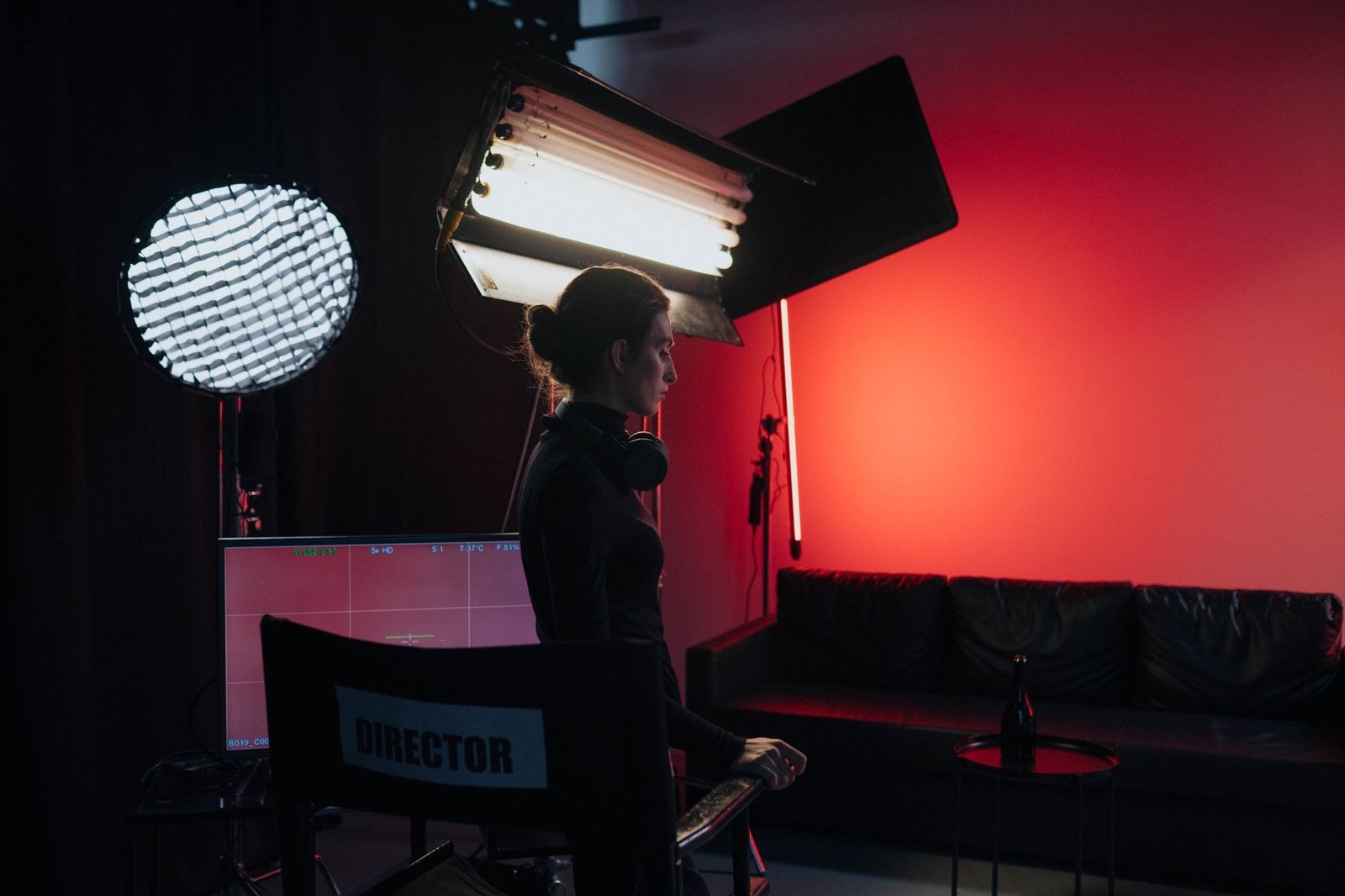
Senior figures in British advertising have warned that the industry’s rush to adopt artificial intelligence could deprive the country of its next generation of film and television directors, according to The Guardian. Commercials have long served as a training ground for directors such as Ridley Scott and Guy Ritchie, but automated production is now cutting costs and, critics say, cutting the chance to learn on set.
What happened
The Guardian reports that the advertising industry is racing to bring in AI technology. Agencies want to lower costs for their clients and avoid being pushed aside by big tech companies. That shift has raised fears of what the paper calls a “lost generation” of British directors who may never get the hands-on experience that shaped their predecessors.
The paper points to a long tradition. When Ridley Scott received a Bafta honour eight years ago for a career that includes Alien, Blade Runner, Gladiator and The Martian, he described making commercials as his “film school”. Guy Ritchie started out making music videos and commercials. Dougal Wilson, who directed Paddington in Peru, made several of John Lewis’s well-known Christmas adverts.
Luke Scott runs the group that includes Ridley Scott Associates, the production company his father co-founded in the 1960s. He told The Guardian: “100%, yes, I have fears.” He described much generative AI output as “a very mixed bag” and warned of “the monoculturalisation of everything”. He added: “The creative business is something you learn by doing. It is in the doing that is most valuable.”
Last month, the global advertising group WPP officially opened its flagship production facility in a converted warehouse in east London. According to The Guardian, it is the first site in an international rollout of the £600m WPP Production business, which aims to bring “world-class creativity and advanced AI capabilities under one roof”.
WPP’s chief executive, Cindy Rose, a former Microsoft executive, said AI is ushering in a “golden age of marketing”. She said: “We no longer need to spend our clients’ budgets on expensive shoots abroad. We can do it in the studio [and] completely change the economics of our content supply chain.”
One industry source told The Guardian that some adverts can be made up to 60% cheaper. That has led some clients to adopt AI-led adverts to “show finance directors they are making savings”. The same source said the results often look “cookie cutter” and suffer from “erosion from the diminished role of a director”. The source also asked whether Top Gun would have happened in an AI-first industry. Its producers, Don Simpson and Jerry Bruckheimer, chose Tony Scott, Ridley Scott’s late brother, as director after seeing his TV advert of a Saab car racing a fighter jet.
Richard Glasson, chief executive of WPP Production, took a different view. He said new technologies have always been embraced by the industry and that AI is no different. Clients, he argued, now need “a vastly greater amount of content” for many more digital channels. “We can place a brand anywhere in the world in a single afternoon,” he said.
Why it matters if you live in United Kingdom
For anyone working in, or hoping to join, the UK’s creative industries, the story raises a practical question about career routes. The Guardian describes advertising as a long-standing “breeding ground” for British film and TV talent. If fewer adverts involve location shoots and full crews, there may be fewer chances for new directors to build experience the way earlier generations did.
Glasson disputes the idea that jobs are disappearing. “The elephant in the room is whether AI is coming for jobs, in production we are seeing the opposite,” he told the paper. He described people in production as “infinitely adaptable and curious about tech”. Workers weighing a move into the sector will hear both arguments, and the source material does not settle which is right.
For viewers and consumers, the change is already visible. WPP’s London launch featured a Ford Capri filmed driving through an AI-generated Paris, which shows the kind of studio-made settings that may replace foreign shoots. According to The Guardian’s industry source, some of this work looks uniform. Rose says it allows brands to deliver content “at the speed of culture”.
The facility itself is in east London, so the first site of WPP’s international rollout is based in the UK. That gives British production staff an early view of how the model works in practice.
What to watch next
WPP’s London studio is described as the first in an international rollout, so further sites are likely to follow. How quickly they open, and how much of WPP’s output moves to AI-led production, will show whether Rose’s “golden age” claim holds up.
Glasson insists that large, traditional campaigns will continue. “We still make Super Bowl ads that take nine months, football World Cup campaigns and ads with celebrities in exotic locales,” he said. Whether those projects remain a meaningful entry point for young directors is the core of the debate.
Luke Scott offered a longer view. “Maybe in 20 or 30 years the whole notion of the ad industry as we work now will be an [anachronistic] joke,” he said. His question, “What do you do with that lost generation?”, remains open for schools, studios and agencies in the UK.
Source: The Guardian
Sources
- The Guardian: Lost generation: the AI threat to Britain’s next great directors, accessed 11 October 2026
The UK, for internationals
One email a week: the week's news for internationals in the UK, new practical guides and what changed in the cities. No spam, unsubscribe any time.