



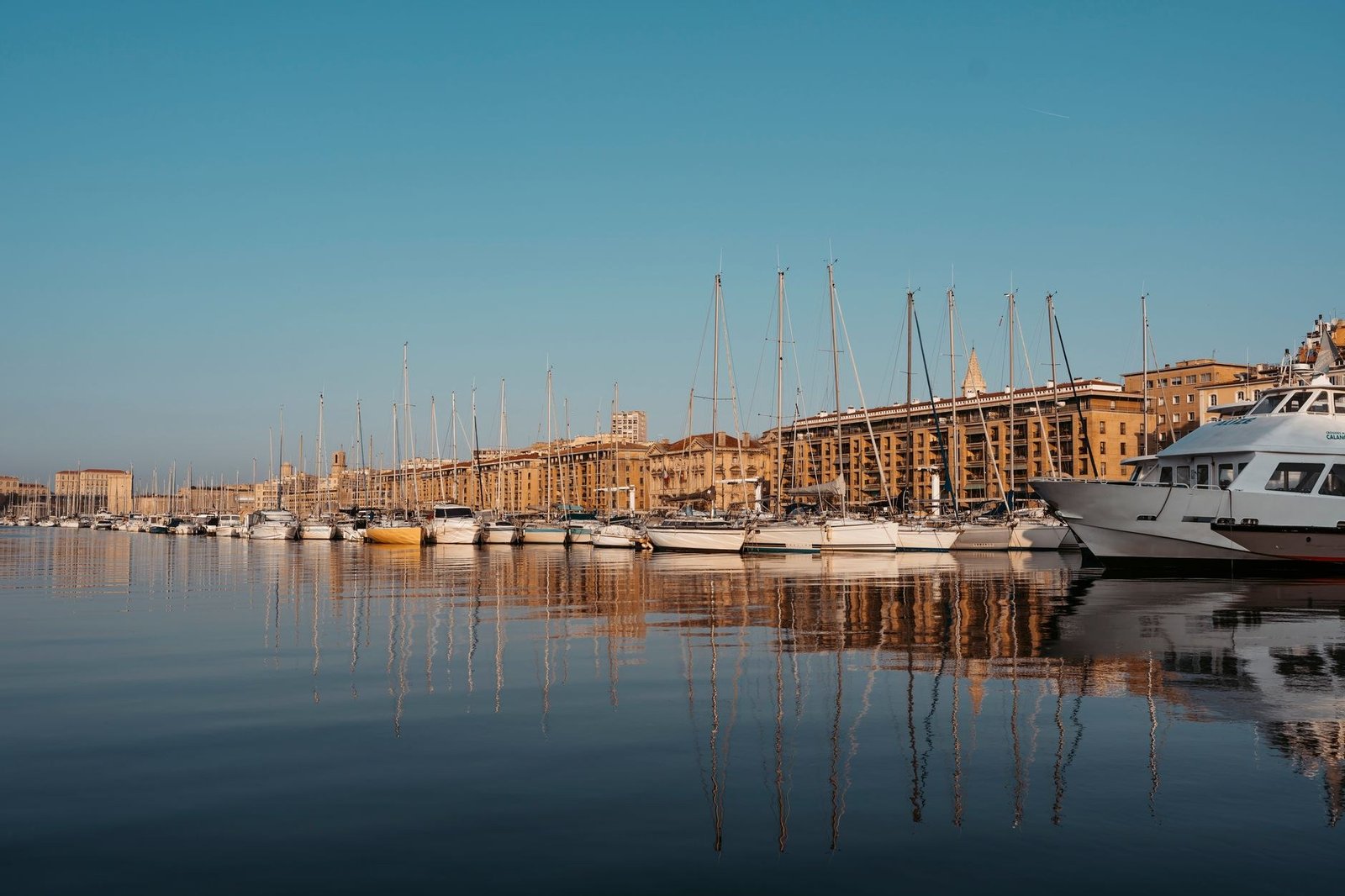
This guide is for people who have moved to Marseille from abroad, alone, as a couple or with children, and who want to start enjoying the city as well as living in it. It covers which official sources are worth following, how the Mucem works and where to begin around the Vieux-Port.
- Start with the official tourism site
- Free tours for residents
- The calendar and the Vé! newsletter
- The Vieux-Port and Fort Saint-Jean
- The Mucem: one museum, three locations
- FAQ
Start with the official tourism site
When you first arrive, it is tempting to rely on blogs and social media for ideas. A better first stop is Marseille Tourisme, the city’s official tourist office. The name suggests it is only for visitors, but a good part of what it offers is meant for the people who live here.
The site is available in English, French, Spanish, Italian, German, Chinese, Japanese and Korean, which helps if not everyone in your household reads French yet. It describes Marseille as a city with many sides from north to south: a seafront promenade, flower-lined streets and natural spaces. It also puts weight on the city’s history, its traditions and the recipes passed down from generation to generation. That is a useful way to think about your first year here. Instead of a list of sights to tick off, think of it as a set of local habits to learn.
From the homepage you can browse articles, the agenda (the events listing), themed lists and activities, and book activities online.
Free tours for residents
Most newcomers miss this part. Marseille Tourisme runs tours and walks throughout the year with a clear purpose: to help the people of Marseille get to know their local area better, appreciate its cultural and tourist attractions, and become ambassadors for the city.
The rules on the homepage are simple. The activities are free, except for special events. You register online. They are open to residents and visitors alike. If you have just moved, this is one of the easiest ways to explore a new neighbourhood with a guide, meet people and learn the stories behind the streets you walk every day.
The homepage does not list the individual walks, their languages, their dates or whether they suit children. Check each activity’s page before you book, especially if you plan to bring young children or need a tour in English.
The calendar and the Vé! newsletter
The tourist office keeps a calendar of events built around Marseille’s traditions, and it invites residents to share the highlights of the local year. For a newcomer, these events are often where you start to feel part of the place.
The simplest way to keep up is the Vé! newsletter. According to the tourism site, it brings tips, new products, the latest news and the monthly calendar, along with some unusual titbits. It goes out on the first Tuesday of every month, which makes it a handy prompt to plan your weekends. You can sign up from the homepage.
The homepage also shows an Instagram feed under #marseille. The posts give a sense of what locals photograph: the Vieux-Port, the Palais du Pharo, the Vallon des Auffes and the Parc national des Calanques (the national park covering the coastal coves). Use it for ideas, then check the official pages for practical details.
The Vieux-Port and Fort Saint-Jean
The Vieux-Port (Old Port) is where many people first get their bearings in Marseille, and it makes a natural starting point for your first weekend. The tourism homepage opens with a photograph of the sunset from Fort Saint-Jean, and that view says a lot about how the city sees itself: sea, old stone and evening light.
Fort Saint-Jean is also one of the Mucem’s three sites, so you can combine a walk around the port, a museum visit, a break at one of the museum’s food courts and the sunset in one afternoon. With children, this kind of outing works well because it mixes open air with a shorter stretch indoors.
The pages used for this guide do not give addresses or hours for the fort. You will find them on the Fort Saint-Jean hours and admission page of the Mucem site.
The Mucem: one museum, three locations
The Mucem is Marseille’s museum of Europe and the Mediterranean. Its site explains that it is the heir to the Musée d’Ethnographie du Trocadéro (a former ethnography museum) and the Musée National des Arts et Traditions Populaires (the former national museum of folk arts and traditions). Since 2005 it has focused on expanding its ethnographic collections from Europe and the Mediterranean. If you have moved here from another country, a museum about shared Mediterranean lives can feel personal.
The museum describes itself as one museum in three locations:
- J4
- Fort Saint-Jean
- The Conservation and Resource Centre
Each location has its own hours and admission page, so check the one you plan to visit. On the day the homepage was consulted, it showed the museum open from 10h to 18h. That was the listing for that day only, so do not assume it applies all year. The pages consulted do not give ticket prices. The Mucem site has the current details.
The museum also runs talks, performances and other events. When the homepage was consulted, its featured event was a two-day programme hosted by the writer, playwright, director and actress Alice Zeniter and her guests. It covered novels from 1980 to the present, the Casbah of Algiers in 1955 and present-day Afghanistan under Taliban control, with music by Isam Elias. Events like this one suit adults and older teenagers best. The pages consulted do not describe activities for children, so check the Mucem agenda before planning a family visit.
For a break, there are four food courts across J4 and Fort Saint-Jean, and a bookshop-boutique in two separate spaces, stocked with the booksellers’ own selections and favourites.
FAQ
Are the tourist office’s free tours open to residents?
Yes. Marseille Tourisme says its tours and walks are designed to help the people of Marseille get to know their area, and they are open to both residents and visitors. They are free except for special events, and you register online through the tourism site.
What are the Mucem’s opening hours and prices?
Each of the three sites (J4, Fort Saint-Jean and the Conservation and Resource Centre) has its own hours and admission page. The homepage showed 10h to 18h on the day it was consulted, but hours can change and the pages used here do not give prices, so check the Mucem site before you go.
Is the Mucem a good outing with children?
It can be, especially if you pair a short visit with time outdoors at Fort Saint-Jean and a stop at one of the food courts. Some events, such as talks on history and politics, are aimed more at adults. The pages consulted do not list family activities, so check the agenda first.
How can I keep up with events in Marseille?
Sign up for Marseille Tourisme’s Vé! newsletter. It arrives on the first Tuesday of every month with the monthly calendar, tips and news. For everything else, use the agenda on the tourism site and the Mucem’s own event pages.
Official sources: marseille-tourisme.com · mucem.org
Last checked: 31 October 2026 against the pages linked above. Prices, opening hours and programmes change; the venue’s own site always has the current details.
Sources
- marseille-tourisme.com: Official website of the Marseille Tourist Office, accessed 31 October 2026
- mucem.org: Home – Mucem, accessed 31 October 2026
Marseille, for internationals
One email a week: what changed for internationals in Marseille, the week's news from France, and one guide worth reading. No spam, unsubscribe any time.






Comments 2