This guide is for international families who have just moved to France with a child of secondary school age. After reading it, you will know which offices are involved, how the language and skills assessment works, and how a child goes from that assessment into a collège (lower secondary school) or lycée (upper secondary school).
- Who does what
- The assessment at the Casnav
- Registering at the assigned school
- Classes for children learning French
- Older pupils, the DELF and families returning to France
- FAQ
Who does what
For a family settling in France for the first time, the official guidance on schooling at collège or lycée for a pupil arriving from abroad sets out a fixed order. The child is assessed first, then placed in an ordinary or adapted class according to age and knowledge. Three bodies are involved. The Casnav (the regional centre for the schooling of newly arrived children who do not speak French) runs the assessment. The académie (the regional education authority) decides which school the child attends. The school then completes the registration.
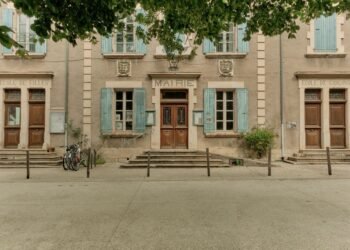
Many newcomers expect to start at the mairie (town hall). The service-public.fr page on secondary school does not describe a town hall step: registration takes place directly at the school named by the académie. Primary school, meaning école maternelle (nursery school) or école élémentaire (primary school), has its own service-public.fr page and is not covered in this guide. Questions about your right to stay in France, such as a titre de séjour (residence permit), go to the prefecture or a migration advice service, not the school.
The assessment at the Casnav
On arrival in France, the first contact is the Casnav that covers your main residence. There, the child meets a psychologue de l’Éducation nationale (a state education psychologist), who reviews their school history and organises an educational assessment.
The results go to the académie’s services, which then assign the child to a school. The page names two factors in that decision: the child’s academic skills, and the places available in a suitable school near your home. It gives no timescale for the assessment or the assignment. The académie decides.
Registering at the assigned school
Once the académie has made its decision, the child must be registered at the collège or lycée it has named. The official page makes two points about this step:
- The child must be present in France at the time of registration.
- The documents required vary from one rectorat (the académie’s administrative office) to another, and the page says to check with the assigned school before registering.
The page gives no national list of documents for a first arrival. The assigned school says what is needed.
When the family arrives, the school explains the French education system and the rights and duties of parents and children. It does this with a bilingual welcome booklet. The languages include French with English, Arabic, Chinese, Portuguese, Romani, Romanian, Russian, Tamil and Turkish.
Classes for children learning French
What happens next depends on whether the child was already in school in their country of origin.
A child who was already in school
The child joins an ordinary class that matches their school level. The other pupils in that class may not be the same age, but in principle the age gap cannot be more than two years. A child who needs intensive French can join a UPE2A (a teaching unit for newly arrived pupils who do not speak French). They then follow ordinary class teaching on an individual timetable, and their total school hours must match those of other pupils at the same level. If pupils cannot be grouped into a UPE2A, specific French lessons are set up instead.
A child who had little or no schooling
The child attends a UPE2A full time to learn French and to acquire the basic knowledge of the cycle des approfondissements (the final stage of French primary school). They can still attend ordinary lessons where written French is not essential, such as music, sport and visual arts. The aim is for the child to join all ordinary classes as quickly as possible, most often after one year. To that end they are assessed regularly, without waiting for the end of the school year. The oldest pupils, and those with the least previous schooling, get help and guidance in building a suitable training plan.
Older pupils, the DELF and families returning to France
Over 16
A young person over 16 no longer has to attend school. According to the page, they can still be accepted at a lycée professionnel (vocational upper secondary school) or a lycée général et technologique (general and technological upper secondary school), with an individual career plan.
Certifying their French
Pupils aged 12 to 17 whose mother tongue is not French can sit the DELF scolaire. This is an official education ministry certificate in French as a foreign language. It is issued by France Éducation international and recognised internationally. France Éducation international can be reached on +33 (0)1 45 07 60 00, or by post at 1, avenue Léon-Journault, 92318 Sèvres cedex.
Returning to France
Families coming back to France follow different rules depending on how the child was schooled abroad. After a French school abroad or the Cned (the state distance learning centre), registration works the same way as after a move within France. The family first obtains a certificat de radiation, also called an exeat (a certificate confirming the child has left their previous school). They then take it to the collège or lycée with these documents:
- the décision d’orientation (the official decision on the pupil’s next class)
- the termly reports from the past year
- certificates of compulsory vaccinations
- a parent information form
- proof of address
The school may ask for more. Decisions made by a French school abroad or the Cned apply in state schools and in private schools sous contrat (under contract with the state).
In other cases, the page says the child must pass an exam that assesses their skills. The contact is the local catchment collège or lycée, or the DSDEN (the departmental education office) for a school outside the catchment area. The Dasen (the departmental director of education) sets the exam content and then decides the child’s class and school.
FAQ
Does a child have to speak French before starting school?
No. According to the official page, a child arriving for the first time is assessed through the Casnav and then placed in an ordinary or adapted class. A child who needs intensive French can join a UPE2A. They attend it alongside ordinary classes or full time, depending on how much schooling they had before.
Can a child be placed in a class with younger pupils?
Yes. A child who was already in school joins a class that matches their level, and the other pupils may be a different age. In principle, the age gap cannot be more than two years.
Which documents are needed to register?
For a first arrival, the page says the documents vary between rectorats and that the assigned school should be asked beforehand. For a return to France, it lists items including vaccination certificates, a parent information form and proof of address, and the school may ask for others.
How long does a child stay in a UPE2A?
The page sets no fixed limit. For a child with little or no prior schooling, the aim is to join all ordinary classes as quickly as possible, most often after one year, with regular assessments along the way.
Sources: service-public.fr
Last verified: 20 October 2026 against the pages linked above. Rules and fees change; the responsible authority always has the final word.
This is general information, not legal or immigration advice. For your own situation, ask the prefecture of your département, a recognised migration advice service or a lawyer (avocat).
Sources
- service-public.fr: Scolarisation au collège ou lycée d'un élève venant de l'étranger, accessed 20 October 2026
France, for internationals
One email a week: the week's news for internationals in France, new practical guides and what changed in the cities. No spam, unsubscribe any time.