Earlier this year, an international research team published results for Aurora — an AI model trained on more than a million hours of atmospheric, oceanic, and weather data. In benchmark testing, it delivered faster, more accurate forecasts for air quality, ocean wave heights, and extreme weather events than the best physics-based prediction systems currently in operational use. A paper in Nature Climate Change published around the same time described AI-based climate modelling as entering a new phase: no longer a promising supplement to traditional approaches but a competitive alternative with distinct advantages.
Why weather prediction is where AI is winning first
Weather and climate forecasting has always been a computational problem. The atmosphere is a physical system governed by well-understood equations, but simulating it at useful resolution requires solving those equations millions of times across a global grid. The largest operational forecast models run on supercomputers costing hundreds of millions of dollars and still take hours to produce a forecast. AI models, once trained, can generate predictions at orders-of-magnitude lower computational cost — which means faster updates, more ensemble runs, and ultimately better coverage of uncertainty.
The accuracy gains are real. Current AI weather models are consistently outperforming European Centre for Medium-Range Weather Forecasts benchmarks on several metrics, particularly for medium-range forecasts in the three-to-ten-day window that matters most for practical decision-making. For extreme weather — hurricanes, severe flooding, heatwaves — even marginal improvements in forecast accuracy translate directly into more effective early warning systems and better-timed evacuations.
Energy systems and emissions modelling
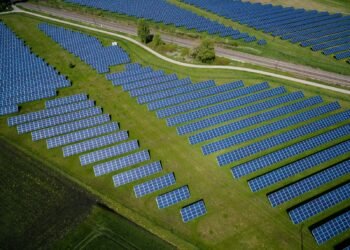
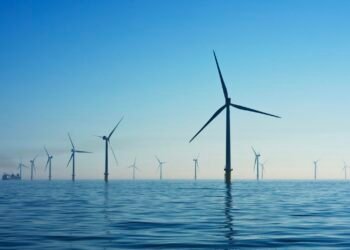
Google published research earlier this year on AI applications across climate infrastructure, with particularly detailed results in renewable energy forecasting. Solar radiation modelling, wind power output prediction, and hybrid energy system optimisation are areas where AI is producing measurable improvements in grid management. A wind farm operator who can predict output with greater accuracy twenty-four hours in advance can reduce the backup generation capacity needed to cover forecasting errors — which in practice means less fossil fuel kept on standby.
Urban heat modelling and power load prediction are closely related applications. Cities account for roughly 70 percent of global energy-related emissions, and AI systems trained on historical temperature, energy use, and land-use data are producing urban climate forecasts accurate enough to inform infrastructure planning decisions — which buildings to retrofit, where to plant trees, how to route cooling systems.
Foundation models for climate decision-making
Researchers have described what they’re calling climate foundation models — large AI systems trained across multiple climate risks and societal response datasets to support integrated decision-making. The ambition is a system that can model the interactions between agricultural drought risk, migration pressure, energy demand, and insurance exposure in a single analytical framework rather than requiring separate specialist models for each.
An AI analysis published in April warned that Earth may be heading toward climate trajectories that existing IPCC models didn’t predict, based on non-linear feedback loops that are difficult to capture in traditional frameworks. Whether that finding holds up to broader scrutiny is still being evaluated, but it points to a broader possibility: that AI-based climate modelling will revise upward the uncertainty ranges in current projections.
The energy problem
The clearest tension in AI’s relationship with climate research is energy use. Training large AI models consumes significant electricity, and the rapid expansion of AI compute infrastructure is adding real load to power grids. Research published in early 2026 found that AI companies are among the largest new customers for clean energy procurement — which is genuinely accelerating renewable buildout — but the net energy effect of AI expansion remains contested. The tools being built to study climate change are themselves contributing to the problem they’re studying. That tension won’t resolve quickly. For more coverage of AI and climate, visit Mylistingo.