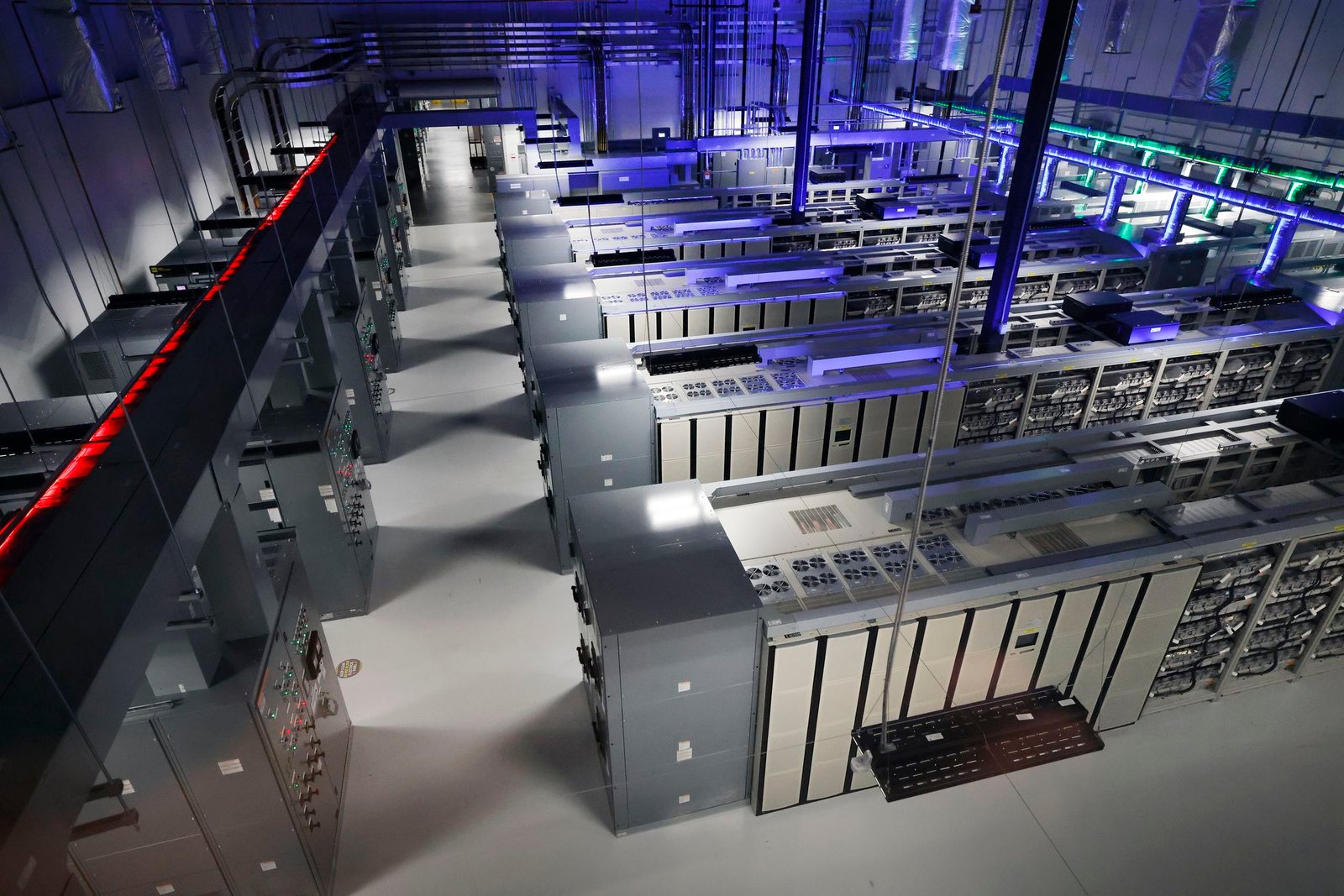
A new report from the United Nations Environment Programme, published in May 2026, has put a number on something the tech industry has been reluctant to quantify: the environmental cost of its AI ambitions. The findings are striking, and the debate they have ignited is reshaping how technology companies talk about sustainability.
The Consumption Figures
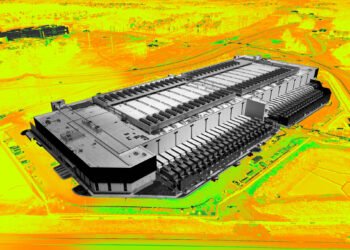
The UNEP report projects that data centres globally could consume up to 945 terawatt-hours of electricity annually by 2030 — roughly equivalent to Japan’s entire current electricity consumption. AI workloads, particularly the training and inference operations that underpin large language models and the image generation tools now embedded in hundreds of consumer products, are the fastest-growing component of that demand.
Water consumption tells an equally sobering story. The cooling systems that keep data centre hardware within operating temperature require enormous quantities of water, either directly in evaporative cooling towers or indirectly in the power generation process. The UNEP analysis estimates that data centre water consumption by 2030 could equal the needs of 1.3 billion people for domestic use. In regions already experiencing water stress — including parts of the US Southwest, Northern Africa, and Southern Europe — new data centre developments are drawing growing opposition from local authorities and communities.
Where the Energy Comes From
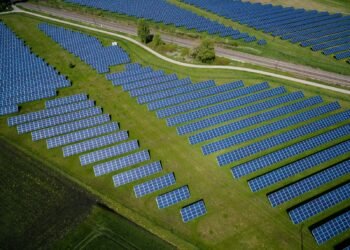
The energy source matters as much as the volume. A data centre running on renewable power has a fundamentally different climate impact than one drawing from a coal-heavy grid. The picture here is mixed. The major cloud providers — Microsoft, Google, Amazon, and Meta — have all made commitments to run on 100 percent renewable energy, though the definitions vary and the timelines extend to 2030 or beyond. In practice, the rapid expansion of data centre capacity is outpacing the availability of renewable power in many markets.
Microsoft’s decision to restart a nuclear reactor at Three Mile Island in Pennsylvania — announced in 2024 and now operational — is one high-profile example of tech companies seeking baseload zero-carbon power that renewables alone cannot currently provide. Google has signed agreements with multiple next-generation nuclear developers, including those working on small modular reactor technology. The logic is straightforward: AI requires reliable, large-scale, carbon-free power, and the existing renewable grid cannot guarantee all three characteristics simultaneously.
AI as Climate Tool
The UNEP report takes care to present both sides of the ledger. The same AI systems consuming vast energy are also being deployed to address climate challenges at a scale that was not previously possible. Climate tech investment reached $40.5 billion globally in 2025, and AI is embedded in an expanding share of that activity.
In materials science, AI is accelerating the discovery of new compounds for battery storage and solar cells. DeepMind’s GNoME system has identified millions of potentially stable new crystal structures, a research task that previously required years of laboratory work. In climate modelling, machine learning has dramatically improved the resolution and accuracy of long-range forecasts, enabling better planning for extreme weather events. In agriculture, AI-powered precision irrigation systems are reducing water use by 20 to 40 percent in commercial deployments across drought-prone regions.
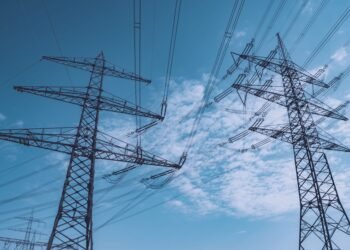
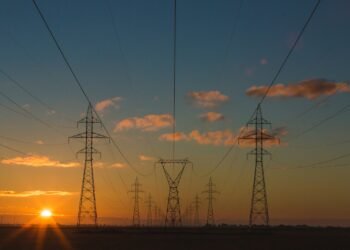
The energy grid itself is an active target for AI optimisation. Systems that can predict demand fluctuations, balance supply across distributed generation sources, and route power efficiently can reduce transmission losses and allow a higher share of variable renewable generation to be integrated without destabilising the grid. The International Energy Agency estimates that AI-enabled grid optimisation could reduce global electricity system costs by $270 billion annually by 2030.
The Efficiency Trajectory
Technology companies are also pointing to efficiency improvements that are likely to reduce the per-query energy cost of AI over time. Inference — running a trained model to generate a response — has become dramatically more efficient over the past three years, driven by better model architectures, hardware specialised for AI workloads, and software optimisation. A query that required a specific amount of compute in 2022 may require a tenth of that today. But the aggregate demand keeps rising as AI is deployed in more applications and by more users — a dynamic the UNEP report describes as a “rebound effect.”
The honest answer from the technology sector is that the efficiency gains are real but the growth in usage is faster. The net environmental footprint of AI is rising, even as the footprint per unit of output falls.
Pressure on the Industry
The UNEP report has given concrete figures to campaigners and regulators who have been pressing for greater transparency about AI’s environmental costs. The EU’s AI Act includes energy consumption reporting requirements for the largest AI systems. Several US states are considering similar disclosure rules. Investors are asking questions in earnings calls that were not on the agenda two years ago.
The industry’s response will be watched closely. The companies best positioned are those that can demonstrate they are pursuing efficiency improvements seriously, investing in zero-carbon power, and integrating their climate impact into their public reporting — rather than treating it as a risk to be managed quietly.
Explore more AI coverage across technology, climate, and industry at Mylistingo.
The Netherlands, for internationals
One email a week: the week's news for internationals in the Netherlands, new practical guides and what changed in the cities. No spam, unsubscribe any time.