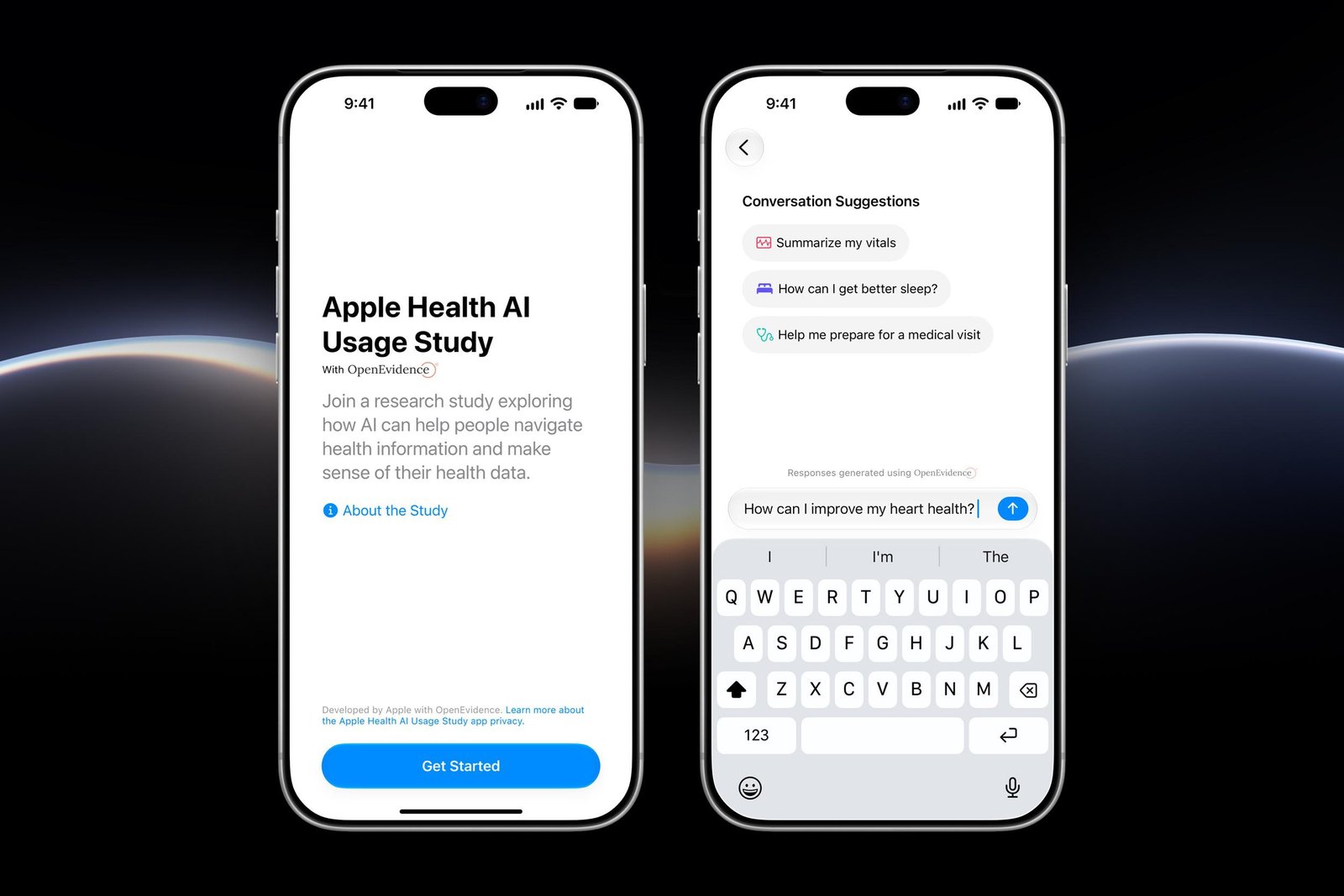
Apple started enrolling participants today for a research study on conversational AI health tools. The Apple Health AI Usage Study runs with OpenEvidence, a clinical AI platform used by doctors. OpenEvidence builds answers from peer-reviewed medical sources, including The New England Journal of Medicine.
The company wants up to 200,000 people. Enrollment opened this morning through a new iOS app. Participants must be 21 or older and live in the United States. An iPhone 15 Pro running iOS 26 or later is also required.
Apple says the app does not use Apple Intelligence. It relies on typed questions, with dictation available through the standard iOS keyboard. There is no Siri integration and no Apple Intelligence layer. That is a notable gap for a company selling paid Apple Intelligence usage packs on the same devices.
That detail matters. Apple has spent two years selling Apple Intelligence as the reason to upgrade. This study deliberately sits outside that system. The company is testing whether grounded, citation-backed answers help people, not whether a branded assistant sounds confident.
Participants rate every answer on accuracy, detail, and relevance. They can also share HealthKit data during enrollment. Activity, sleep, and clinical lab results would then give answers more personal context.
Apple says the collected data will not train AI models. The stated goal is design feedback, not model training. Sumbul Desai, Apple’s vice president of Health and Fitness, framed the work as a scientific question rather than a product launch. She said responsible innovation starts with clinical grounding and scientific rigor.
The timing is awkward in a useful way. Regulators in Europe and the United States are still writing rules for medical AI. A 200,000-person dataset on how people read and judge AI health answers would be valuable to any of them. Apple gets a defensible research record before it ships anything consumer-facing.
OpenEvidence is the interesting partner choice. The platform is built for clinicians, and its answers link to journals rather than web pages. Pairing that with a consumer app tests whether the citation style survives outside a hospital.
Some questions remain open. Apple has not said how long the study runs or when results will publish. The app’s answers are not a diagnosis, and participants are not patients in a clinical trial. How Apple communicates that line will decide whether the study builds trust or confusion.
For now the study is US-only, which leaves European iPhone owners out. That gap is likely temporary. If the results hold up, a wider rollout would follow.
Source: The Verge — Apple’s new study looks to improve the effectiveness of AI health tools
The Netherlands, for internationals
One email a week: the week's news for internationals in the Netherlands, new practical guides and what changed in the cities. No spam, unsubscribe any time.