The Backbone of the AI Boom
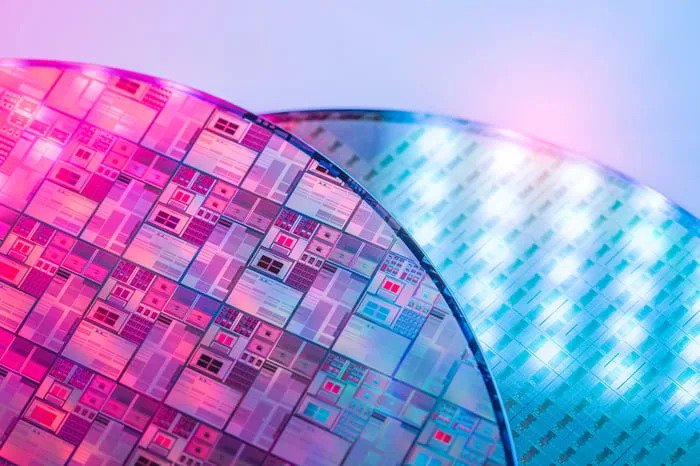
Based in Veldhoven, Netherlands, ASML remains the single most important company in the global semiconductor supply chain that most consumers have never heard of. Its extreme ultraviolet (EUV) lithography machines — each costing upwards of $400 million — are the only tools capable of manufacturing the most advanced chips powering everything from iPhone processors to NVIDIA’s H200 AI accelerators.
In May 2026, ASML reported that its order backlog had swelled to over €45 billion, driven almost entirely by demand from AI chip manufacturers. Taiwan’s TSMC, South Korea’s Samsung, and Intel in the United States are all competing for limited EUV machine slots, with delivery lead times now stretching into 2028.
High-NA EUV: The Next Leap
ASML’s next-generation High-NA EUV platform — capable of printing features down to 8 nanometres — began commercial shipments in late 2025. The first systems went to Intel’s Oregon facility, with TSMC receiving its initial unit in early 2026. Each High-NA machine costs approximately €380 million and stands taller than a double-decker bus.
“We are entering an era where chip complexity doubles every two years rather than transistor density alone,” ASML CEO Christophe Fouquet told investors at the company’s 2026 annual meeting. “AI is the primary driver, but the list of applications demanding leading-edge logic keeps growing.”
Export Controls and Geopolitical Headwinds
The Netherlands-based company finds itself at the centre of intensifying US-China technology competition. The Dutch government, in coordination with Washington, has progressively tightened export restrictions on ASML’s most advanced tools. Starting January 2026, a new licensing framework requires Dutch government approval for servicing existing EUV machines installed in Chinese fabrication plants.
Analysts at Bloomberg Intelligence estimate that the restrictions could affect roughly 15% of ASML’s service revenue, though the company’s overwhelming dependence on non-Chinese customers — TSMC alone accounts for nearly 40% of sales — cushions the blow.
The Hague’s Role in Semiconductor Diplomacy
The Dutch government, headquartered in The Hague, has become an unlikely hub for semiconductor diplomacy. Trade ministers from Japan, South Korea, and the United States have made repeated visits to the Binnenhof throughout 2025 and 2026, coordinating export control policies that shape the global chip industry.
For the Netherlands — a country of just 18 million people — ASML represents an outsized source of both economic value and geopolitical influence that shows no sign of diminishing as the AI arms race accelerates.
The Netherlands, for internationals
One email a week: the week's news for internationals in the Netherlands, new practical guides and what changed in the cities. No spam, unsubscribe any time.