Record-Breaking Temperatures Grip the Continent
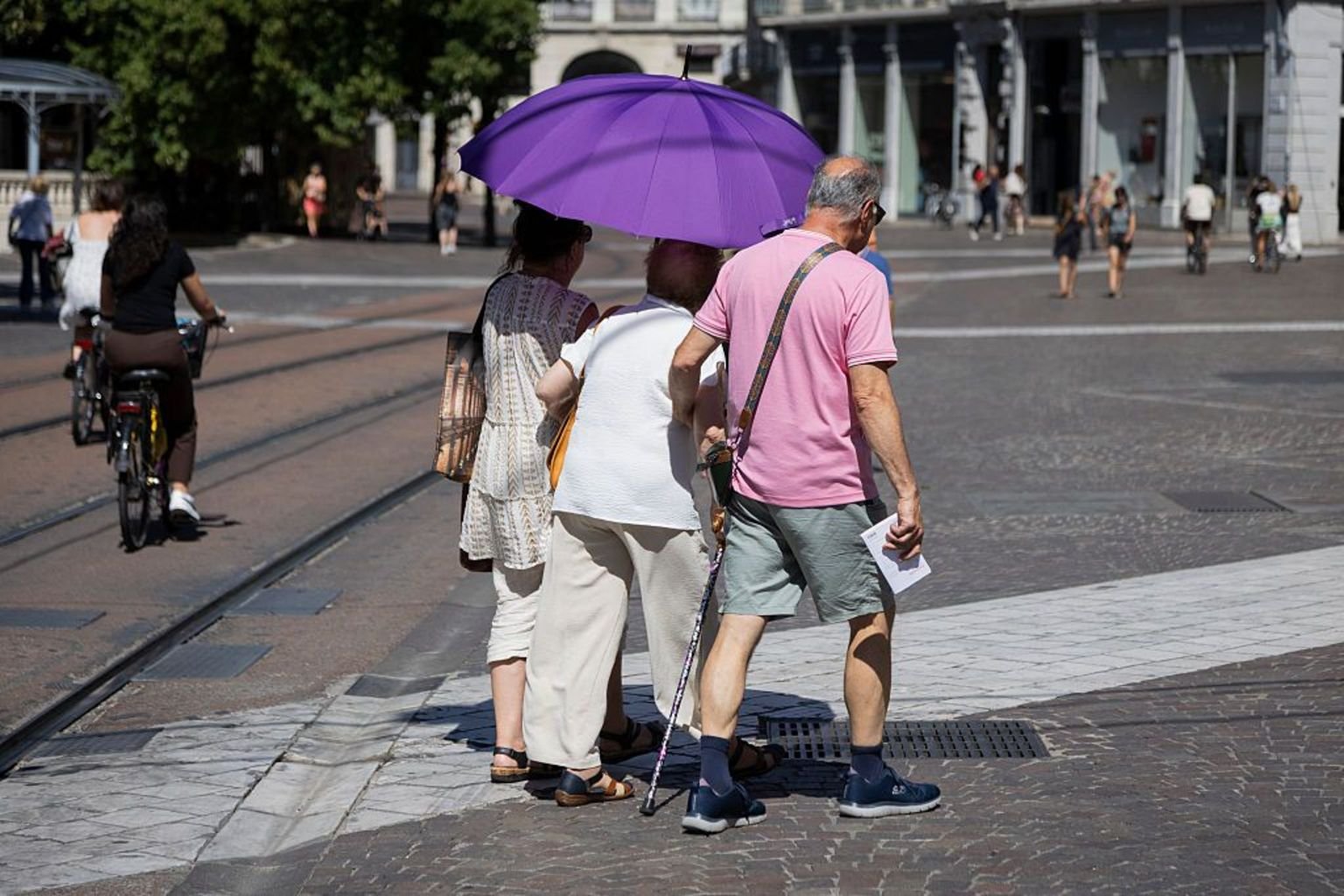
Europe is in the grip of one of the most severe heatwaves in recorded history, with temperatures exceeding 45°C (113°F) in parts of Spain, France, and Italy during the last week of June and first days of July 2026. The extreme weather has led to a devastating public health crisis, with France alone recording 2,025 excess deaths at the peak of the heatwave, according to the country’s public health agency, Santé Publique France. Across the continent, the death toll is expected to rise significantly as data from other nations becomes available.
Meteorologists are describing the event as unprecedented in both its intensity and duration. Rome recorded 43°C on three consecutive days, breaking a record that had stood since 2003. Barcelona hit 44.1°C, the highest temperature ever recorded in a major Spanish coastal city. In southern France, the city of Nîmes reached 46°C, tying the all-time French heat record set during the infamous 2019 heatwave. What makes this event particularly dangerous, public health officials warn, is that nighttime temperatures have not dropped below 28°C in many urban areas, depriving vulnerable populations of the chance to recover from daytime heat exposure.
Public Health Emergency: Vulnerable Communities at Risk
The social impact of the heatwave has been profound and unevenly distributed. Elderly residents, particularly those living alone in urban “heat island” zones, have been the most severely affected. In Paris, where many apartments lack air conditioning, authorities opened 1,200 cooling centers and extended public pool hours, but the city’s emergency services were overwhelmed by the volume of heat-related calls. The situation was even more dire in lower-income neighborhoods, where residents could not afford to run fans or relocate to cooler areas.
“This is a social justice crisis as much as a climate crisis,” said Dr. Elena Marchetti, a public health researcher at the University of Bologna. “We’re seeing that mortality rates in poorer districts are three to four times higher than in affluent areas during heatwaves. The difference comes down to access to air conditioning, the quality of housing, and the ability to take time off work.”
Children and outdoor workers have also faced significant risks. Several European countries activated emergency workplace safety protocols, mandating the suspension of outdoor labor during peak heat hours. In Spain, construction workers were sent home by noon for four consecutive days. In Italy, agricultural workers in the Po Valley — a region already grappling with drought — were advised to work only during early morning hours. The economic cost of these disruptions is still being calculated, but early estimates suggest losses running into the billions of euros across the continent.
Infrastructure Strain and Environmental Consequences
The heatwave has placed enormous strain on Europe’s infrastructure. Rail networks across France, Germany, and Italy imposed speed restrictions to prevent tracks from buckling, causing widespread delays and cancellations. In the Netherlands, where rail infrastructure is particularly vulnerable to heat, NS (Dutch Railways) reduced speeds on several key routes by 40%, affecting travel for hundreds of thousands of commuters. The energy grid has also been under severe pressure, with demand for electricity soaring as air conditioning usage reached record levels.
Wildfires have compounded the crisis. In Greece, a massive blaze on the island of Evia consumed over 15,000 hectares of forest and forced the evacuation of six coastal villages. Firefighting aircraft from the European Union’s Civil Protection Mechanism were deployed, but high winds hampered containment efforts. In Portugal, where the government had invested heavily in fire prevention infrastructure following the devastating 2017 fires, the new systems helped limit the spread of blazes, but firefighters still struggled to contain multiple simultaneous outbreaks.
Climate Change and the Path Forward
Climate scientists are unequivocal about the role of global warming in amplifying extreme heat events. A rapid attribution study conducted by the World Weather Attribution network found that the July 2026 heatwave was made at least five times more likely by human-caused climate change. “What we’re seeing is exactly what climate models have been projecting for decades,” said Dr. Friederike Otto, the network’s co-lead. “Every fraction of a degree of warming makes extreme heat events more intense and more frequent. This is not a future scenario — it is our present reality.”
European governments are racing to adapt. Spain announced a €2 billion heat resilience package that includes mandatory green roofs on new buildings, an urban tree-planting program, and subsidies for air conditioning in low-income households. France’s parliament is debating the “Loi Canicule II,” which would require all new residential buildings to be designed as “passive cooling” structures by 2030. The European Commission has proposed a continent-wide heat health warning system modeled after successful programs in the Netherlands and the United Kingdom.
The Netherlands’ climate tech startups are emerging as key players in the adaptation effort, developing everything from heat-reflective building materials to AI-powered early warning systems. Several Dutch startups have received EU grants to scale their solutions across southern European markets where the need is most acute.
For the millions of Europeans now living through their second or third “once-in-a-century” heatwave in as many decades, the message is clear: adaptation is no longer optional. The heatwave of July 2026 will be studied by policymakers, urban planners, and public health officials for years to come, serving as both a warning and a catalyst for change.
The Netherlands, for internationals
One email a week: the week's news for internationals in the Netherlands, new practical guides and what changed in the cities. No spam, unsubscribe any time.