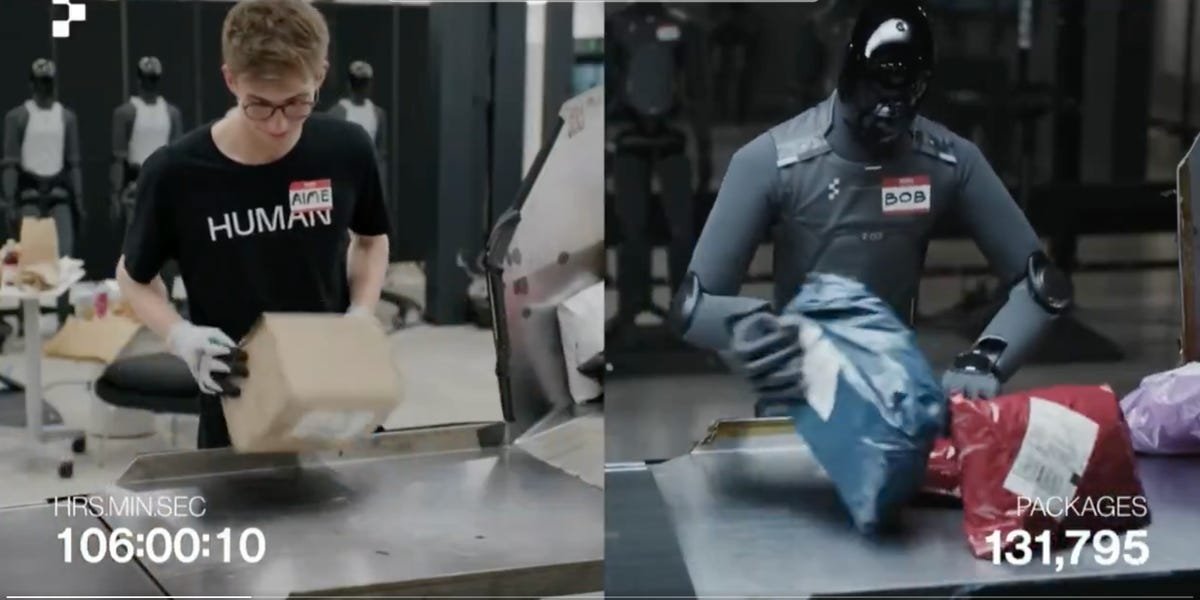
One robot per hour. That is the current production rate at Figure AI’s BotQ factory, where Figure 03 units are rolling off the line at a pace that would have seemed implausible eighteen months ago. The humanoid robot industry has spent years promising industrial-scale deployment. In June 2026, it is delivering it.
Figure is not alone. Boston Dynamics has begun shipping its electric Atlas units, with the first 2026 deployments going to Hyundai and DeepMind. Agility Robotics has more than seven Digit units active at Toyota Canada under a robotics-as-a-service model. What was a research-and-demonstration phase for most of the industry is giving way to something harder to dismiss: real machines doing real work in real facilities.
From labs to loading docks
The shift from prototype to production has been faster than most industry analysts forecast. TrendForce projects global shipments of humanoid robots will grow by over 700 percent in 2026, driven by demand from automotive, logistics, and electronics manufacturing. That number reflects both the acceleration of deployment and the fact that the comparison base was very low a year ago — but the directional trend is unmistakable.
Agility’s deployment at Toyota Canada is particularly instructive. The seven Digit units are operating under a robotics-as-a-service contract, which means Toyota is paying for work performed rather than hardware owned. That pricing model removes the upfront capital barrier that has kept many manufacturers on the sidelines. If the economics hold, it opens a path for mid-sized manufacturers to access humanoid labour without a nine-figure procurement process.
Language control and the NVIDIA stack
Beyond the hardware, the way robots receive instructions is changing significantly. NVIDIA developer Umang Chudasama demonstrated earlier this year how NVIDIA NemoClaw, integrated with NVIDIA Isaac Sim, can navigate a Nova Carter autonomous robot using plain natural language commands — no manual coding required. You tell the robot what to do. It figures out how.
NVIDIA’s Isaac GR00T open models extend this further, enabling robots to understand natural language and carry out complex, multi-step tasks using vision language action reasoning. The Cosmos world models sit alongside this, generating synthetic training data at scale so robots can learn new environments without having to physically encounter every scenario. It is a significant reduction in the cost and time required to deploy a robot in a new setting.
The week of June 3 to 7, CVPR 2026 took place at the Colorado Convention Center in Denver, bringing together computer vision and AI researchers whose work feeds directly into the robotics pipeline. Much of what debuts at academic conferences this summer will appear in commercial products by late 2026 or early 2027. The gap between research and deployment has shortened considerably.
Surgery, sensing, and specialised applications
Not all the momentum is in industrial settings. PeritasAI is building what it describes as a new generation of surgical robotics using NVIDIA Isaac for Healthcare, with multi-agent intelligence that can sense, coordinate, and respond in real time during an operating procedure. The system is designed to support surgical teams rather than replace them — reading the environment, anticipating instrument handoffs, and flagging anomalies before they become problems.
Healthcare robotics has always been a high-stakes, slow-moving market because of regulatory requirements and the obvious consequences of failure. The fact that companies are now deploying physical AI in operating environments is a signal of how far the reliability and safety standards of the underlying technology have advanced.
The production bottleneck that remains
One robot per hour is impressive. It is also still slow compared to what industrial deployment at scale would require. Figure AI’s BotQ facility and its peers are building out capacity, but the supply chain for high-precision actuators, sensors, and AI compute remains constrained. The demand signal is clear. The manufacturing infrastructure to meet it is still catching up.
The second half of 2026 will be worth watching closely, particularly as more robotics-as-a-service contracts come up for renewal and early adopters start reporting operational data. The question of whether humanoid robots can reliably outperform cheaper, purpose-built automation in real-world conditions will have clearer answers by the end of the year. For more coverage of robotics and physical AI, visit Mylistingo.
The Netherlands, for internationals
One email a week: the week's news for internationals in the Netherlands, new practical guides and what changed in the cities. No spam, unsubscribe any time.