



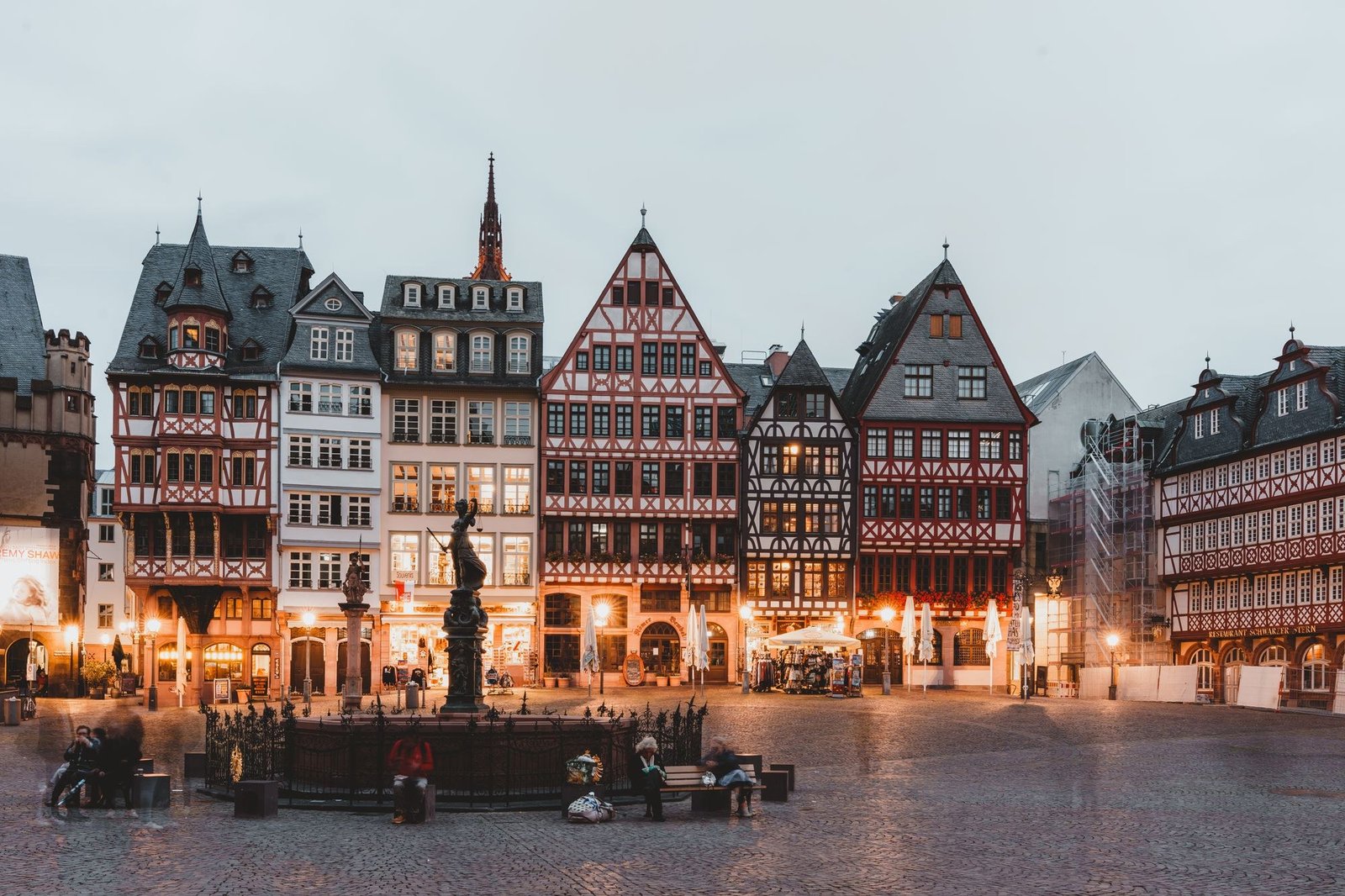
Police in Frankfurt have been carrying out daily checks on the Zeil, the city’s main shopping street, since the looting there on 31 October. According to the Frankfurter Rundschau, local politicians and a criminal lawyer say the checks target young men who are perceived as having a migrant background. The police reject the accusation of racial profiling.
What happened
Roman Poseck (CDU), Hesse’s interior minister, said that around 400 police officers were deployed on the Zeil from Monday to Saturday last week. The Besondere Aufbauorganisation (BAO) Zeil is a special police task force set up for the street. It no longer works only on Fridays and Saturdays. The Frankfurter Rundschau reports that officers checked 945 people and 169 vehicles. They filed 31 Strafanzeigen (criminal complaints) and recorded 334 Ordnungswidrigkeiten (administrative offences, the minor category that is usually punished with a fine). They also issued 72 Platzverweise, which are orders to leave a particular place. Poseck said the stronger presence was a response to the looting on 31 October.
Deniz Avan of Die Linke (the Left party) sits on the Sicherheitsausschuss im Römer, the city council’s security committee. The Römer is Frankfurt’s city hall. Avan told the paper that on Tuesday evening last week he watched officers check groups of young people who were perceived as migrants. He said he stood near a group of six teenagers whose smartphones were reportedly being searched. When he identified himself as a city councillor, one officer told him the checks were a “direct follow-up measure” to the riots and were deliberately aimed at young people. According to Avan, the police told the teenagers that letting officers search their phones would give them a chance to clear themselves of involvement in the events of 31 October. Avan said the teenagers told him they felt intimidated, and that this was why they accepted what the police called a voluntary phone search. He said groups of teenagers who looked German were not checked.
A 21-year-old student gave the Frankfurter Rundschau a similar account. He said that on the same evening he was leaving the MyZeil shopping centre with two friends when about ten officers stopped them and called it a “normal identity check”. The officers searched their jackets, trousers and bodies, checked their ID cards, and asked to see their phones and photo galleries. They also asked for their phone numbers and took photos of them. The student said all three have an African migration background that is visible. They went along with the check because they were afraid of being taken away.
Emre Telyakar, a Green city councillor, wrote on Instagram that he had seen similar checks on the Zeil and shares the suspicion of racial profiling.
The Polizeipräsidium Frankfurt (Frankfurt police headquarters) told the paper that the checks, which began on Sunday, are based on crime levels on the Zeil and on specific police findings from the night of 31 October. The aim is to identify violent people and structures early. The police said measures are “never based solely on a person’s external characteristics”. Instead they rely on factors such as location, time, previous police knowledge and a person’s behaviour. The police added that they would not drop checks just because the people involved might have a migrant background.
What it means for you
- Where and when: According to the Hessian interior ministry, the BAO Zeil will continue its daily checks until further notice. If you shop, work or meet friends on the Zeil or around MyZeil, expect a visible police presence on any day of the week.
- Who is being stopped: The accounts in the Frankfurter Rundschau describe young men and teenagers, many perceived as having a migrant background, being checked in groups.
- What a lawyer says about your rights: Johannes Koch, a criminal lawyer in Frankfurt, told the paper that police may establish your identity without specific suspicion. They may search you only if it is not against your will. He argued that under the intimidating conditions described, people could not give free consent. In his view, the phone searches were unlawful. He also said that in German criminal law the state must show a concrete suspicion, and the person being checked does not have to clear themselves. This is his legal opinion, not a court ruling.
- What you can do afterwards: According to Koch, people who were checked have a Löschungsanspruch, a right to have the data the police collected about them deleted. They can also file a Dienstaufsichtsbeschwerde, a formal complaint about an officer’s conduct. The police must give out officers’ Dienstnummern (service numbers) even after the check is over.
What to watch next
The interior ministry has not said when the daily checks will end. The Initiative Schwarze Menschen in Deutschland, an advocacy group for Black people in Germany, is calling on people to support those being checked on the Zeil and to teach children about their rights. Avan and Telyakar both sit on the city council, so the issue may come up again in the Römer.
Source: Frankfurter Rundschau
Sources
- Frankfurter Rundschau: Racial-Profiling-Vorwürfe gegen Frankfurter Polizei, accessed 10 November 2026
Frankfurt, for internationals
One email a week: what changed for internationals in Frankfurt, the week's news from Germany, and one guide worth reading. No spam, unsubscribe any time.







Comments 2