AI News
  • Home
  • AI & Tech
  • Machine Learning
  • Startups
  • Tools & Apps
  • Robotics
  • Future Tech
  • AI in Industry
    • AI in Sport ⚽
    • AI in Health
    • AI in Education
    • AI in Finance
    • AI in Business
    • AI in Law
    • AI in Climate
No Result
View All Result
SAVED POSTS
AI News
  • Home
  • AI & Tech
  • Machine Learning
  • Startups
  • Tools & Apps
  • Robotics
  • Future Tech
  • AI in Industry
    • AI in Sport ⚽
    • AI in Health
    • AI in Education
    • AI in Finance
    • AI in Business
    • AI in Law
    • AI in Climate
No Result
View All Result
AI News
No Result
View All Result

How Generative AI and Physics Are Teaming Up to Design the Next Generation of Antibiotics

Ramo by Ramo
8 July 2026
in AI & Tech, Sport
394 29
0
ml feat
586
SHARES
3.3k
VIEWS
Summarize with ChatGPTShare to Facebook

How Generative AI and Physics Are Teaming Up to Design the Next Generation of Antibiotics

In a groundbreaking convergence of disciplines, researchers are combining generative artificial intelligence with physics-based modeling to design entirely new antibiotics — a development that could help address the growing global threat of antimicrobial resistance. The approach, detailed in recent scientific publications, represents a fundamental shift in how drugs are discovered and optimized.

Traditional antibiotic discovery relies heavily on screening large libraries of chemical compounds against bacterial targets, a process that can take years and cost hundreds of millions of dollars. The new AI-physics hybrid approach dramatically accelerates this timeline by using machine learning models to generate novel molecular structures and physics simulations to predict how those structures will interact with bacterial proteins.

How the Hybrid Approach Works

At its core, the method uses a generative AI model — similar in concept to the models that produce images or text, but trained on molecular data — to propose new antibiotic candidates. These AI-generated molecules are then run through physics-based simulations that calculate binding affinity, stability, and toxicity at the atomic level.

📖
RECOMMENDED READ
The Coming Wave: AI, Power, and the Greatest Dilemma of Our Age
Mustafa Suleyman
The definitive book on where AI is heading - written by one of the field founders.
View on Amazon →affiliate link

This two-stage filtering process is key. The generative model can propose millions of candidate molecules in hours, while the physics simulation acts as a rigorous reality check, eliminating candidates that look promising on paper but would fail in a living organism. The result is a dramatically narrowed pool of high-probability candidates ready for laboratory testing.

Why This Matters Now

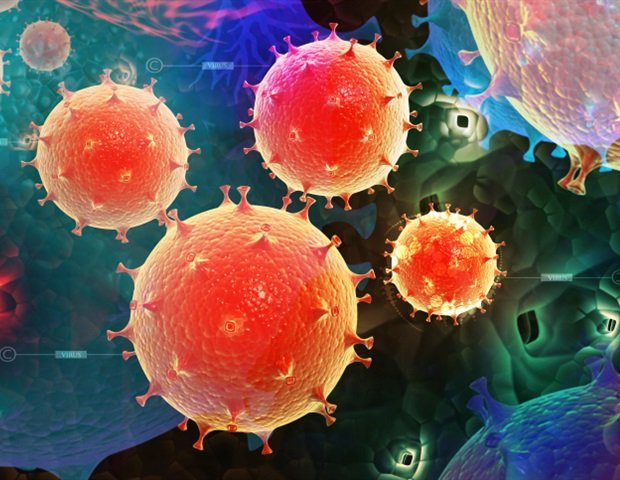
Antimicrobial resistance (AMR) has been declared one of the top 10 global public health threats by the World Health Organization. An estimated 1.27 million deaths were directly attributable to drug-resistant infections in 2019, and that number has been rising steadily. The pipeline of new antibiotics has been dangerously thin for decades, largely because the economics of antibiotic development are broken — drugs that need to be used sparingly to preserve effectiveness don’t generate blockbuster revenues.

By slashing the cost and time required for early-stage discovery, AI-physics approaches could change this calculus. If promising candidates can be identified in months rather than years, the financial risk of antibiotic R&D decreases substantially.

Early Results and Future Directions

Early applications of this hybrid approach have already yielded several novel antibiotic candidates that show activity against multidrug-resistant bacteria, including MRSA and carbapenem-resistant Enterobacteriaceae. While none have yet reached clinical trials, the speed of discovery — from computational modeling to confirmed in-vitro activity in under six months — is unprecedented.

The researchers behind the approach emphasize that AI is not replacing human scientists but augmenting them. The models generate hypotheses at superhuman scale, but human expertise remains essential for interpreting results, prioritizing candidates, and navigating the complex regulatory pathway to clinical use.

As generative AI continues to mature and physics simulations become more accurate, the marriage of these two disciplines could usher in a new golden age of drug discovery — one where the next generation of life-saving antibiotics is designed not in a petri dish, but in a computer.

SummarizeShare234
Ramo

Ramo

Ramo is the editorial voice of Mylistingo — an AI and technology news platform based in The Hague, Netherlands. Covering artificial intelligence, machine learning, robotics, and the future of technology, Ramo delivers accurate, accessible reporting for both general audiences and industry professionals. Every article is fact-checked and written to meet Mylistingo's strict no-fabrication editorial standards.

Related Stories

Inherent, founded by DeepMind alumni, says its AI ‘teammate’ just outperformed Anthropic and OpenAI at replicating research

Inherent’s Faraday AI Beats Anthropic, OpenAI at Research

by Ramo
22 August 2026
0

Reproducing a scientific result is supposed to be the boring part of science. It is also where a lot of science quietly falls apart. Take a published paper,...

Nvidia just showed that the harness, not the AI model, is now the real hero

Nvidia: The AI Harness Now Matters More Than the Model

by Ramo
21 August 2026
0

For three years the AI industry has run on a single assumption: the model is the product. Bigger models, smarter agents, better answers. Buy the best brain and...

Google Locks In Marvell With a $12.2 Billion Stock Warrant

by Ramo
21 August 2026
0

Marvell gave Google the right to buy up to $12.2 billion of its shares, tied to chip purchases. The warrant shows how AI silicon deals now work.

Slack Launches AI Code Channels for Team Vibe-Coding

by Ramo
21 August 2026
0

Slack Code gives teams a dedicated space to collaborate with AI coding agents.

Recommended

Suno Studio 2.0 Adds MIDI and a Chatbot to Compete With Real DAWs

16 August 2026
ml_feat_53801946

Samsung Galaxy Unpacked July 2026: Everything Expected to Launch

8 July 2026

Popular Story

  • ml_feat_56193023

    ASML’s Next-Gen High-NA EUV Machines Drive Eindhoven Expansion, Creating 20,000 New Jobs

    590 shares
    Share 236 Tweet 148
  • Best Cafes and Coffee Shops in The Hague 2026: A Digital Nomad’s Guide

    589 shares
    Share 236 Tweet 147
  • PixVerse closes $439m series C extension at $2b valuation

    589 shares
    Share 236 Tweet 147
  • The Rise of Neuromorphic Computing: How Brain-Inspired Chips Are Transforming AI in 2026

    588 shares
    Share 235 Tweet 147
  • Is Your Home Truly Safe The Smart Security Tech You Need in 2025

    588 shares
    Share 235 Tweet 147
Advertise Here
Your Ad Could Be Here

This premium 300×250 spot is available. Reach our AI & tech audience with your product or service.

Book This Space →
logo ainews

We bring you the best Premium WordPress Themes that perfect for news, magazine, personal blog, etc. Check our landing page for details.

Recent Posts

  • OpenAI Cuts GPT-5.6 Sol Prices by More Than 20%
  • Pinecone’s Nexus Outscores OpenAI and Google Agents
  • GLM-5.3 Found 2,436 Bugs Nobody Trained It to Find

Categories

  • AI & Tech
  • AI in Business
  • AI in Climate
  • AI in Education
  • AI in Finance
  • AI in Health
  • AI in Law
  • AI in Sport
  • Economy & Finance
  • Future Tech
  • Machine Learning
  • Politics & Geopolitics
  • Robotics
  • Social Topics
  • Sport
  • Startups
  • The Hague
  • Tools & Apps
  • Uncategorized

Weekly Newsletter

  • Home
  • Advertise
  • Latest News
  • Contact Us
  • Data Deletion Instructions
  • Editorial Policy

Welcome Back!

Login to your account below

Forgotten Password?

Retrieve your password

Please enter your username or email address to reset your password.

Log In
No Result
View All Result
  • Home
  • AI & Tech
  • Machine Learning
  • Startups
  • Tools & Apps
  • Robotics
  • Future Tech
  • AI in Industry
    • AI in Sport ⚽
    • AI in Health
    • AI in Education
    • AI in Finance
    • AI in Business
    • AI in Law
    • AI in Climate