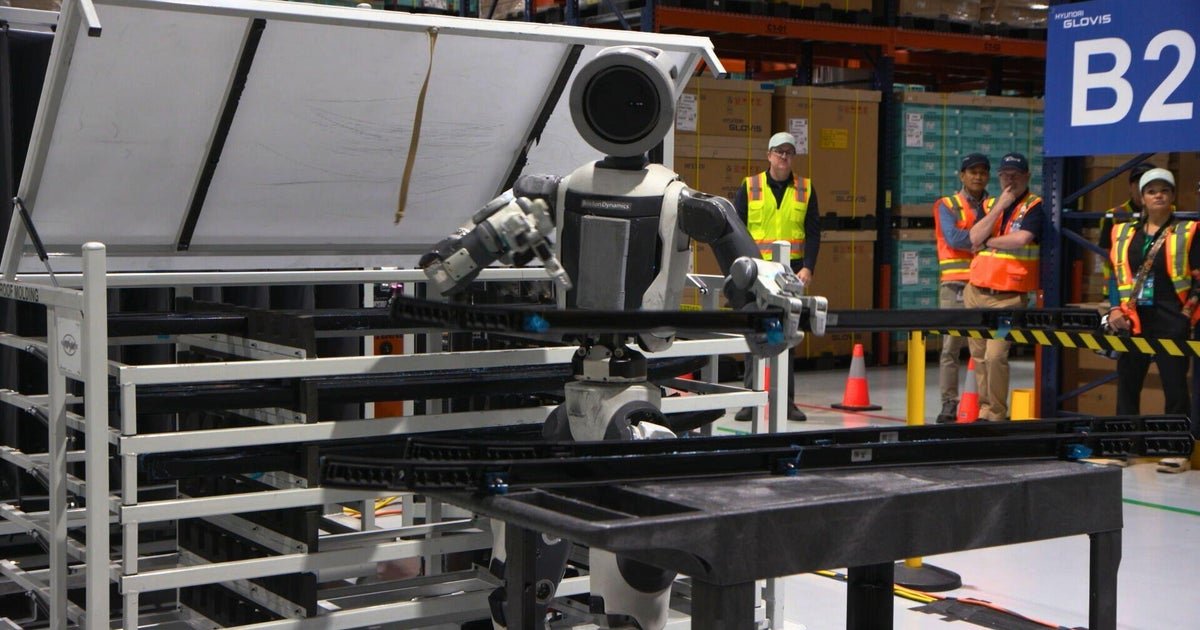
Tesla crossed a threshold in 2026 that the robotics industry has been anticipating for years. More than 1,000 Optimus Gen 3 humanoid robots are now working on factory floors at Gigafactory Texas and the Fremont facility in California, handling parts processing and kitting tasks alongside human workers. That is not a pilot program. That is a deployment.
From trade show to production floor
Humanoid robots have occupied a strange middle ground for most of the past decade: impressive at demonstrations, underwhelming on real production lines. That is changing. Agility Robotics’ Digit, operating under a Robots-as-a-Service contract at a GXO Logistics facility in Flowery Branch, Georgia, has now moved more than 100,000 totes and accumulated over a year of continuous full-time operation. BMW’s Spartanburg plant in South Carolina is running Figure 02 robots for parts handling and quality inspection, and has reported a 15 percent improvement in line efficiency in areas where robots work alongside human workers.
Japan Airlines went in a different direction entirely. In May 2026, the airline deployed two humanoid platforms based on Unitree Robotics hardware at Tokyo’s Haneda Airport, priced at approximately $15,400 per unit, tasked with baggage loading, container transport, and aircraft cabin cleaning. Getting a bipedal robot to operate reliably in an aviation environment — variable weather on the tarmac, a narrow aircraft cabin, a busy baggage bay — is considerably harder than a climate-controlled warehouse. The deployment signals how far the hardware has come.
What these robots can and cannot do
The honest picture is more constrained than the headlines suggest. Current humanoid platforms are genuinely capable at a specific set of tasks: moving totes and bins in logistics environments, transferring light materials between workstations, and running inspection routes where the robot carries a sensor through a defined path. Tasks requiring sub-millimetre precision, payloads above roughly ten kilograms, or compliance with the safety certifications required in hazardous environments remain out of reach for most available systems.
That boundary matters because many of the jobs people associate with automation — welding, heavy assembly, chemical handling — sit on the wrong side of it. What the current generation excels at is unglamorous but genuinely valuable: repetitive, low-weight movement work that is expensive to staff and physically demanding for human workers over long shifts.
The economics of mass production
Tesla is targeting annual production of one million Optimus units by late 2026, at a manufacturing cost of approximately $20,000 per unit. If those figures hold, the economics shift dramatically. A robot costing $20,000, amortized over three years, works out to less per year than many warehouse salaries in North America and Western Europe, without overtime, sick days, or turnover costs. That calculation is driving serious attention from logistics companies and manufacturers who have spent years watching the technology mature.
Accenture, Vodafone Procure and Connect, and SAP are currently running a joint pilot of humanoid robots in warehouse operations — a sign that enterprise adoption is moving from individual experiments to cross-industry collaboration. On the open-source side, Ai2 released MolmoAct 2 in May, an open model for controlling robots in real-world environments that has been downloaded more than 400,000 times since launch.
The harder question
Industry analysts broadly expect humanoid robots to move from limited pilots to genuine production-scale deployment in logistics and light manufacturing between 2027 and 2030. The remaining barriers are reliability at scale, further cost reduction, and safety certification for a wider range of environments. These are real challenges, but the kind that get solved through engineering iterations rather than scientific breakthroughs.
The question companies are mostly not asking publicly yet is what happens to the workforce when a $20,000 robot can perform tasks that a warehouse worker handles today. That conversation is coming. For more on robotics and physical AI, visit Mylistingo.