Wall Street does not usually panic over mainframes. These are the refrigerator-sized machines that quietly run the world’s banks, airlines, and insurance claims, the kind of technology most people assume died sometime around the fax machine. So when IBM warned last week that its mainframe sales were slumping, and the stock cratered in response, the reaction told you something. Investors were spooked, and the culprit they suspected was the same one blamed for nearly everything in enterprise tech right now: artificial intelligence.
A quarter nobody at IBM wanted
The sell-off followed a set of results that landed badly. IBM signaled weakness in the part of its business that still, decades in, carries an outsized share of profit. Mainframes are not a nostalgia product for IBM. They anchor long-term contracts, drag along software and services revenue, and generate the sort of predictable margins that make the company a favorite of conservative investors. A soft mainframe quarter is not a rounding error. It rattles the whole story.
What made this particular stumble sting was the narrative attached to it. For two years, the market has rewarded companies that can plausibly claim to be AI winners and punished those it suspects are AI roadkill. IBM sells hardware. Big, expensive, capital-intensive hardware. If corporations are pouring money into AI, the fear goes, they have to be pulling it from somewhere, and the somewhere looks a lot like the machines humming in their own data centers.
IBM’s answer: it’s timing, not death
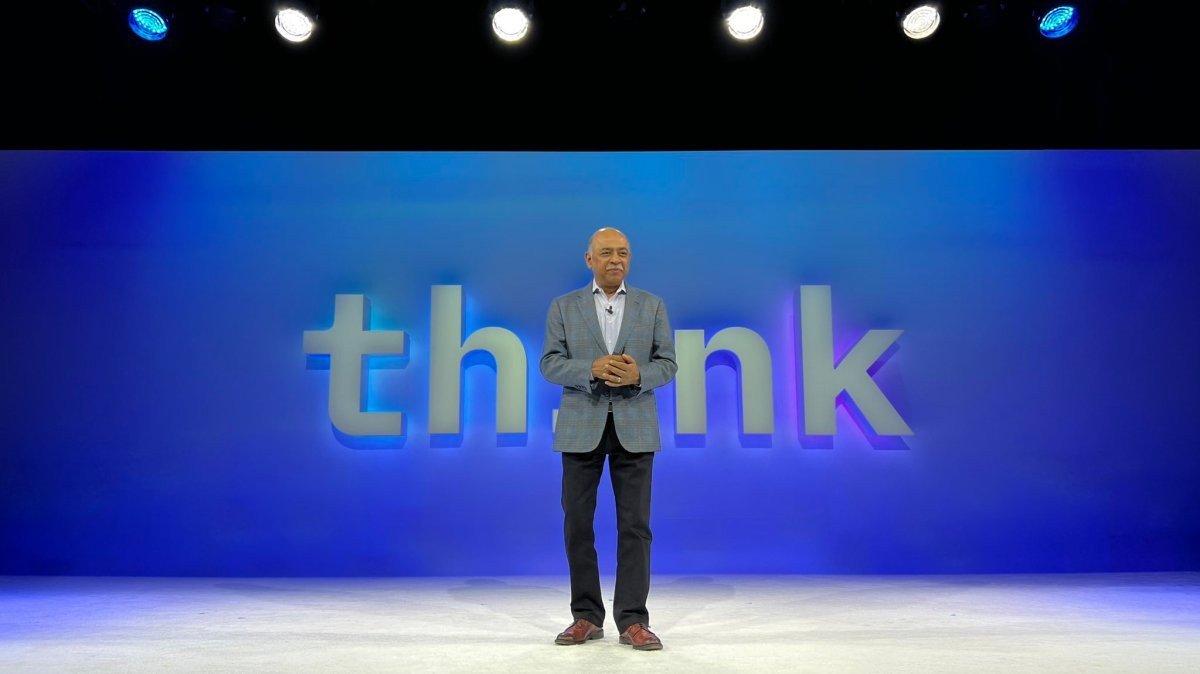
IBM’s chief executive pushed back on the obituary directly. His explanation was less dramatic than the stock move suggested. AI has not made the mainframe obsolete, he argued. It has temporarily raided the corporate hardware budget. Companies have finite capital, and right now an enormous share of it is being funneled toward AI infrastructure, pilots, and the chips that make all of it run. Something had to give in the short term, and mainframe upgrades were an easy line item to defer.
That framing matters because it changes the diagnosis entirely. A dying product does not come back. A postponed purchase does. If IBM is right, the customers skipping a mainframe refresh this year are not abandoning the platform. They are waiting, spending elsewhere, and will return once the AI spending surge settles into something more routine. The company is betting that the mainframe is not losing a war so much as sitting out one expensive budget cycle.
There is history on IBM’s side. The mainframe has been declared dead so many times that the declarations have become a genre. Client-server computing was supposed to kill it in the 1990s. The cloud was supposed to finish the job in the 2010s. Instead the machines kept selling, because the institutions that depend on them cannot easily move workloads that must never, ever go down. A bank does not casually re-platform the system that processes millions of transactions a day because a cheaper option exists on paper.
Why the AI story cuts both ways
Here is the twist IBM is counting on. The same AI wave that is starving hardware budgets today could feed the mainframe tomorrow. Enterprises want to run AI models close to the sensitive data they already keep on mainframes, and IBM has spent years positioning the platform as a place to do exactly that. If that pitch lands, the machines that look like a casualty of the AI boom could end up as one of its beneficiaries.
Whether investors believe that is a separate question. Markets are impatient, and “temporary” is a word every executive reaches for when a bad quarter needs explaining. The burden now sits with IBM to show that deferred demand is real demand, that the customers who paused this year come back next year with contracts signed. One soft quarter can be timing. Two starts to look like a trend, and the AI-is-killing-the-mainframe story writes itself if the numbers cooperate.
The broader signal is worth sitting with. AI spending has grown so large that it is now visibly cannibalizing other technology budgets, even the reliable, unglamorous ones that companies have funded without complaint for decades. When a mainframe warning can knock a company like IBM sideways, it is a reminder of how completely AI has reordered where corporate money flows, and how much collateral disruption that reordering can cause on its way through.
The number to watch is next quarter. If mainframe demand rebounds as the AI spending frenzy matures, IBM’s timing argument holds and the stock story resets. If it does not, the market will stop listening to explanations and start pricing in decline. Either way, the machine that refuses to die just became an unlikely barometer for how healthy the AI boom really is underneath the hype.
For more coverage of enterprise AI and IBM, visit Mylistingo.
Source: Original Article
The Netherlands, for internationals
One email a week: the week's news for internationals in the Netherlands, new practical guides and what changed in the cities. No spam, unsubscribe any time.