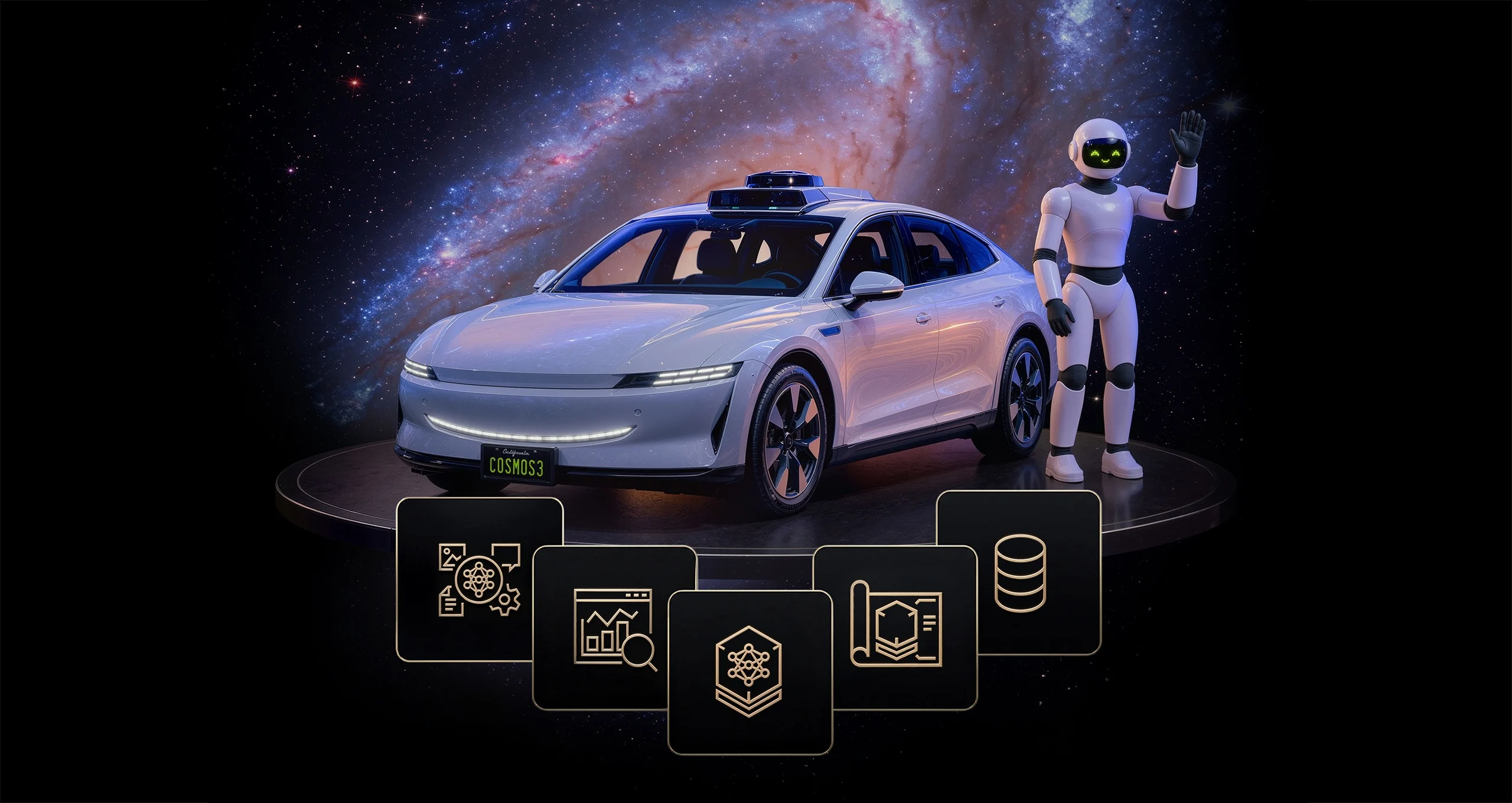
When NVIDIA unveiled Cosmos 3 on June 1, 2026, at GTC Taipei, it did not arrive quietly. The company described it as the world’s first fully open omnimodel for physical AI — a single system capable of understanding and generating text, images, video, ambient sound, and physical actions simultaneously. For anyone paying attention to how fast industrial robotics, autonomous vehicles, and smart manufacturing are evolving, the announcement felt less like a product launch and more like a turning point.
Cosmos 3 is built on a mixture-of-transformers architecture and comes in three tiers: Super, Nano, and Edge, allowing developers to deploy it at different scales depending on their infrastructure. What sets it apart from previous AI systems is its ability to combine vision reasoning, world simulation, and action generation in one place. NVIDIA says the model can compress physical AI training and evaluation cycles from months down to days — a claim that carries enormous implications for factories, warehouses, and research labs trying to build intelligent machines faster.
A Coalition for the Physical World
NVIDIA did not stop at releasing a model. The company simultaneously announced the NVIDIA Cosmos Coalition, bringing together leading AI labs and robotics companies including Agile Robots, Black Forest Labs, Generalist, LTX, Runway, and Skild AI. The coalition’s stated aim is to advance the next generation of open world models — essentially pooling research and resources to push physical AI forward more quickly than any single organization could manage alone.
This kind of collaborative structure is becoming more common at the frontier of AI. The reasoning is straightforward: physical AI is still an unsolved problem, and the diversity of hardware, sensors, and real-world conditions makes it nearly impossible for one lab to handle everything. By building an open model and surrounding it with a coalition of partners, NVIDIA is trying to create a shared foundation that the entire industry can build on.
Enterprise Giants Stop Calling It Experimental
The Cosmos 3 launch landed at a moment when major corporations are quietly rewriting how they classify AI spending. JPMorgan Chase, one of the most closely watched banks in the world for technology investment, formally reclassified its AI investments this year from experimental research and development into core infrastructure. The bank’s 2026 technology budget stands at approximately $19.8 billion, with around 2,000 staff now dedicated full-time to AI development.
That shift in language matters more than it might first appear. When a company like JPMorgan moves AI from an experimental line item to core infrastructure, it signals that the technology is no longer being treated as a bet on the future. It is being treated as a business requirement for today. Other large financial institutions and manufacturers are watching that decision carefully.
Across industries, the pattern is similar. AI is moving away from pilot programs and proof-of-concept demonstrations toward systems that sit at the center of how companies operate. The focus is increasingly on workflows where AI can handle repetitive, expensive manual tasks under human oversight — not flashy demos, but durable improvements to daily operations.
The Infrastructure Race
Behind this enterprise shift is a massive buildout of AI hardware. NVIDIA’s Cosmos 3 represents the software layer, but it sits on top of infrastructure that includes the company’s own accelerator chips alongside Intel’s Xeon 6+ processors, which were also highlighted this year as delivering faster and more cost-efficient AI processing at the data center level.
The broader picture is one of convergence. Compute is getting cheaper and faster. Open models are becoming more capable. And large organizations, from banks to manufacturers to logistics companies, are committing serious money to deploying AI at scale. The question is no longer whether enterprise AI will happen — it is how quickly the organizations that have already made their bets will pull ahead of those still running experiments.
What Comes Next
For developers and businesses watching Cosmos 3, the immediate opportunity is in synthetic data generation. One of the hardest problems in physical AI has been collecting enough real-world data to train reliable models — it is slow, expensive, and often dangerous. A model that can generate high-quality synthetic training data with accurate physics dramatically lowers that barrier.
NVIDIA is positioning Cosmos 3 as the foundation for a new generation of robots and autonomous systems that can learn faster and adapt more readily to real environments. Whether that vision plays out depends on how quickly developers adopt the model and how well the Cosmos Coalition coordinates its research. But the infrastructure is being built, the investment is flowing, and the timelines are compressing.
For a deeper look at how AI is reshaping industries in 2026, visit Mylistingo for daily coverage of the tools and technologies driving the next wave of change.