This guide is for internationals who already have Dutch basic health insurance, or who are about to arrange it, and are wondering whether to switch insurer for 2027. After reading it, you will know the key dates, how cancelling works, what to check before you choose, and which questions the official pages leave to the insurer.
- The switching period and key dates
- How cancelling your old policy works
- Acceptance: basic package versus additional cover
- The deductible and what to compare
- If you are in treatment while switching
- FAQ
The switching period and key dates
Basic health insurance is compulsory. According to Government.nl, everyone who lives or works in the Netherlands must take it out. It covers things like the GP, hospital treatment and prescription medication. The government decides what the standard package covers, and all insurers offer the same package.
The yearly cycle is described on the Rijksoverheid page on switching insurer (in Dutch). It works like this:
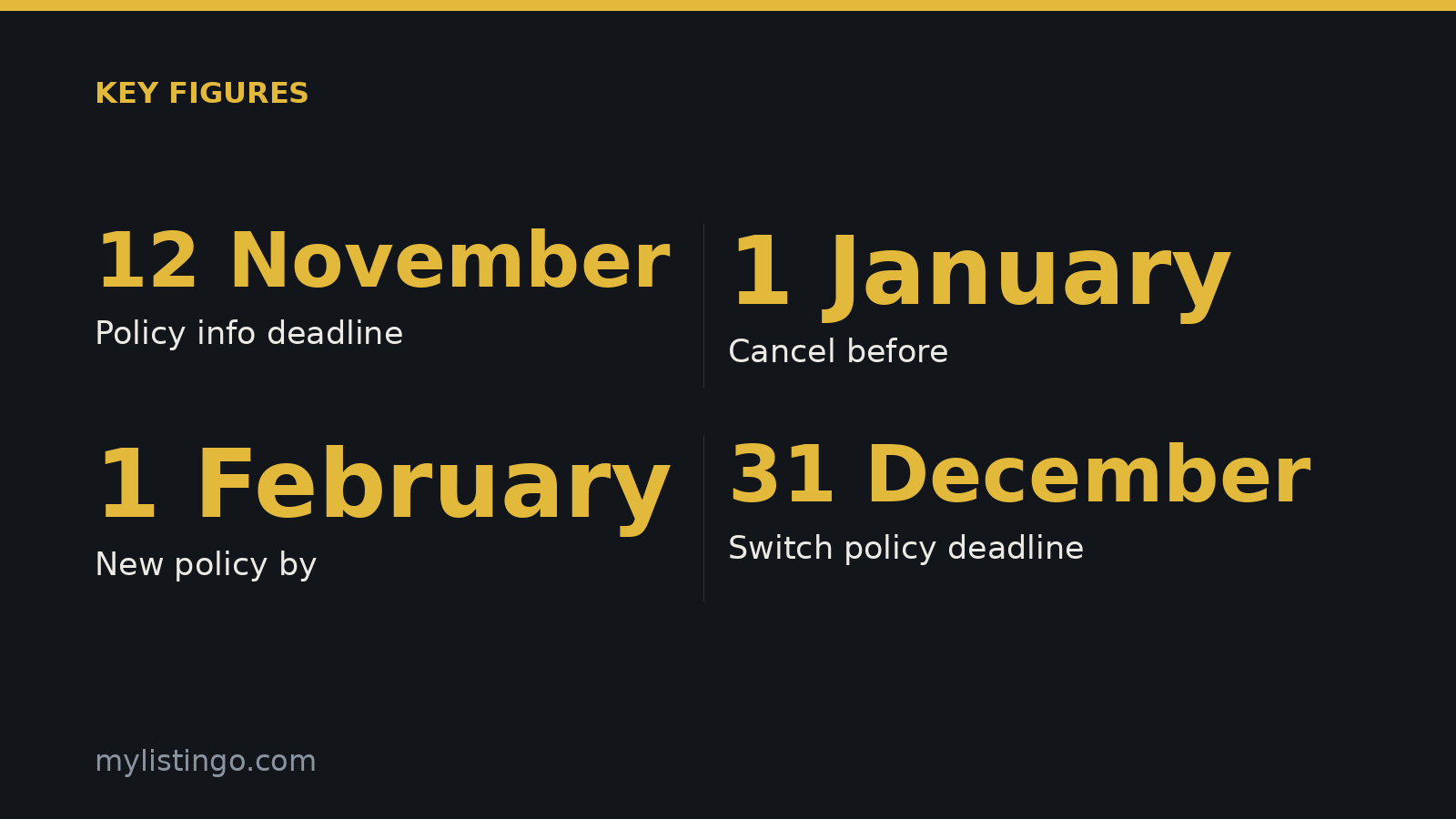
- Before 12 November, insurers publish their policy conditions and premiums for the coming year on their websites. You also receive them by letter. From then on you can compare insurers and policies.
- In November you receive your policy for the new year from your current insurer. If you disagree with it, you may switch.
- If you want to switch insurer, cancel your current insurance before 1 January and take out the new one before 1 February.
- If you stay with your insurer but choose a different policy there, do it by 31 December at the latest.
The page describes this as the annual routine. To switch for 2027, follow the same steps and check the page again for any changes to the dates. The safest approach is to decide well before the end of December rather than at the last minute.
How cancelling your old policy works
You have two options for ending your old insurance, both described on the Rijksoverheid page.
- Let the new insurer do it. If you take out a new policy by 31 December at the latest, your new insurer automatically cancels your old one. Insurers offer this as a switching service.
- Cancel it yourself. You can cancel your own policy, also by 31 December at the latest.
- You do not have to take your basic and additional insurance with the same insurer.
- A separate additional policy can come with special conditions, such as a higher premium.
- Insurers rarely use medical selection for additional insurance anymore. It happens only in a few cases, with very extensive packages.
- An insurer can apply a waiting period when you switch, so some costs are not reimbursed straight away. The page gives the example of a new crown from a dental policy, which is reimbursed if the costs were incurred after 6 months.
- The premium. It can differ between insurers.
- The type of policy. Insurers offer three types: naturapolis, budgetpolis and combinatiepolis. With a naturapolis, the insurer contracts certain care providers and you choose among them.
- Contracts with your care providers. Check that the insurer has contracts with the providers you want, and what you pay if you go to a provider without a contract. This applies to the naturapolis.
- Treatment caps. Some contracts limit the number of treatments agreed with a provider. If the cap is reached, you may not be able to go there late in the year, or you may have to pay yourself.
- Changed conditions. Insurers can change policy conditions every year, so read your own policy for the new year too.
- Service and complaints. The page also points to how the insurer handles complaints and what other service it offers.
- rijksoverheid.nl: Waar moet ik aan denken als ik wil overstappen naar een andere zorgverzekeraar? | Rijksoverheid.nl, accessed 16 November 2026
- government.nl: Standard health insurance | Government.nl, accessed 16 November 2026
You have until 1 February to take out a new policy. If you do, you are insured from 1 January onward, with retroactive effect. You can arrange the new policy online or by phone.
The page says you must cancel before 1 January and arrange the new cover before 1 February. Cancelling and then waiting is possible, but the simpler route is to take out the new policy first and let the new insurer cancel the old one. This avoids any gap in your cover.
Acceptance: basic package versus additional cover
Newcomers often worry that an insurer will turn them down. For the basic package, the rules are clear. Both official pages say that an insurer must accept anyone who applies for the basic insurance. Government.nl adds that insurers must charge all policyholders the same premium, regardless of age or state of health.
Additional insurance works differently. It covers care outside the standard package, for example physiotherapy or dental care. It is not compulsory, and insurers do not have to accept everyone who applies. An insurer can refuse you or ask about your health before accepting you.
The Rijksoverheid page adds some practical points about additional cover:
The pages do not say how long a waiting period lasts for any given policy. Read the policy conditions or ask the insurer.
The deductible and what to compare
The basic package has a legally required deductible (eigen risico). You pay the first part of the care costs that fall under it yourself. You can also choose a higher voluntary deductible, and the insurer then gives you a discount on the monthly premium.
The Rijksoverheid page states the deductible amount for 2026 only. The pages used for this guide do not give an amount for 2027. Check the current figure on the Rijksoverheid website and in your insurer’s 2027 policy conditions before you decide. A higher voluntary deductible lowers your premium but raises what you may pay out of pocket, so match it to the care you expect to use.
When you compare policies, the official page suggests looking at:
Also decide what care you expect to need outside the basic package, such as dental care, physiotherapy or a pregnancy. Then decide whether to pay for it yourself or insure it. For a step-by-step comparison, the Rijksoverheid page refers to ACM ConsuWijzer.
If you are in treatment while switching
If you are being treated when you switch, the provider sends the bill to the insurer you were insured with when the treatment started. The start date is usually the date of your first contact with the provider.
Some treatments in the basic package need prior permission (machtiging) from your insurer. If your old insurer gave you permission, for example for physiotherapy or patient transport, your new insurer takes it over. The same applies to agreements about a personal budget (persoonsgebonden budget).
Two further points from Government.nl matter for families. Children under 18 must be insured but pay no premium for the basic package. Parents must register a child with an insurer within four months of birth. Everyone also pays an income-related contribution on top of the premium, which your employer pays directly to the Health Insurance Fund. People on a low income may be eligible for healthcare benefit. The official pages used here do not state the benefit conditions, so the relevant agency decides case by case.

FAQ
Do I have to switch insurer for 2027?
No. If you disagree with your new policy, you can switch, but you are not obliged to. You can also change your policy at your current insurer. Do this by 31 December at the latest.
What happens if I cancel but do not arrange a new policy straight away?
You have until 1 February to take out a new basic insurance. If you do, you are insured from 1 January with retroactive effect. The simplest way to avoid a gap is to take out the new policy by 31 December, so your new insurer cancels the old one for you.
Can an insurer refuse me?
Not for the basic package. Insurers must accept anyone who applies and must charge the same premium regardless of age or health. For additional insurance they can refuse you, or ask about your health first. They can also apply a waiting period after you switch.
What will the deductible be in 2027?
The pages used for this guide do not state a 2027 amount, so check the current figure on the Rijksoverheid website and in your insurer’s policy conditions. You may choose a higher voluntary deductible in return for a lower monthly premium.
Official sources: rijksoverheid.nl · government.nl
Last verified: 16 November 2026 against the official pages linked above. Rules and fees change; the official page always wins. General information, not legal or tax advice.
Sources
The Netherlands, for internationals
One email a week: the week's news for internationals in the Netherlands, new practical guides and what changed in the cities. No spam, unsubscribe any time.