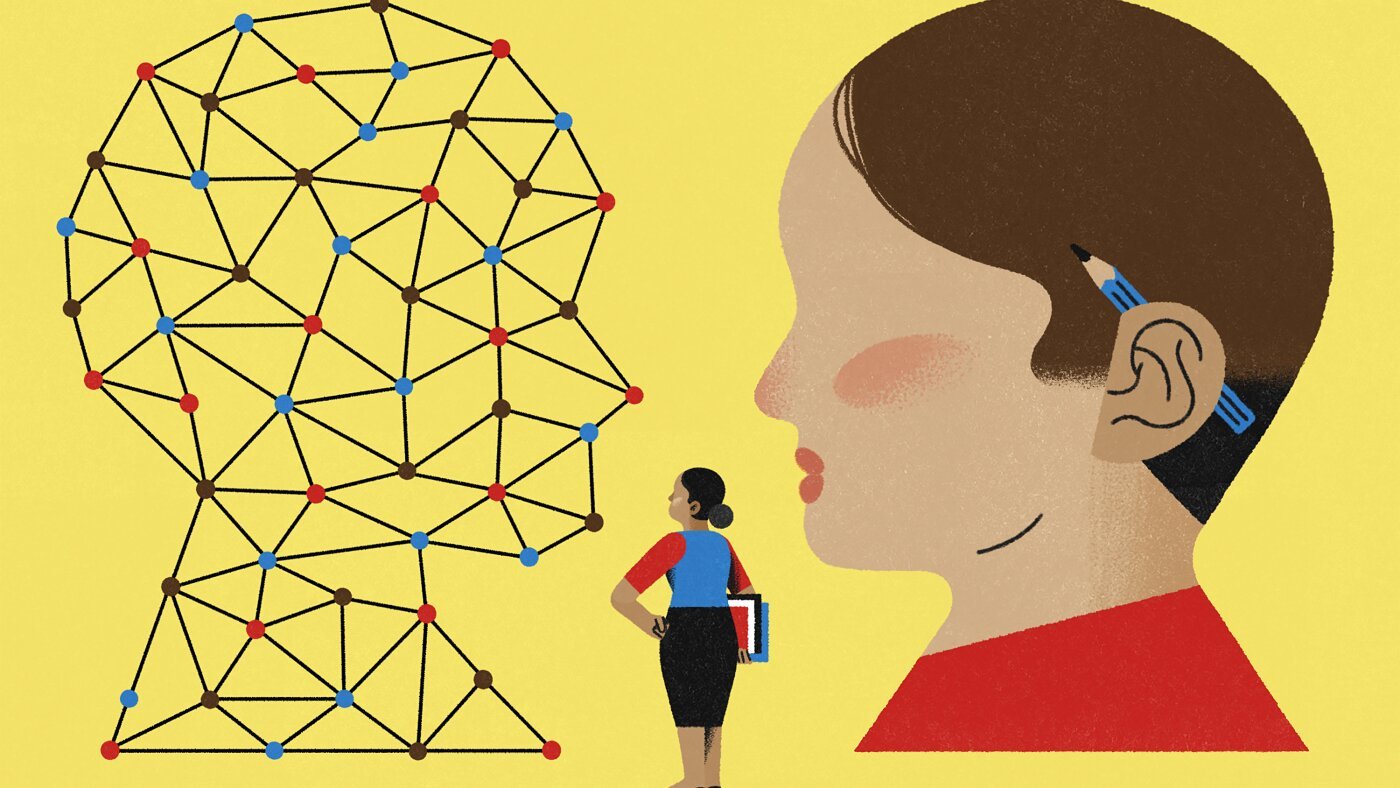
Teachers spend their careers navigating change. New curricula, shifting technology, evolving expectations from parents and policymakers — all of it flows through the classroom eventually. But according to a survey published in June 2026, most K-12 educators believe what is coming with artificial intelligence is categorically different from anything they have experienced before, including the arrival of the internet.
Nearly three in four polled teachers said AI has bigger implications for education than past technological shifts like the internet or personal computers. That is a striking claim from professionals who have lived through decades of edtech promises, many of which delivered far less than advertised. The difference this time, many teachers suggest, is that AI is harder to quarantine. It does not wait at the computer lab door.
A Survey That Captures Real Anxiety
The NPR-commissioned poll of K-12 teachers reveals a profession grappling with profound uncertainty. More than half of respondents — 54 percent — said AI makes it harder for students to learn critical thinking skills. Close to six in ten said AI is eroding the trust between students and teachers, a relationship that depends on teachers being able to assess whether a student genuinely understands something or has simply produced a convincing AI-generated response.
Those concerns are not abstract. Teachers describe a specific daily reality: assignments that look polished but feel hollow, students who can generate sophisticated text but struggle to explain what they wrote, and an increasing difficulty in distinguishing effort from output. The pedagogical challenge is not just about academic integrity. It is about whether the skills education is supposed to build are being built at all.
What makes the findings more than just a record of concern is the scale. If nearly three-quarters of teachers believe AI will exceed the internet in its educational impact, the profession is not dismissing the technology. It is grappling with it seriously, and asking for policy and institutional support that has not yet arrived in most school districts.
Maryland Leads With the First State AI School Law
On June 1, 2026, Maryland’s A.I. Ready Schools Act came into effect, making the state the first in the country to legally require its Department of Education to issue AI guidelines and best practices to all public school systems. Under the law, AI literacy will be incorporated into K-12 computer science and workforce preparation standards by June 2027.
The legislation reflects a broader recognition that schools cannot simply wait for federal guidance to clarify AI’s role in classrooms. Maryland has chosen to set expectations now, giving teachers a formal framework to work within and students a signal that AI competence is becoming a core educational outcome rather than an extracurricular interest.
Across the country, FutureEd’s 2026 State AI in Education Legislative Tracker is following 52 bills across 25 states, all addressing different dimensions of AI in schools. Some focus on what students learn about AI. Others regulate how schools use it in instruction. Still others set guardrails on student data and algorithmic decision-making in academic assessment. The legislative wave is moving fast, and it is largely outpacing the research base on what actually works.
Global Frameworks Are Starting to Emerge
The OECD published its Digital Education Outlook 2026 this year, analyzing emerging research on generative AI in classroom settings. The report finds that AI tools can support learning meaningfully when guided by clear teaching principles, but warns that deployment without pedagogical frameworks tends to produce shallow engagement rather than deeper understanding.
The OECD’s framing is deliberate: effective AI integration in education requires teachers to be active designers of how AI is used, not passive recipients of tools handed down from technology companies. That conclusion aligns with what the NPR survey found anecdotally — that teachers feel most confident about AI in contexts where they understand the tool well enough to set the terms for how students interact with it.
Students Are Ahead of the Policy Curve
Whatever the policy debates, students have already made their choices. Approximately 93 percent of students report having used AI tools at least once or twice for school purposes. The usage is not evenly distributed or always academically productive, but the familiarity is near-universal among young people in digitally connected communities.
Education leaders themselves are significant AI users. Survey data suggests that close to 99 percent of education administrators report using AI more frequently than students do, primarily for planning, communication, and administrative tasks. That asymmetry shapes how AI policies get designed and communicated across school districts.
The Classroom Is Changing Whether Schools Are Ready or Not
The teacher survey, the Maryland law, and the OECD framework all point to the same underlying reality. AI has arrived in education as a force to be shaped rather than a problem to be prevented. The institutions and educators who are beginning to ask serious questions about what AI is good for, and where its influence should be constrained, are in a better position than those still treating it as a cheating problem with a technical fix.
For the latest on how AI is transforming classrooms and institutions around the world, visit Mylistingo.