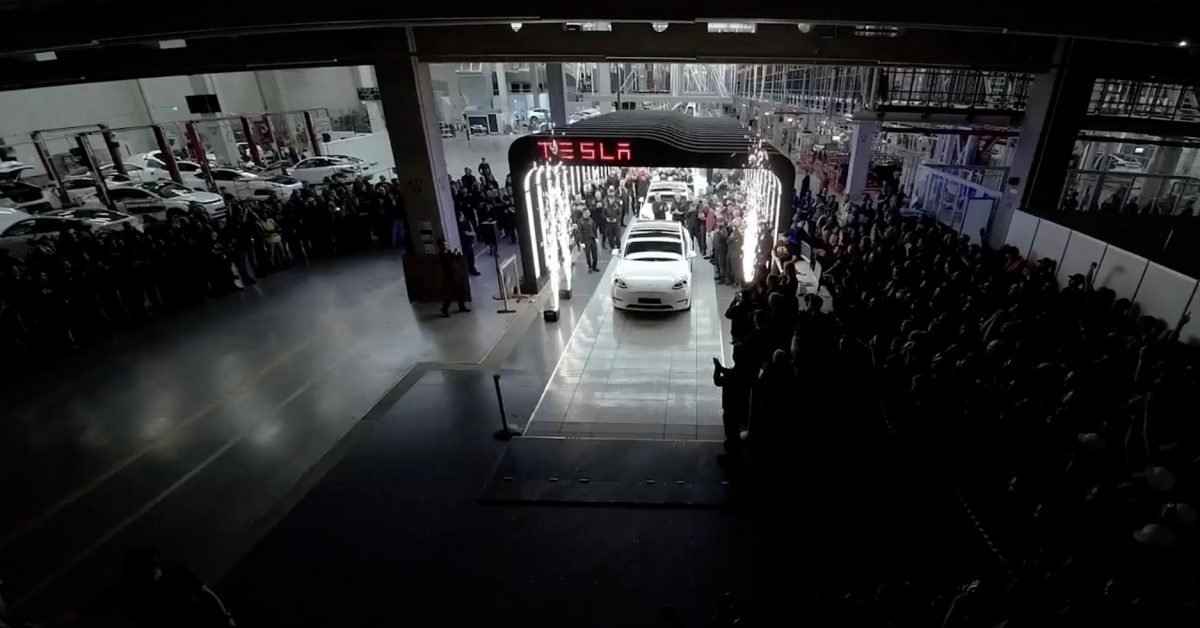
Tesla’s Berlin Gigafactory Ramps Up as European EV Market Accelerates
Tesla’s Gigafactory Berlin-Brandenburg has reached a production milestone of 5,000 vehicles per week in mid-2026, solidifying its position as Europe’s largest electric vehicle manufacturing facility. The factory, which sits on a 300-hectare site in Grünheide, just outside Berlin, now employs over 12,000 workers and has become a cornerstone of the continent’s electric mobility transition.
The ramp-up comes as the European EV market continues its rapid expansion. Battery-electric vehicles now account for over 25% of new car registrations in the European Union, up from 18% a year ago. The Netherlands remains one of the strongest EV markets globally, with EVs representing nearly 40% of new car sales thanks to generous tax incentives and one of the densest charging networks in the world.
The Dutch Connection
The Netherlands plays a unique role in Tesla’s European operations. The company’s European headquarters are located in Amsterdam, and the port of Rotterdam serves as a key logistics hub for vehicle distribution across the continent. Dutch charging infrastructure companies like Fastned and Allego have expanded aggressively, building high-speed charging stations along European highways to support the growing EV fleet.
“The Netherlands has been ahead of the curve on EV adoption for years,” says Maarten Steinbuch, professor of automotive technology at Eindhoven University of Technology. “The combination of dense urban areas, short average trip distances, and strong government support created the perfect conditions for early adoption. Now we are seeing the rest of Europe catch up.”
Competition Heats Up
Tesla’s Berlin ramp-up faces increasing competition. Volkswagen’s Zwickau plant, BMW’s Munich facility, and new entrants from China including BYD and NIO are all scaling European production. Chinese manufacturers have been particularly aggressive, with BYD opening a factory in Hungary and announcing plans for additional capacity.
The European Commission’s recently confirmed tariffs on Chinese-made EVs — set at up to 38% — have added complexity to the competitive landscape. For Tesla, which manufactures locally in Berlin for the European market, the tariffs provide a competitive buffer against Chinese rivals while also pressuring the company’s Shanghai-exported models.
As Europe races toward its 2035 zero-emission vehicle mandate, the Berlin Gigafactory stands as a symbol of the continent’s ambition to build — not just buy — the electric vehicles of the future.
The Netherlands, for internationals
One email a week: the week's news for internationals in the Netherlands, new practical guides and what changed in the cities. No spam, unsubscribe any time.