NATO’s Eastern Flank: The New Frontline of European Defense
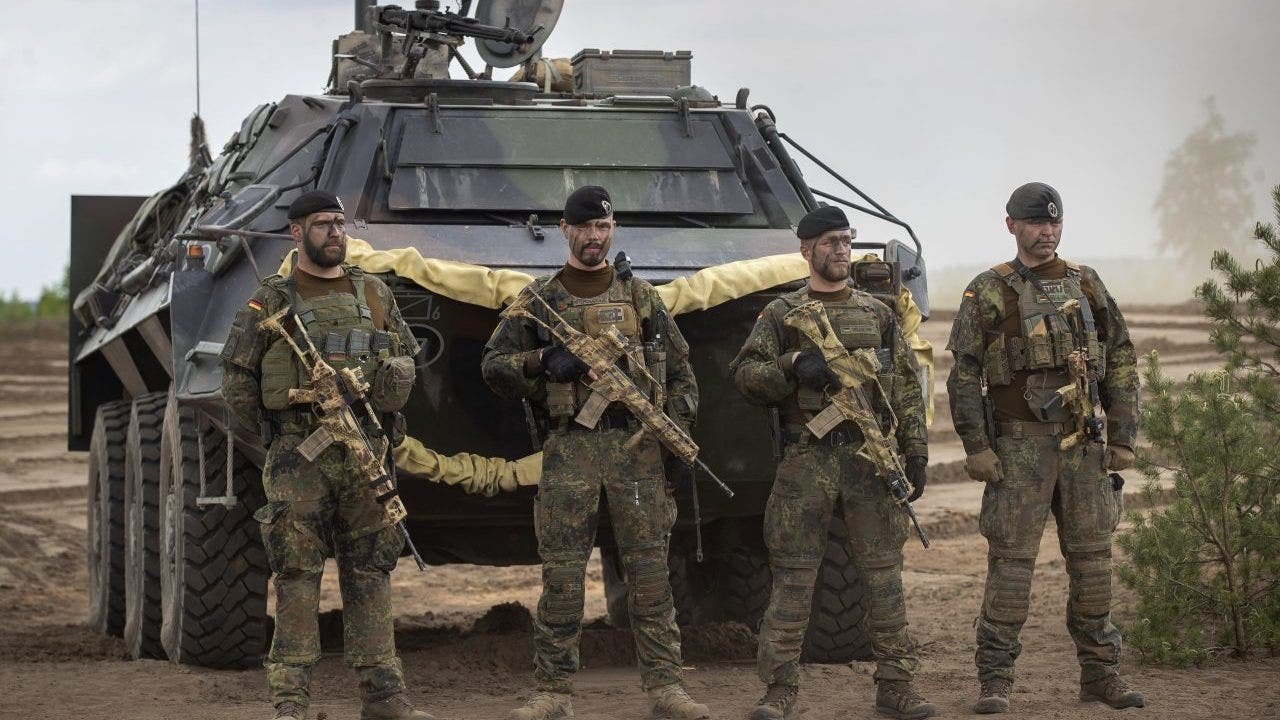
Two and a half years after Russia’s full-scale invasion of Ukraine, NATO’s eastern flank has been transformed from a geopolitical concept into the most heavily militarized border in Europe since the Cold War. As of July 2026, the alliance has forward-deployed more than 300,000 troops across Poland, the Baltic states, Romania, and Finland — a tenfold increase from pre-2022 levels. This unprecedented buildup represents not merely a response to the war in Ukraine, but a permanent strategic recalibration of European security architecture that will shape transatlantic relations for decades to come.
The new posture goes far beyond troop numbers. NATO has established eight new multinational battlegroups along its eastern frontier, each equipped with integrated air defense systems, long-range precision artillery, and logistics hubs designed to support sustained operations. The alliance’s newly created Allied Reaction Force — a rapidly deployable joint task force of 50,000 troops — achieved full operational capability in March 2026, reducing the time needed to respond to any aggression from months to days. Command-and-control centers in Poland, Estonia, and Romania have been hardened against cyberattacks and electronic warfare, reflecting lessons painfully learned from Ukraine’s experience.
For the countries on NATO’s eastern flank, this transformation carries profound implications. Poland has emerged as the alliance’s undisputed hub, hosting the headquarters of the US Army’s V Corps forward element and serving as the primary logistics gateway for all alliance operations in the region. Warsaw has committed to spending 4.7 percent of its GDP on defense in 2026 — the highest of any NATO member — and has undertaken the largest military modernization program in its history, including the purchase of Abrams tanks, F-35 fighters, and HIMARS rocket systems. The Polish government has framed this buildup as existential necessity, pointing to the devastation in Ukraine as what happens when deterrence fails.
European Defense Spending Hits Historic Levels
The broader trend across Europe is equally striking. Twenty-three of NATO’s 32 members are now meeting the alliance’s target of spending at least 2 percent of GDP on defense, up from just six members in 2021. Total European defense expenditure is projected to reach $430 billion in 2026, surpassing the previous Cold War peak when adjusted for inflation. Germany — long criticized for underfunding its military — has created a €100 billion special fund for the Bundeswehr and committed to reaching 2.5 percent of GDP by 2028. The Netherlands has increased its defense budget by 60 percent since 2022 and is now spending 2.3 percent of GDP on the military, with further increases planned.
This spending surge is driving a transformation in European defense industrial capacity. The European Union has activated its European Defence Industry Reinforcement through Common Procurement Act (EDIRPA), which provides €8 billion in subsidies for joint procurement of weapons systems. Major European arms manufacturers — including Rheinmetall, BAE Systems, Leonardo, and Saab — have doubled or tripled their production capacities. The artillery shell shortage that plagued Ukraine in 2024 and 2025 has been largely resolved, with European production of 155mm shells now exceeding 1.5 million rounds per year. However, significant gaps remain in areas such as drone production, electronic warfare capabilities, and advanced air defense systems.
The economic implications of this military buildup are far-reaching. Higher defense spending is creating jobs and stimulating industrial activity in regions that have long suffered from deindustrialization. Shipyards in Poland, tank factories in Germany, and ammunition plants in the Czech Republic are running at full capacity, often with multi-year backlogs. But the opportunity cost is also substantial: money spent on defense is money not spent on healthcare, education, infrastructure, and climate adaptation. Several European governments are grappling with difficult tradeoffs as they try to balance the competing demands of security and social welfare.
Geopolitical Implications Beyond Europe
The strengthening of NATO’s eastern flank has implications that extend well beyond the immediate confrontation with Russia. The alliance’s renewed credibility has reshaped the strategic calculations of other major powers. China, while continuing to deepen its economic ties with Russia, has become more cautious in its rhetorical support for Moscow’s war effort, recognizing that a more militarily assertive NATO could complicate Beijing’s ambitions in the Indo-Pacific. Chinese diplomatic initiatives in the Global South have increasingly emphasized the dangers of bloc politics, reflecting concern that a hardened European security architecture could eventually be mirrored in Asia.
Turkey, NATO’s second-largest military force, has used the alliance’s renewed focus on the eastern flank to extract concessions on its own security priorities. Ankara’s ratification of Sweden’s membership in 2024 was followed by a series of agreements on counterterrorism cooperation and arms sales. However, tensions remain over Turkey’s independent stance on Russia, its military operations in northern Syria, and its objections to Greek military build-up in the Aegean. Managing these internal divisions within the alliance has become one of NATO’s most persistent challenges, even as it presents a unified front to external adversaries.
The United States’ role in European defense remains the decisive factor. The 2024 US presidential election brought a new administration that, while more Atlanticist than its predecessor, has made clear that European allies must bear a greater share of the collective defense burden. The American force posture in Europe has been restructured — fewer permanent bases, more rotational deployments, and a greater emphasis on pre-positioned equipment that can be rapidly manned by troops flown in from the United States. The US European Deterrence Initiative, now funded at $12 billion annually, has focused heavily on improving infrastructure — airfields, rail lines, fuel pipelines, and ammunition storage — that would enable rapid reinforcement in a crisis.
The Human Dimension of the Eastern Flank Buildup
Behind the statistics and strategic calculations lies a human story that is often overlooked. The military buildup has transformed life in the towns and cities along NATO’s eastern border. In the Estonian city of Narva, which sits on the Russian border, the presence of NATO multinational battlegroups has brought economic activity but also heightened anxiety. Local residents report a palpable sense of living on a frontier where the risk of escalation is never far from the surface. For many Estonians, Latvians, and Lithuanians — whose countries were forcibly incorporated into the Soviet Union for five decades — the return of foreign troops is not an abstraction but a deeply personal matter of survival.
The social integration of troops from dozens of different countries also presents challenges. Language barriers, differences in military doctrine, and cultural misunderstandings have occasionally caused friction. NATO has invested heavily in interoperability exercises and cultural training programs, but the alliance’s commanders acknowledge that building genuine trust across such a diverse multinational force takes time. For a deeper analysis of how European nations are grappling with the economic consequences of increased military spending, see our related article on how defense spending is reshaping national budgets across the continent.
As July 2026 unfolds, the eastern flank stands as both NATO’s greatest achievement and its most significant challenge. The alliance has demonstrated a capacity for adaptation and collective action that many doubted it still possessed. But the sustainability of the current posture is uncertain. Maintaining 300,000 troops in a high-readiness state is enormously expensive, and the political will to continue funding these deployments at current levels may wane as the war in Ukraine evolves and other crises demand attention. What is clear is that the security landscape of Europe has been permanently altered, and the decisions made in the coming months will determine whether this new architecture becomes a lasting foundation for peace or a source of new tensions.
The Netherlands, for internationals
One email a week: the week's news for internationals in the Netherlands, new practical guides and what changed in the cities. No spam, unsubscribe any time.