
AI News
  • Home
  • AI & Tech
  • Machine Learning
  • Startups
  • Tools & Apps
  • Robotics
  • Future Tech
  • AI in Industry
    • AI in Sport ⚽
    • AI in Health
    • AI in Education
    • AI in Finance
    • AI in Business
    • AI in Law
    • AI in Climate
No Result
View All Result
SAVED POSTS
AI News
  • Home
  • AI & Tech
  • Machine Learning
  • Startups
  • Tools & Apps
  • Robotics
  • Future Tech
  • AI in Industry
    • AI in Sport ⚽
    • AI in Health
    • AI in Education
    • AI in Finance
    • AI in Business
    • AI in Law
    • AI in Climate
No Result
View All Result
AI News
No Result
View All Result

How digital twins are reshaping scientific discovery

Ramo by Ramo
26 June 2026
in Future Tech
393 29
0
How digital twins are reshaping scientific discovery
585
SHARES
3.2k
VIEWS
Summarize with ChatGPTShare to Facebook
How digital twins are reshaping scientific discovery

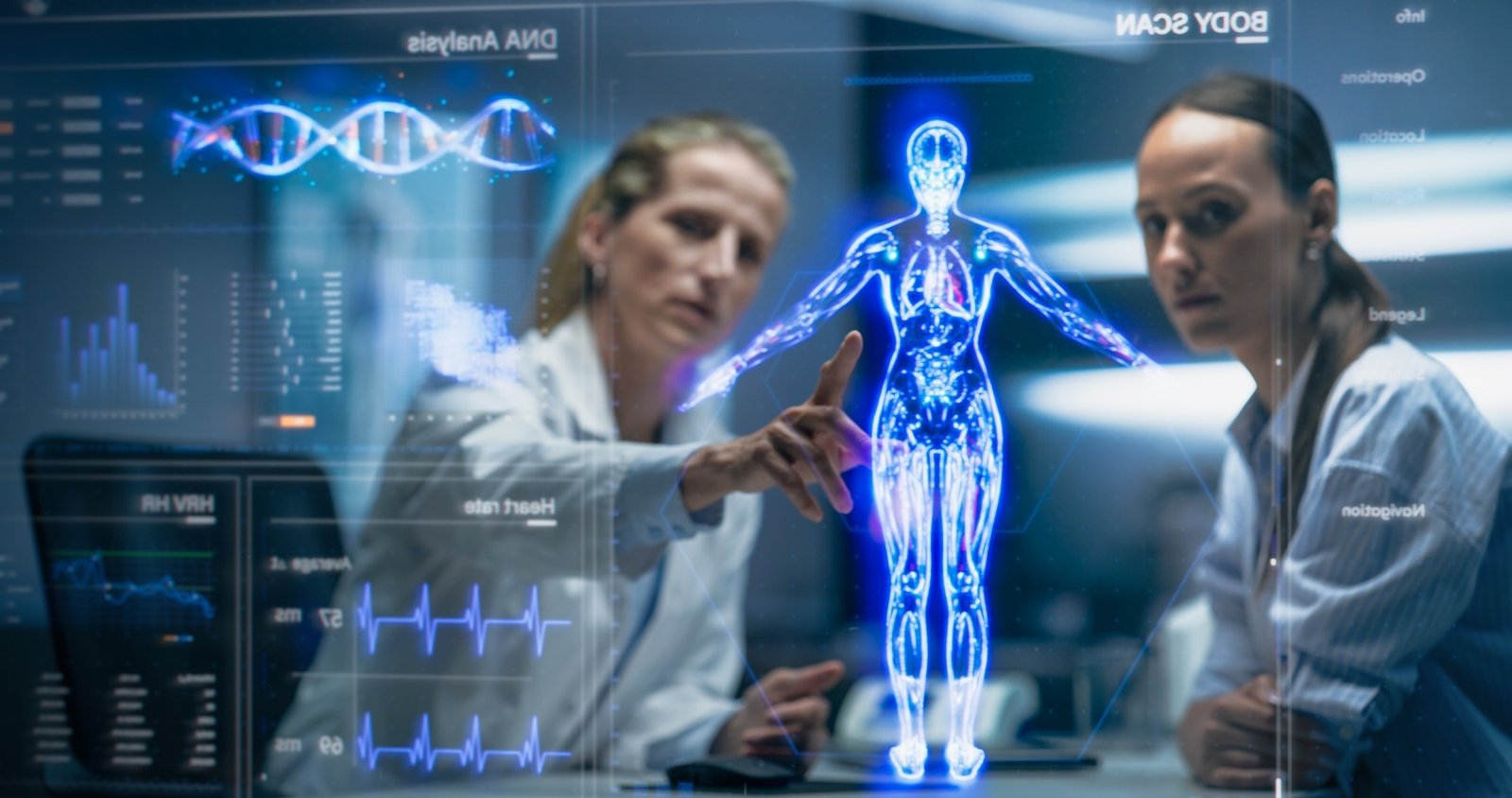
Scientific research has long depended on physical experiments and observations, a process that can be slow and expensive. A new approach is changing that equation. Researchers are increasingly turning to digital twins, virtual replicas of physical systems that can be tested and manipulated at digital speed. These models are not just for engineering anymore. They are becoming a core tool in fields from neuroscience to climate science.

What exactly is a digital twin

A digital twin is a virtual model that mirrors a real world object, process, or system. It updates continuously with data from sensors and other sources, allowing scientists to simulate scenarios and predict outcomes without touching the physical system. The concept originated in manufacturing and aerospace, where companies like NASA used early versions to monitor spacecraft. Now, the same idea is being applied to complex biological and environmental systems.

Current digital twins can simulate a single organ, a factory floor, or even a city. The next generation aims higher. Researchers are working on whole-brain models, planetary climate simulations, and digital copies of entire supply chains. The key advantage is speed. A simulation that would take years in a physical lab can run in days or hours on a supercomputer. This accelerates the pace of discovery and reduces costs.

🔮
RECOMMENDED READ
The Singularity Is Nearer: When We Merge with AI
Ray Kurzweil
An updated roadmap for the technologies reshaping human civilisation this decade.
View on Amazon →affiliate link

Brain and Earth scale projects lead the way

Two ambitious projects illustrate the range of digital twin applications. The Virtual Brain Twin initiative, backed by the European Union, seeks to create a personalized digital model of the human brain. By integrating patient brain scans and real-time neural data, the model could help doctors test treatments for epilepsy, Parkinson’s disease, and other neurological disorders before applying them. The goal is to move from trial and error medicine to predictive, personalized care.

On a planetary scale, the Destination Earth project is building a digital twin of the entire Earth system. This model ingests data from satellites, weather stations, and ocean buoys to simulate climate patterns, extreme weather events, and the effects of policy changes. Policymakers could use the twin to test the impact of carbon reduction strategies or to predict the path of a hurricane. Both projects rely on massive computing power and sophisticated algorithms to mimic reality with high fidelity.

The impact on research methodology is significant. Scientists no longer have to choose between simplified laboratory models and uncontrolled field studies. Digital twins offer a middle ground, a controlled yet realistic environment for hypothesis testing. They also enable experiments that would be impossible in the physical world, such as observing the long-term effects of climate change over centuries or the spread of a neural signal across a complete brain network.

Challenges and the road ahead

Building accurate twins is not easy. They require high-quality, continuous data streams and models that can handle immense complexity. A brain twin must account for billions of neurons and trillions of connections. An Earth twin must integrate atmospheric, oceanic, and land surface dynamics. Computational costs remain high, and not all systems are well understood enough to model accurately.

Despite these hurdles, the trajectory is clear. Digital twins are moving from niche engineering tools to general scientific instruments. They complement rather than replace physical experiments. The most powerful research programs will likely combine both approaches, using twins to narrow the search space and physical tests to confirm key results. As data collection improves and computing power grows, the fidelity and range of digital twins will only increase.

For those tracking where technology meets research, this is a space to watch. To stay ahead of the latest developments in AI and science, {$link_text}. The next decade may well be defined by our ability to mirror and manipulate the world in code before making changes to the world itself.

Tags: AI Researchbrain simulationclimate modelingdigital twinsscientific discovery
SummarizeShare234
Ramo

Ramo

Ramo is the editorial voice of Mylistingo — an AI and technology news platform based in The Hague, Netherlands. Covering artificial intelligence, machine learning, robotics, and the future of technology, Ramo delivers accurate, accessible reporting for both general audiences and industry professionals. Every article is fact-checked and written to meet Mylistingo's strict no-fabrication editorial standards.

Related Stories

Future technology superconductivity breakthrough 2026

Superconductivity Breakthrough Could Reshape Electronics

by Ramo
24 June 2026
0

Chalmers researchers have preserved superconductivity under real-world conditions, a step that could change electronics and energy transmission.

Technology circuit board and AI infrastructure

COMPUTEX 2026: The Hardware World Bets on AI Agents

by Ramo
23 June 2026
0

From Intel's rackscale inference clouds to NVIDIA's laptop AI chips, COMPUTEX 2026 made one thing clear: the hardware industry has made its bet on agentic AI.

Asteroid Ryugu samples contain alien microbes but they are not what you think

Asteroid Ryugu samples contain alien microbes but they are not what you think

by Ramo
23 June 2026
0

Samples from asteroid Ryugu show contamination by Earth microbes after return, raising new questions about planetary protection and life detection.

Nvidia frames the next stage of ai as a physical and robotic shift

Nvidia frames the next stage of ai as a physical and robotic shift

by Ramo
23 June 2026
0

Nvidia CEO Jensen Huang outlined a vision for physical AI at GTC 2025, describing a robotics era beyond generative models and data center chips.

Recommended

AI’s Environmental Cost: What the UN’s 2026 Data Centre Report Reveals — Photo by www.kaboompics.com on Pexels

AI’s Environmental Cost: What the UN’s 2026 Data Centre Report Reveals

22 June 2026
AI Is Now Standard in Classrooms. The Debate Has Shifted. — Photo by contact me +923323219715 on Pexels

AI Is Now Standard in Classrooms. The Debate Has Shifted.

22 June 2026

Popular Story

  • How I Developed a Trading Indicator That Boasts Over 350% Returns—and How to Get It for Free — Photo by Саша Алалыкин on Pexels

    How I Developed a Trading Indicator That Boasts Over 350% Returns—and How to Get It for Free

    37 shares
    Share 477 Tweet 298
  • Is Your Home Truly Safe The Smart Security Tech You Need in 2025

    587 shares
    Share 235 Tweet 147
  • AI Takes the Field: Strikes, Horses, and the NBA Draft

    587 shares
    Share 235 Tweet 147
  • OpenAI unveils Lockdown Mode to protect sensitive data from prompt injection attacks

    587 shares
    Share 235 Tweet 147
  • How AI Is Changing Sports Coaching in 2026

    586 shares
    Share 234 Tweet 147
Mylstingo

We bring you the best Premium WordPress Themes that perfect for news, magazine, personal blog, etc. Check our landing page for details.

Recent Posts

  • Ex-Trump adviser Bolton pleads guilty in classified documents case
  • Morocco jails 29, including politicians and sports figures, in drug trial
  • Why has the UN paused plans to evacuate sailors from the Strait of Hormuz?

Categories

  • AI & Tech
  • AI in Business
  • AI in Climate
  • AI in Education
  • AI in Finance
  • AI in Health
  • AI in Law
  • AI in Sport
  • Future Tech
  • Machine Learning
  • Robotics
  • Startups
  • Tools & Apps
  • Uncategorized

Weekly Newsletter

  • Home
  • Latest News
  • Contact Us
  • Data Deletion Instructions
  • Editorial Policy

Welcome Back!

Login to your account below

Forgotten Password?

Retrieve your password

Please enter your username or email address to reset your password.

Log In
No Result
View All Result
  • Home
  • AI & Tech
  • Machine Learning
  • Startups
  • Tools & Apps
  • Robotics
  • Future Tech
  • AI in Industry
    • AI in Sport ⚽
    • AI in Health
    • AI in Education
    • AI in Finance
    • AI in Business
    • AI in Law
    • AI in Climate