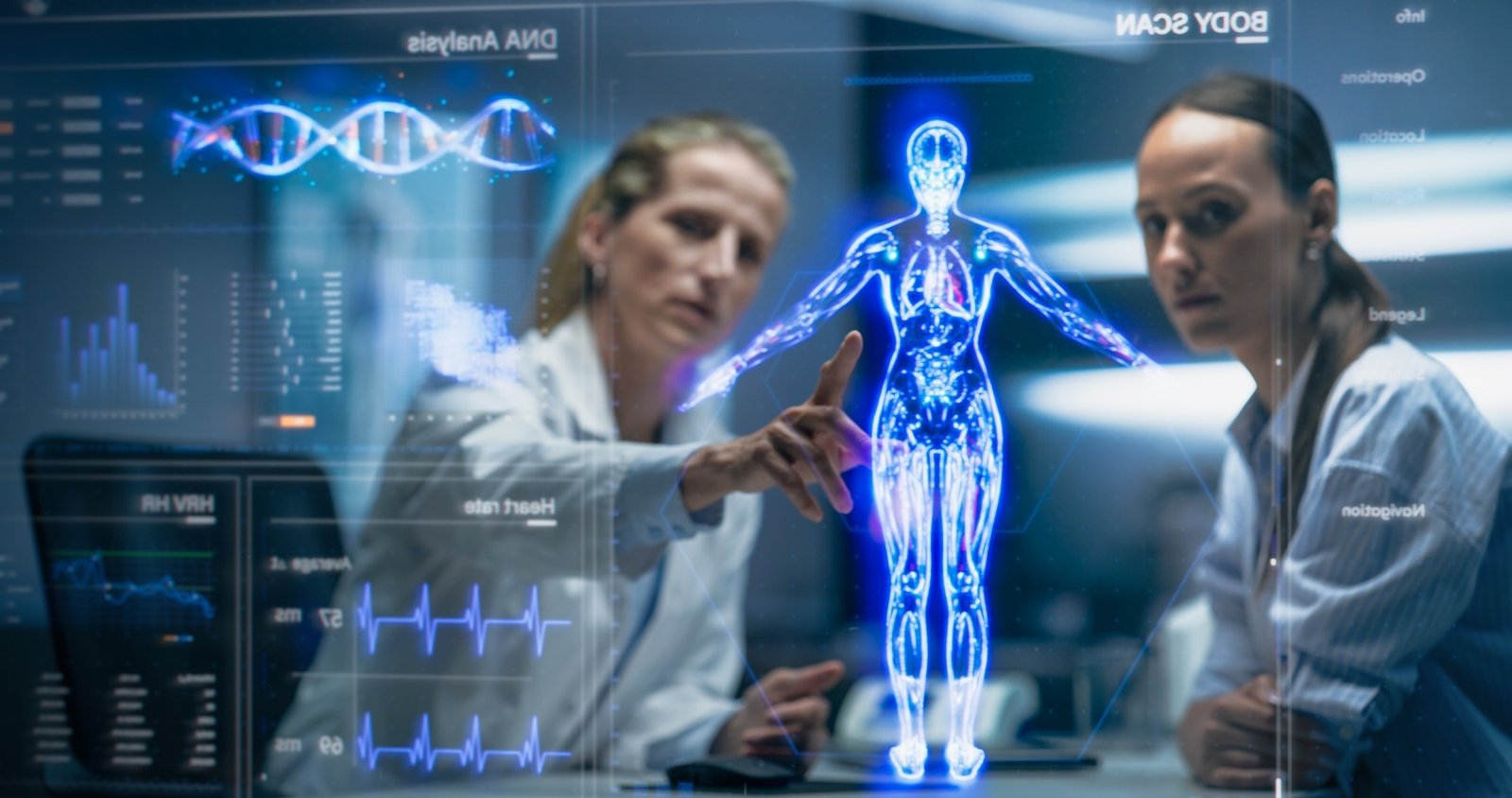
Scientific research has long depended on physical experiments and observations, a process that can be slow and expensive. A new approach is changing that equation. Researchers are increasingly turning to digital twins, virtual replicas of physical systems that can be tested and manipulated at digital speed. These models are not just for engineering anymore. They are becoming a core tool in fields from neuroscience to climate science.
What exactly is a digital twin
A digital twin is a virtual model that mirrors a real world object, process, or system. It updates continuously with data from sensors and other sources, allowing scientists to simulate scenarios and predict outcomes without touching the physical system. The concept originated in manufacturing and aerospace, where companies like NASA used early versions to monitor spacecraft. Now, the same idea is being applied to complex biological and environmental systems.
Current digital twins can simulate a single organ, a factory floor, or even a city. The next generation aims higher. Researchers are working on whole-brain models, planetary climate simulations, and digital copies of entire supply chains. The key advantage is speed. A simulation that would take years in a physical lab can run in days or hours on a supercomputer. This accelerates the pace of discovery and reduces costs.
Brain and Earth scale projects lead the way
Two ambitious projects illustrate the range of digital twin applications. The Virtual Brain Twin initiative, backed by the European Union, seeks to create a personalized digital model of the human brain. By integrating patient brain scans and real-time neural data, the model could help doctors test treatments for epilepsy, Parkinson’s disease, and other neurological disorders before applying them. The goal is to move from trial and error medicine to predictive, personalized care.
On a planetary scale, the Destination Earth project is building a digital twin of the entire Earth system. This model ingests data from satellites, weather stations, and ocean buoys to simulate climate patterns, extreme weather events, and the effects of policy changes. Policymakers could use the twin to test the impact of carbon reduction strategies or to predict the path of a hurricane. Both projects rely on massive computing power and sophisticated algorithms to mimic reality with high fidelity.
The impact on research methodology is significant. Scientists no longer have to choose between simplified laboratory models and uncontrolled field studies. Digital twins offer a middle ground, a controlled yet realistic environment for hypothesis testing. They also enable experiments that would be impossible in the physical world, such as observing the long-term effects of climate change over centuries or the spread of a neural signal across a complete brain network.
Challenges and the road ahead
Building accurate twins is not easy. They require high-quality, continuous data streams and models that can handle immense complexity. A brain twin must account for billions of neurons and trillions of connections. An Earth twin must integrate atmospheric, oceanic, and land surface dynamics. Computational costs remain high, and not all systems are well understood enough to model accurately.
Despite these hurdles, the trajectory is clear. Digital twins are moving from niche engineering tools to general scientific instruments. They complement rather than replace physical experiments. The most powerful research programs will likely combine both approaches, using twins to narrow the search space and physical tests to confirm key results. As data collection improves and computing power grows, the fidelity and range of digital twins will only increase.
For those tracking where technology meets research, this is a space to watch. To stay ahead of the latest developments in AI and science, Mylistingo. The next decade may well be defined by our ability to mirror and manipulate the world in code before making changes to the world itself.
The Netherlands, for internationals
One email a week: the week's news for internationals in the Netherlands, new practical guides and what changed in the cities. No spam, unsubscribe any time.