AI News
  • Home
  • AI & Tech
  • Machine Learning
  • Startups
  • Tools & Apps
  • Robotics
  • Future Tech
  • AI in Industry
    • AI in Sport ⚽
    • AI in Health
    • AI in Education
    • AI in Finance
    • AI in Business
    • AI in Law
    • AI in Climate
No Result
View All Result
SAVED POSTS
AI News
  • Home
  • AI & Tech
  • Machine Learning
  • Startups
  • Tools & Apps
  • Robotics
  • Future Tech
  • AI in Industry
    • AI in Sport ⚽
    • AI in Health
    • AI in Education
    • AI in Finance
    • AI in Business
    • AI in Law
    • AI in Climate
No Result
View All Result
AI News
No Result
View All Result

Asteroid Ryugu samples contain alien microbes but they are not what you think

Ramo by Ramo
10 July 2026
in Future Tech
401 22
0
Asteroid Ryugu samples contain alien microbes but they are not what you think
585
SHARES
3.3k
VIEWS
Summarize with ChatGPTShare to Facebook

Scientists analyzing samples from the asteroid Ryugu have made a surprising discovery. The material collected by Japan’s Hayabusa2 mission contains traces of microbial life. But these organisms did not originate in space. They are Earth-based microbes that colonized the samples after they landed on our planet. The finding highlights a major challenge in the search for extraterrestrial life.

What the Ryugu samples revealed

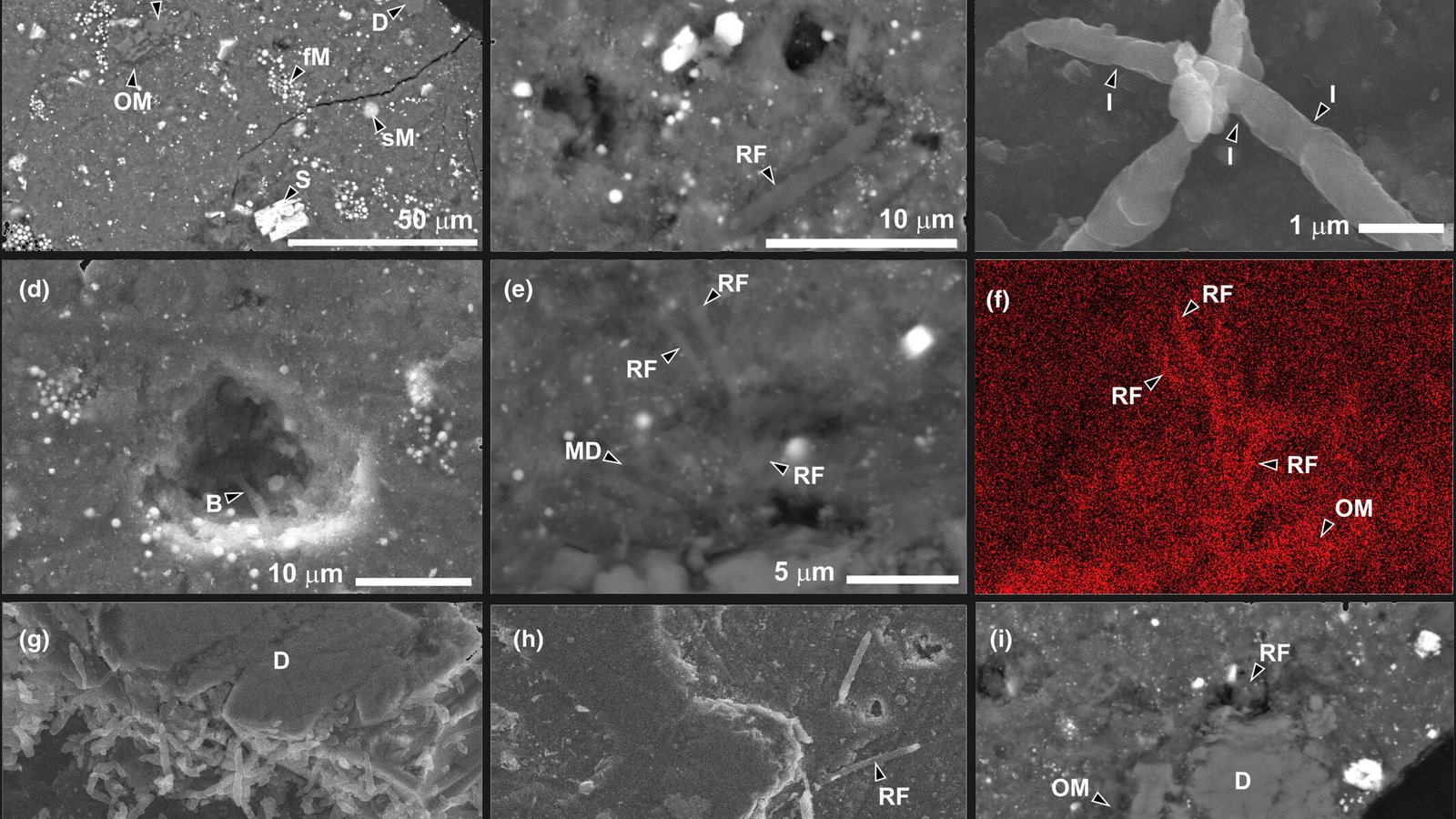
The Hayabusa2 spacecraft returned about 5.4 grams of material from Ryugu in December 2020. Researchers expected the samples to be sterile given the harsh conditions of space. However, a new study published in the journal Meteoritics and Planetary Science reports the presence of filamentous microorganisms embedded in the asteroid fragments. The team used advanced imaging and DNA analysis to identify the microbes as terrestrial in origin.

The contamination likely occurred during sample handling or storage. Despite rigorous protocols, microorganisms found a way to colonize the organic matter present in the Ryugu fragments. This discovery does not mean we found alien life. It means we brought our own life with us, and it adapted to a new environment.

🔮
RECOMMENDED READ
The Singularity Is Nearer: When We Merge with AI
Ray Kurzweil
An updated roadmap for the technologies reshaping human civilisation this decade.
View on Amazon →affiliate link

The lead author of the study emphasized that the finding is a cautionary tale. If Earth microbes can colonize asteroid samples so readily, then future missions to Mars or the icy moons of Jupiter and Saturn will face even greater challenges. Contamination could ruin the search for authentic extraterrestrial biosignatures.

Implications for planetary protection

The Ryugu finding underscores why space agencies invest heavily in clean rooms and sterilization techniques. The Outer Space Treaty requires that missions avoid harmful contamination of other worlds. But this study shows that even with the best practices, contamination can happen. The microbes found in the Ryugu samples were likely introduced after the samples arrived on Earth, not during the collection process.

The researchers noted that the microbial filaments were concentrated in areas rich in organic compounds. These compounds, which include carbon-based molecules, are exactly the kind of material that future missions will target when searching for signs of life. If we cannot keep our samples clean, we may never know if we have found something truly alien.

This problem is not limited to returned samples. Rovers and landers on Mars also carry Earth microbes despite extensive cleaning. The Perseverance rover, for example, underwent intense sterilization before launch. Still, some hardy bacteria survived. The Ryugu study suggests that these stowaways could confuse instruments designed to detect life.

The road ahead for sample return missions

NASA and JAXA are planning even more ambitious sample return missions. The OSIRIS-REx mission returned material from the asteroid Bennu in September 2023. China’s Chang’e 5 and Chang’e 6 missions brought lunar samples back to Earth. And the Mars Sample Return campaign, a joint NASA-ESA effort, aims to bring Martian rocks and soil to our planet in the early 2030s. Each of these missions must contend with the risk of contamination.

The researchers behind the Ryugu study recommend stronger containment procedures. They suggest using multiple layers of sealing, working in glove boxes with purified atmospheres, and developing better methods to detect microbial DNA. They also advocate for more research into how Earth organisms interact with extraterrestrial materials.

This discovery also raises questions about the nature of life itself. If terrestrial bacteria can survive and reproduce on asteroid fragments, it suggests that life is more resilient than we thought. It also means that our attempts to find life elsewhere may be hampered by our inability to keep our own life away from the samples. The search for alien life may require not just better instruments but also a deeper understanding of our own biological contamination.

The Ryugu samples are still yielding data. Scientists continue to study them for clues about the early solar system, the origins of water on Earth, and the organic chemistry that preceded life. But the microbial finding will likely change how future missions are designed. It is a reminder that the hardest part of finding life beyond Earth may be proving that we did not bring it with us. For more insights on the future of space exploration and AI-driven analysis, check out Mylistingo.

Tags: asteroid microbesHayabusa2planetary protectionRyuguspace contamination
SummarizeShare234
Ramo

Ramo

Ramo is the editorial voice of Mylistingo — an AI and technology news platform based in The Hague, Netherlands. Covering artificial intelligence, machine learning, robotics, and the future of technology, Ramo delivers accurate, accessible reporting for both general audiences and industry professionals. Every article is fact-checked and written to meet Mylistingo's strict no-fabrication editorial standards.

Related Stories

Neuromorphic chip architecture illustrating brain-inspired neural network design with synaptic connections on a futuristic blue circuit board

The Rise of Neuromorphic Computing: How Brain-Inspired Chips Are Transforming AI in 2026

by Ramo
15 July 2026
0

Explore how neuromorphic computing is revolutionizing AI hardware in 2026 with brain-inspired chips that consume less power and process information faster than traditional GPUs.

Brain-Computer Interfaces Move from Labs to Real-World Applications in 2026

Brain-Computer Interfaces Move from Labs to Real-World Applications in 2026

by Ramo
14 July 2026
0

Brain-computer interfaces leave research labs in 2026. Neuralink, Synchron, and startups bring mind-controlled devices to patients and consumers.

European Digital Identity Wallet Rollout Accelerates Across EU in 2026

European Digital Identity Wallet Rollout Accelerates Across EU in 2026

by Ramo
14 July 2026
0

The European Union's digital identity wallet program enters a critical phase in 2026, with the Netherlands among the first member states deploying the interoperable digital ID for 450...

Robotaxis arrive in Rotterdam Netherlands autonomous ride-hailing fleet

Robotaxis Arrive in Rotterdam: Netherlands Launches Europe’s Largest Autonomous Ride-Hailing Fleet

by Ramo
13 July 2026
0

Rotterdam becomes the first Dutch city with commercial robotaxis, as AutoValet deploys 120 self-driving EVs across the city — with The Hague expansion expected by September 2026.

Recommended

ml feat fix 14013

Ford Rehires Veteran ‘Gray Beard’ Engineers After AI Falls Short on the Factory Floor

2 July 2026
Editorial photo for: Schools Are All-In on AI. Are Students Still Learning?

Schools Are All-In on AI. Are Students Still Learning?

10 July 2026

Popular Story

  • ml_feat_56193023

    ASML’s Next-Gen High-NA EUV Machines Drive Eindhoven Expansion, Creating 20,000 New Jobs

    590 shares
    Share 236 Tweet 148
  • Best Cafes and Coffee Shops in The Hague 2026: A Digital Nomad’s Guide

    589 shares
    Share 236 Tweet 147
  • The New Space Arms Race in 2026: Satellite Warfare and the Geopolitics of Orbital Dominance

    588 shares
    Share 235 Tweet 147
  • Inside The Hague’s AI-Powered International Criminal Court: How Machine Learning Is Accelerating Justice

    588 shares
    Share 235 Tweet 147
  • Is Your Home Truly Safe The Smart Security Tech You Need in 2025

    587 shares
    Share 235 Tweet 147
Advertise Here
Your Ad Could Be Here

This premium 300×250 spot is available. Reach our AI & tech audience with your product or service.

Book This Space →
logo ainews

We bring you the best Premium WordPress Themes that perfect for news, magazine, personal blog, etc. Check our landing page for details.

Recent Posts

  • Global Stock Markets in 2026: Record Highs, Rate Decisions, and the AI Bubble Debate
  • How Digital Nomads Are Reshaping Global Economies in 2026
  • The Rise of Neuromorphic Computing: How Brain-Inspired Chips Are Transforming AI in 2026

Categories

  • AI & Tech
  • AI in Business
  • AI in Climate
  • AI in Education
  • AI in Finance
  • AI in Health
  • AI in Law
  • AI in Sport
  • Economy & Finance
  • Future Tech
  • Machine Learning
  • Politics & Geopolitics
  • Robotics
  • Social Topics
  • Sport
  • Startups
  • The Hague
  • Tools & Apps

Weekly Newsletter

  • Home
  • Advertise
  • Latest News
  • Contact Us
  • Data Deletion Instructions
  • Editorial Policy

Welcome Back!

Login to your account below

Forgotten Password?

Retrieve your password

Please enter your username or email address to reset your password.

Log In
No Result
View All Result
  • Home
  • AI & Tech
  • Machine Learning
  • Startups
  • Tools & Apps
  • Robotics
  • Future Tech
  • AI in Industry
    • AI in Sport ⚽
    • AI in Health
    • AI in Education
    • AI in Finance
    • AI in Business
    • AI in Law
    • AI in Climate