AI News
  • Home
  • AI & Tech
  • Machine Learning
  • Startups
  • Tools & Apps
  • Robotics
  • Future Tech
  • AI in Industry
    • AI in Sport ⚽
    • AI in Health
    • AI in Education
    • AI in Finance
    • AI in Business
    • AI in Law
    • AI in Climate
No Result
View All Result
SAVED POSTS
AI News
  • Home
  • AI & Tech
  • Machine Learning
  • Startups
  • Tools & Apps
  • Robotics
  • Future Tech
  • AI in Industry
    • AI in Sport ⚽
    • AI in Health
    • AI in Education
    • AI in Finance
    • AI in Business
    • AI in Law
    • AI in Climate
No Result
View All Result
AI News
No Result
View All Result

Nvidia frames the next stage of ai as a physical and robotic shift

Ramo by Ramo
10 July 2026
in Future Tech
401 21
0
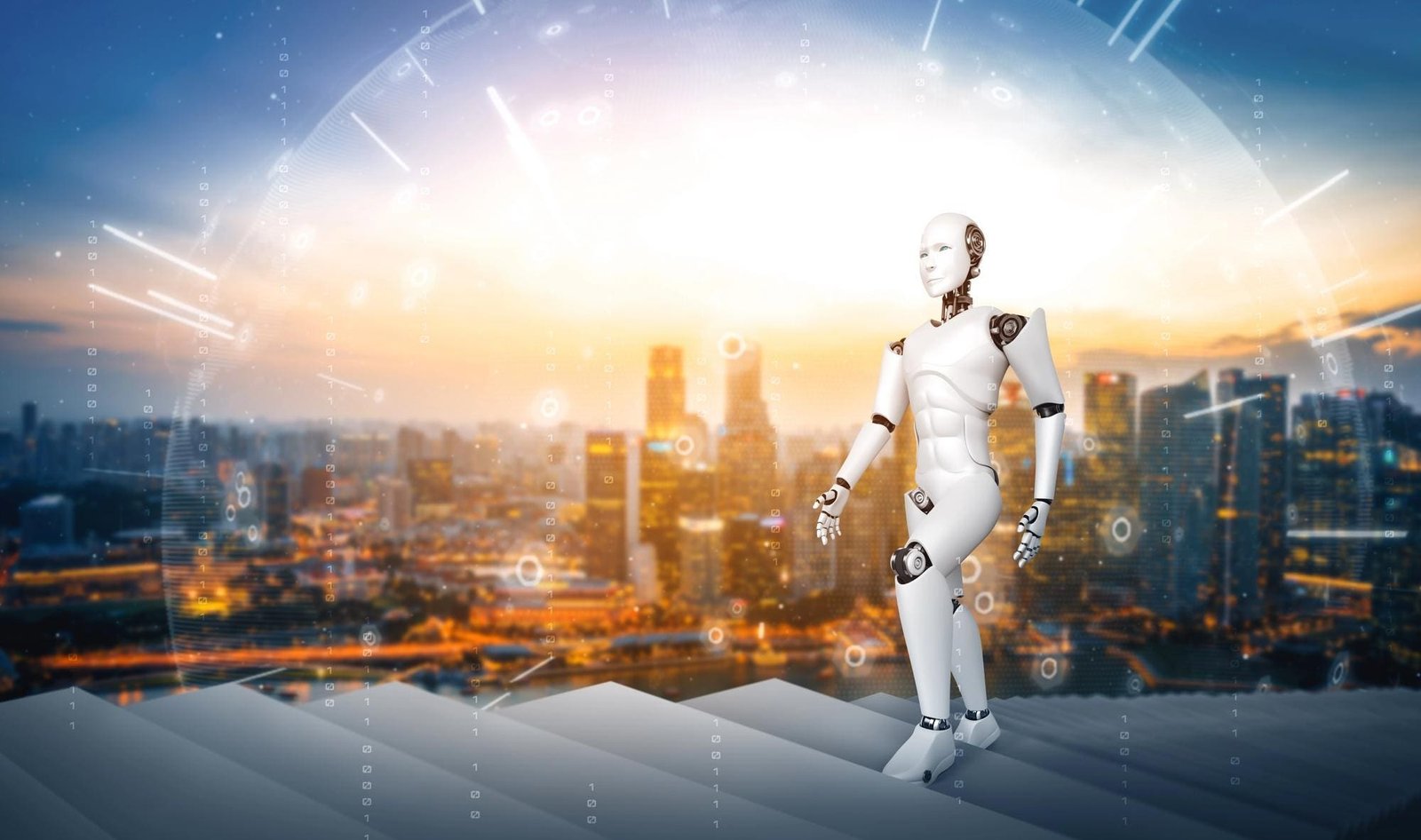
Editorial photo for: Nvidia frames the next stage of ai as a physical and robotic shift

Nvidia frames the next stage of ai as a physical and robotic shift

585
SHARES
3.2k
VIEWS
Summarize with ChatGPTShare to Facebook

Nvidia is turning its gaze from the digital to the tangible. At its annual GTC conference in San Jose, Jensen Huang laid out a vision that moves beyond large language models and data center dominance. The next wave, he explained, will involve machines that can interact with the physical world. This is the era of physical AI, a term the company is pushing to describe robots and autonomous systems that learn by doing.

Robots that learn from human examples

The company revealed a new suite of tools designed to accelerate robotics development. Central to this effort is Nvidia Isaac, a platform that now includes simulation and training capabilities. Developers can use it to train robots in virtual environments before deploying them in factories or warehouses. Huang emphasized that imitation learning, where robots copy human actions from recorded data, will be a key method for teaching these systems. The goal is to reduce the time and cost of programming complex movements from scratch.

Nvidia also announced partnerships with several robotics firms. These collaborations aim to build general-purpose robots that can handle multiple tasks, rather than single-purpose machines. Huang predicted that the market for robotics will eventually surpass the current size of the PC and smartphone industries. He pointed to logistics, manufacturing, and healthcare as early adoption areas.

🔮
RECOMMENDED READ
The Singularity Is Nearer: When We Merge with AI
Ray Kurzweil
An updated roadmap for the technologies reshaping human civilisation this decade.
View on Amazon →affiliate link

The hardware fueling the shift

Underpinning this push is a new chip architecture called Blackwell Ultra. Huang described it as a step up from the current Hopper generation, with improvements in memory bandwidth and processing speed for AI inference. These chips are designed to handle the complex simulations that physical AI requires. Nvidia also introduced a compact computer called Jetson Thor, aimed at powering robotic systems directly on edge devices.

Huang noted that the demand for computing power in this sector is growing faster than expected. He cited the example of a single autonomous vehicle generating terabytes of sensor data per hour. Processing that data in real time, he said, requires a shift in how chips are designed and deployed. The company is positioning its hardware as the backbone for this new class of applications.

The announcement also touched on the convergence of generative AI and physical AI. Huang argued that language models alone cannot control a robot arm or navigate a drone. The next frontier, he said, is combining large language understanding with spatial reasoning and motor control. Nvidia is building software tools that bridge this gap, allowing developers to use natural language prompts to program robot behaviors.

Some analysts at the conference expressed caution. They noted that physical AI faces challenges in safety, regulation, and energy consumption. A robot operating in an uncontrolled environment, one analyst pointed out, has very different failure modes than a chatbot. Nvidia acknowledged these concerns and said it is working with safety researchers to develop standards for testing and deployment.

Huang closed his keynote by framing physical AI as a long term bet. He compared it to the early days of the internet when infrastructure had to be built before applications could flourish. Nvidia, he said, is investing billions in the tools that will enable this future. The company is banking on a world where chips and code move not just bits but objects.

For more on how Nvidia and its partners are shaping the AI hardware landscape, read our analysis of the latest trends in machine learning infrastructure at Mylistingo.


Tags: Blackwell UltraGTC 2025NVIDIAphysical AIrobotics
SummarizeShare234
Ramo

Ramo

Ramo is the editorial voice of Mylistingo — an AI and technology news platform based in The Hague, Netherlands. Covering artificial intelligence, machine learning, robotics, and the future of technology, Ramo delivers accurate, accessible reporting for both general audiences and industry professionals. Every article is fact-checked and written to meet Mylistingo's strict no-fabrication editorial standards.

Related Stories

Neuromorphic chip architecture illustrating brain-inspired neural network design with synaptic connections on a futuristic blue circuit board

The Rise of Neuromorphic Computing: How Brain-Inspired Chips Are Transforming AI in 2026

by Ramo
15 July 2026
0

Explore how neuromorphic computing is revolutionizing AI hardware in 2026 with brain-inspired chips that consume less power and process information faster than traditional GPUs.

Brain-Computer Interfaces Move from Labs to Real-World Applications in 2026

Brain-Computer Interfaces Move from Labs to Real-World Applications in 2026

by Ramo
14 July 2026
0

Brain-computer interfaces leave research labs in 2026. Neuralink, Synchron, and startups bring mind-controlled devices to patients and consumers.

European Digital Identity Wallet Rollout Accelerates Across EU in 2026

European Digital Identity Wallet Rollout Accelerates Across EU in 2026

by Ramo
14 July 2026
0

The European Union's digital identity wallet program enters a critical phase in 2026, with the Netherlands among the first member states deploying the interoperable digital ID for 450...

Robotaxis arrive in Rotterdam Netherlands autonomous ride-hailing fleet

Robotaxis Arrive in Rotterdam: Netherlands Launches Europe’s Largest Autonomous Ride-Hailing Fleet

by Ramo
13 July 2026
0

Rotterdam becomes the first Dutch city with commercial robotaxis, as AutoValet deploys 120 self-driving EVs across the city — with The Hague expansion expected by September 2026.

Recommended

Featured image illustrating Bonds

Global Bond Market Shifts Signal Changing Economic Landscape in Q3 2026

6 July 2026
Editorial photo for: Meta Introduces Llama 3 for Open Source AI Research

Meta Introduces Llama 3 for Open Source AI Research

10 July 2026

Popular Story

  • ml_feat_56193023

    ASML’s Next-Gen High-NA EUV Machines Drive Eindhoven Expansion, Creating 20,000 New Jobs

    590 shares
    Share 236 Tweet 148
  • Best Cafes and Coffee Shops in The Hague 2026: A Digital Nomad’s Guide

    589 shares
    Share 236 Tweet 147
  • The New Space Arms Race in 2026: Satellite Warfare and the Geopolitics of Orbital Dominance

    588 shares
    Share 235 Tweet 147
  • Inside The Hague’s AI-Powered International Criminal Court: How Machine Learning Is Accelerating Justice

    588 shares
    Share 235 Tweet 147
  • Is Your Home Truly Safe The Smart Security Tech You Need in 2025

    587 shares
    Share 235 Tweet 147
Advertise Here
Your Ad Could Be Here

This premium 300×250 spot is available. Reach our AI & tech audience with your product or service.

Book This Space →
logo ainews

We bring you the best Premium WordPress Themes that perfect for news, magazine, personal blog, etc. Check our landing page for details.

Recent Posts

  • Global Stock Markets in 2026: Record Highs, Rate Decisions, and the AI Bubble Debate
  • How Digital Nomads Are Reshaping Global Economies in 2026
  • The Rise of Neuromorphic Computing: How Brain-Inspired Chips Are Transforming AI in 2026

Categories

  • AI & Tech
  • AI in Business
  • AI in Climate
  • AI in Education
  • AI in Finance
  • AI in Health
  • AI in Law
  • AI in Sport
  • Economy & Finance
  • Future Tech
  • Machine Learning
  • Politics & Geopolitics
  • Robotics
  • Social Topics
  • Sport
  • Startups
  • The Hague
  • Tools & Apps

Weekly Newsletter

  • Home
  • Advertise
  • Latest News
  • Contact Us
  • Data Deletion Instructions
  • Editorial Policy

Welcome Back!

Login to your account below

Forgotten Password?

Retrieve your password

Please enter your username or email address to reset your password.

Log In
No Result
View All Result
  • Home
  • AI & Tech
  • Machine Learning
  • Startups
  • Tools & Apps
  • Robotics
  • Future Tech
  • AI in Industry
    • AI in Sport ⚽
    • AI in Health
    • AI in Education
    • AI in Finance
    • AI in Business
    • AI in Law
    • AI in Climate