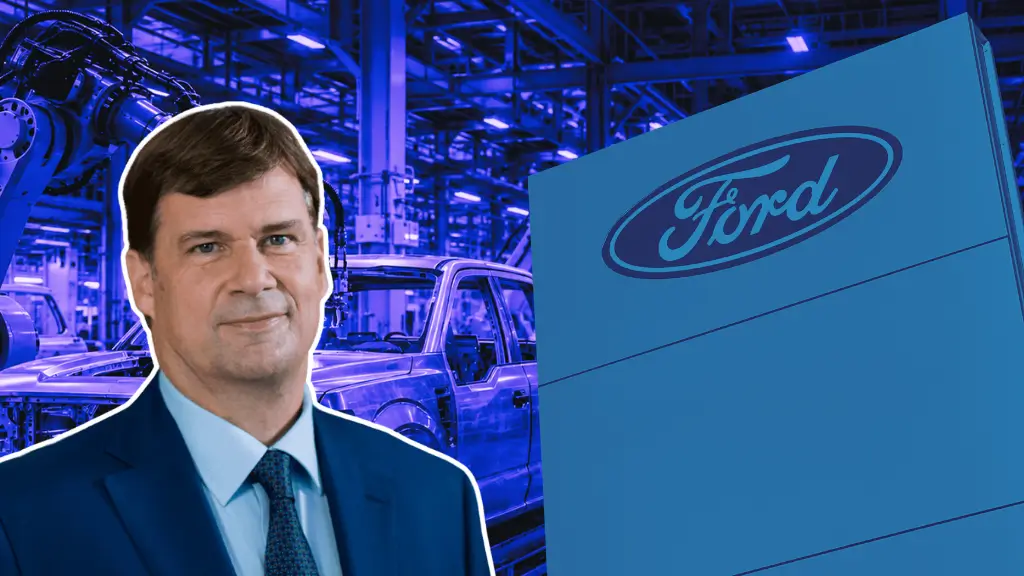
In a striking acknowledgment of artificial intelligence’s current limitations, Ford Motor Company has begun rehiring retired veteran engineers — affectionately dubbed “gray beards” — after discovering that AI-driven manufacturing systems continue to fall short of the nuanced problem-solving capabilities of experienced human workers. The move, reported by TechCrunch, highlights the persistent gap between AI’s promise and its real-world performance in complex industrial environments.
Ford’s decision to bring back retired engineers comes after a multi-year push to integrate AI and machine learning into its production lines, including predictive maintenance systems, computer vision quality control, and automated assembly optimization. While these systems delivered measurable efficiency gains in controlled environments, they repeatedly struggled with edge cases — the unpredictable, real-world problems that veteran engineers have learned to handle through decades of hands-on experience.
“We found that AI is excellent at pattern recognition when conditions are consistent. But manufacturing is rarely consistent,” a Ford manufacturing executive told TechCrunch. “When a conveyor belt misaligns by two millimeters or a sensor gives a slightly anomalous reading, the AI flags an error but cannot diagnose it. Our experienced engineers can walk up, listen to the machine, and tell you exactly what’s wrong in thirty seconds.”
The program, which Ford calls the “Legacy Knowledge Initiative,” brings retired engineers back on contract bases to work alongside AI systems and younger engineering teams. The veteran engineers serve as mentors, troubleshoot complex production issues, and — critically — help train the next generation of AI models by documenting the tacit knowledge that has never been formally captured in company databases.
Ford is not alone in rediscovering the value of human expertise in an AI-driven world. Across the automotive and heavy manufacturing sectors, companies ranging from Boeing to Siemens have launched similar initiatives to preserve institutional knowledge. Industry analysts note that despite billions of dollars invested in industrial AI, the technology still struggles with what engineers call “the last mile problem” — the final, often intuitive steps of diagnosis and decision-making that separate functional automation from truly intelligent systems. The experience at Ford serves as a powerful reminder that, for all of AI’s advances, there remains no substitute for the irreplaceable judgment of seasoned human professionals.
The Netherlands, for internationals
One email a week: the week's news for internationals in the Netherlands, new practical guides and what changed in the cities. No spam, unsubscribe any time.