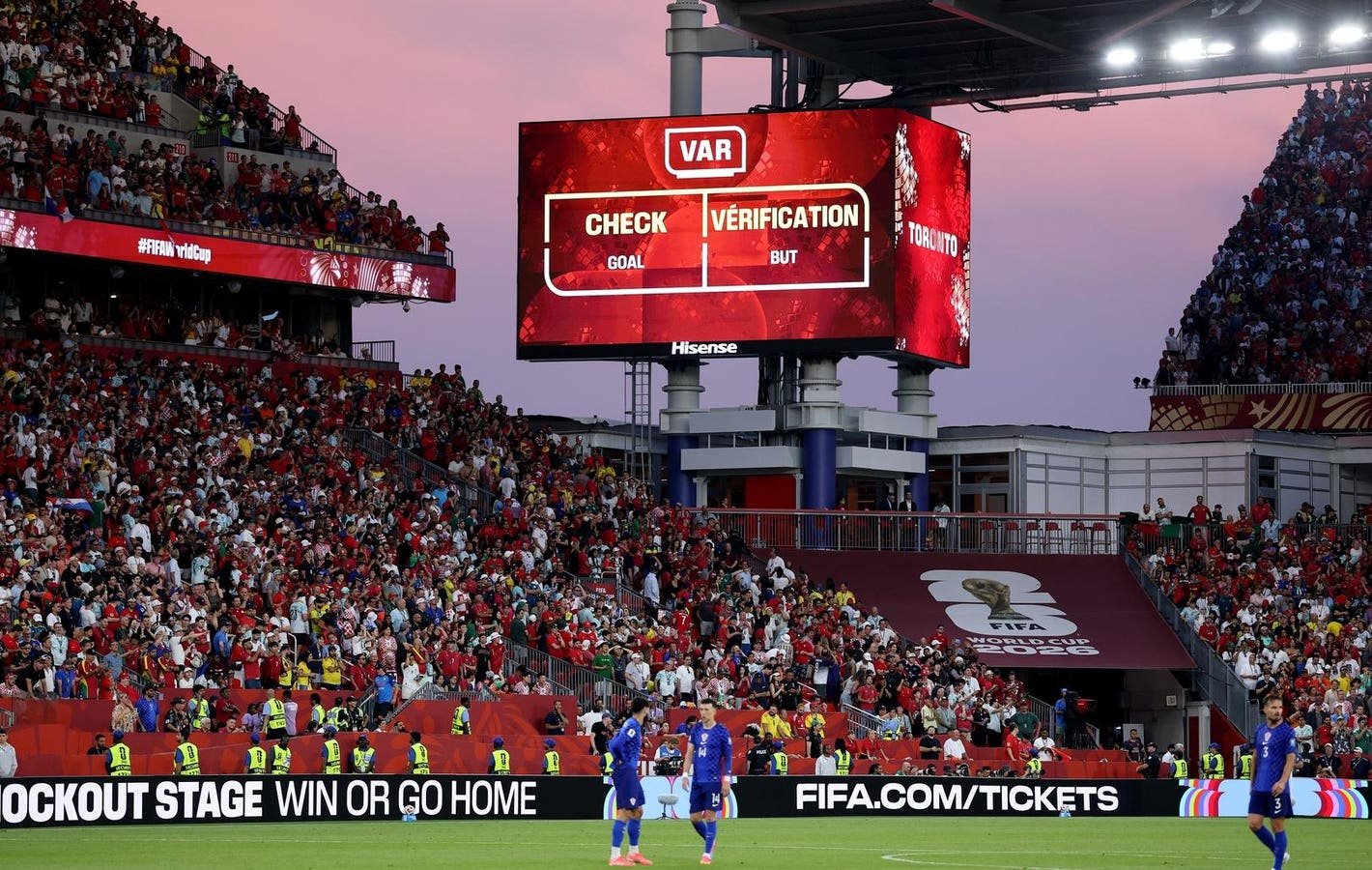
The 2026 FIFA World Cup will be remembered not just for the breathtaking goals and dramatic upsets, but as the tournament where artificial intelligence and cutting-edge technology fundamentally rewrote the rules of football. From the moment the first whistle blew, it was clear this would be unlike any World Cup before it.
The Rise of AI Officiating and VAR 2.0
Perhaps the most visible change at the 2026 World Cup was the introduction of VAR 2.0 a fully AI-enhanced video assistant referee system. Unlike its predecessor, which relied heavily on human frame-by-frame analysis, VAR 2.0 used neural networks trained on millions of match incidents to make near-instantaneous offside and foul detection calls.
The system, powered by 12 specialized cameras positioned around each stadium, could flag potential offside positions in under two seconds with an accuracy rate of over 99%. The AI did not just detect offsides; it provided semi-automated offside technology that rendered 3D skeleton models of every player on the pitch in real time, allowing referees to make decisions with unprecedented confidence.
Handball decisions, historically one of the most controversial aspects of football, were also transformed. The AI analyzed arm positions, ball trajectory, and player intent using predictive motion models, dramatically reducing the number of disputed calls. However, the technology was not without its detractors. Several managers complained that the system was too clinical, removing the “human element” that had always been part of the game charm.
Player Tracking and Fitness Intelligence
Behind the scenes, every player at the 2026 World Cup was monitored by an intricate network of sensors and AI systems. The official match ball, developed with advanced microchip technology, transmitted positional data 500 times per second. Combined with wearable GPS trackers in players shirts and optical tracking from stadium cameras, coaches had access to real-time data on player fatigue, sprint distances, acceleration patterns, and even predicted injury risk.
One of the most significant innovations was the AI-powered substitution recommendation engine. Using historical data combined with live match metrics, the system could predict with remarkable accuracy when a player was likely to suffer a muscle injury or when their performance would drop below 70% effectiveness. Several teams credited this technology with preventing crucial injuries during the knockout stages.
The impact on tactics was profound. Managers could now see exactly which areas of the pitch their team was dominating or struggling in, updated in real time. This data-driven approach led to more dynamic substitutions and tactical adjustments than ever before in World Cup history.
AI-Generated Highlights and Personalized Broadcasting
For the first time at a World Cup, broadcasters used AI to generate personalized highlight reels for fans. The system analyzed every moment of every match, tagging events by type goals, saves, tackles, passes, and even emotional crowd reactions and then compiled custom packages based on viewer preferences. Fans could choose to see only their favorite team attacking plays, or all the controversial refereeing decisions, or every moment involving a specific player.
The AI highlight system also powered the tournament social media presence. Within 30 seconds of any goal, a professionally edited clip with multiple camera angles was automatically generated and posted to official channels. This near-instant turnaround generated billions of views across platforms and brought the tournament to a global audience at an unprecedented scale.
Smart Stadiums and the Fan Experience
The 2026 World Cup stadiums were themselves marvels of technology. Each venue was equipped with an AI-powered crowd management system that monitored foot traffic, queue lengths, and concession stand demand in real time. Fans received personalized notifications directing them to the shortest queues and suggesting optimal times to visit restrooms or grab refreshments.
Augmented reality features were integrated into the official tournament app, allowing fans to point their phones at the pitch and see player stats, heat maps, and even real-time positioning overlaid on the live action. The system also provided multi-language real-time commentary powered by natural language processing, allowing fans to hear professional-quality commentary in any of 40 languages.
How Smaller Teams Used AI Scouting to Compete
Perhaps the most heartwarming story of the 2026 World Cup was how smaller footballing nations used AI-powered scouting to punch above their weight. Traditional scouting networks require significant investment in human scouts, travel, and infrastructure. AI scouting platforms, however, allowed teams with limited budgets to analyze millions of data points from leagues around the world, identifying undervalued players and tactical patterns that gave them a competitive edge.
Several of the tournament surprise packages openly credited their AI analytics tools. These systems did not just evaluate individual players; they modeled how specific players would fit into a team tactical system, predicted chemistry with potential teammates, and even simulated match outcomes based on different lineup combinations. For nations that had never progressed past the group stage, this technology was genuinely transformative.
To learn more about how data-driven approaches are reshaping the beautiful game at every level, read our in-depth analysis: How AI and Data Analytics Are Revolutionizing Football in 2026.
Controversies and the Future of Football Technology
Despite the remarkable advancements, the 2026 World Cup was not without controversy. Some purists argued that AI was sucking the soul out of football, turning it into a sterile data exercise rather than a passionate human competition. The VAR 2.0 system, while remarkably accurate, still faced criticism for marginal offside calls that, while technically correct, went against the traditional spirit of the game.
There were also questions about data privacy and the extent of player monitoring. Unions raised concerns about how biometric data collected during matches might be used by clubs and governing bodies in the future. FIFA responded by implementing strict data governance policies, but the debate is far from over.
As we look ahead, the 2026 World Cup has set a new standard for technology in football. AI is no longer a futuristic concept being tested on the sidelines it is now an integral part of how the game is played, officiated, consumed, and analyzed. The question is no longer whether technology belongs in football, but how we balance innovation with the raw, unpredictable human drama that makes the sport so beloved.
The beautiful game will always be about the players, the passion, and the moments of magic that defy analysis. But in 2026, we learned that AI does not have to diminish those moments it can enhance them, protect the integrity of the competition, and bring the sport to more people around the world than ever before.
The Netherlands, for internationals
One email a week: the week's news for internationals in the Netherlands, new practical guides and what changed in the cities. No spam, unsubscribe any time.