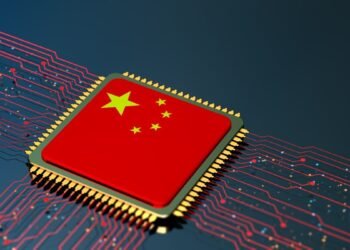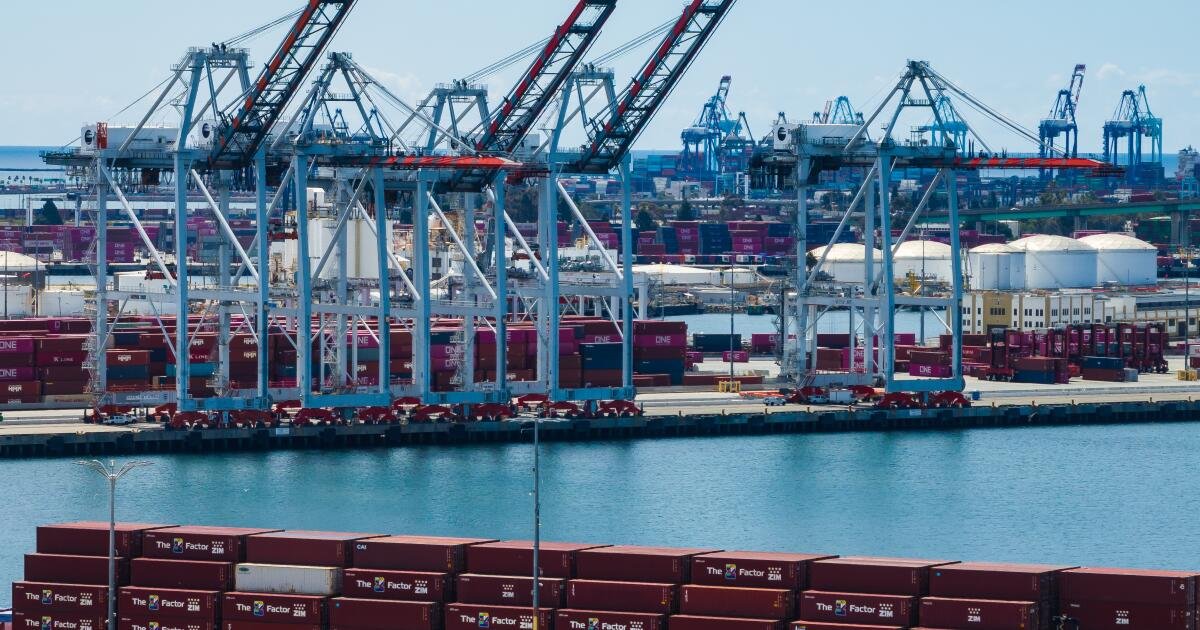
The landscape of global trade in mid-2026 is unrecognisable from even five years ago. What began as a bilateral trade dispute between the United States and China in 2018 has metastasized into a multi-front confrontation involving the European Union, Japan, South Korea, India, and a growing coalition of emerging economies determined to navigate between competing superpowers. With the US maintaining tariffs as high as 145 percent on Chinese goods, China retaliating with 125 percent levies on American products, and the EU imposing its own tariffs on Chinese electric vehicles and steel, the world economy is fragmenting along geopolitical fault lines at an accelerating pace.
This is not a conventional trade war in the historical sense — it is a systemic reordering of global supply chains, technology transfer, and financial architecture driven by a fundamental loss of trust between the world’s largest economies. At the heart of the transformation are three interconnected dynamics: the weaponization of tariffs for strategic ends, the acceleration of technology decoupling in semiconductors and artificial intelligence, and the emergence of alternative trading blocs that seek to reduce dependence on both Washington and Beijing.
The ramifications of this fragmentation are being felt across every sector of the global economy. From the Dutch port of Rotterdam to the factories of Guangdong, from the boardrooms of Silicon Valley to the farms of the American Midwest, the trade wars of 2026 are rewriting the rules of international commerce in ways that will persist for a generation. As explored in our analysis of ASML’s position in the global semiconductor race, the technology sector is at the epicentre of this transformation.
The Tariff Escalation: From Trade Dispute to Economic Warfare
The second Trump administration’s trade policy, implemented through a series of executive actions beginning in January 2025, represented a dramatic escalation from the first-term tariffs that had defined US-China economic relations from 2018 onward. Where the first Trump administration had imposed tariffs averaging 19.3 percent on Chinese goods by the end of 2019, the 2025-2026 campaign raised those rates to an unprecedented 145 percent on a broad basket of Chinese imports, while simultaneously extending tariffs to cover nearly $400 billion in goods from European allies, Japan, and South Korea under the banner of “reciprocal trade.”
The rationale, as articulated by US Trade Representative Jamieson Greer in congressional testimony in March 2026, was that previous tariff regimes had failed to achieve their stated objectives: the US-China trade deficit remained above $300 billion annually, and Chinese industrial policy — particularly in electric vehicles, solar manufacturing, and advanced semiconductors — had continued to advance despite the tariffs. The new approach, described internally as “maximum leverage trade policy,” sought to force a fundamental renegotiation of the terms of global commerce by making continued market access to the United States conditional on concrete concessions in technology transfer, intellectual property enforcement, and industrial subsidy reduction.
China’s response was swift and calibrated. The People’s Bank of China allowed the yuan to depreciate by approximately 12 percent against the dollar over 2025, partially offsetting the tariff impact for Chinese exporters. Beijing imposed retaliatory tariffs of 125 percent on American agricultural products, energy exports, and advanced manufactured goods — deliberately targeting products from US political swing states. More significantly, China accelerated its “dual circulation” strategy, investing heavily in domestic consumption and technology self-sufficiency while deepening trade relationships with the Global South through the expanded Belt and Road Initiative and the Regional Comprehensive Economic Partnership (RCEP).
The European Union found itself caught in the crossfire. The US imposed 25 percent tariffs on European automotive imports and 15 percent tariffs on European machinery and pharmaceutical products in mid-2025, citing EU value-added tax regimes as “unfair trade barriers.” The EU retaliated with tariffs on American bourbon, motorcycles, and agricultural products — a rerun of the 2018 dispute but with higher stakes. However, the most consequential European response was the adoption of the EU’s “Economic Security Strategy” in December 2025, which introduced outbound investment screening for semiconductor, AI, and quantum computing technologies, and established a new Anti-Coercion Instrument designed to deter third-country economic pressure through asymmetric retaliation.
By mid-2026, the cumulative impact on global trade volumes has been severe. The World Trade Organization’s April 2026 trade forecast projected global merchandise trade growth of just 0.8 percent for the year — down from 3.2 percent in 2024 — with the sharpest declines concentrated in US-China bilateral trade (down 38 percent from 2024 levels) and US-EU trade (down 12 percent). The International Monetary Fund’s Article IV consultations with major economies in June 2026 warned that the fragmentation of global trade could reduce global GDP by as much as 2.5 percent over the medium term if tariff levels remain elevated and supply chain restructuring continues at its current pace.
Tech Decoupling: The Semiconductor War and AI Export Controls
While tariffs dominate the headlines, the most consequential dimension of the 2026 trade war is occurring in the realm of advanced technology. The United States has pursued a comprehensive strategy of technology decoupling from China that extends far beyond the semiconductor export controls first imposed in October 2022. The Biden-era CHIPS Act restrictions have been dramatically expanded under the second Trump administration, which in January 2026 introduced the “Foreign Technology Security Framework” — a sweeping set of regulations that effectively creates three tiers of technology access.
Tier 1 countries (close allies including the UK, Australia, Japan, South Korea, and select EU members) receive expedited licensing for advanced semiconductor manufacturing equipment, AI chips, and quantum computing components. Tier 2 countries (neutral or non-aligned nations including India, Brazil, and most of Southeast Asia) face case-by-case review with a presumption of denial for the most sensitive technologies. Tier 3 countries, which includes China and Russia, are subject to a comprehensive export ban covering not only semiconductor fabrication equipment and advanced chips but also AI model weights, quantum computing hardware, and biotechnology tools with dual-use applications.
The enforcement infrastructure behind this framework is unprecedented. The US Bureau of Industry and Security (BIS) has added over 200 new personnel dedicated to export control compliance, while the “Validated End User” programme has been tightened to require on-site inspections by US officials at foreign semiconductor facilities. The Netherlands-based ASML, the world’s sole manufacturer of extreme ultraviolet lithography machines essential for advanced chip production, has been prohibited from servicing or maintaining its equipment at Chinese customer sites — a restriction that has effectively frozen China’s advanced semiconductor fabrication capacity at 7-nanometer process technology. The full implications of these restrictions are analysed in depth in our piece on the Netherlands’ push for semiconductor sovereignty.
China has responded with a counter-decoupling strategy of its own. Beijing has invested an estimated $140 billion since 2024 in domestic semiconductor production, with a particular focus on mature-node chips (28-nanometer and above) that remain essential for automotive, industrial, and consumer electronics applications. While Chinese companies have struggled to replicate leading-edge EUV-based fabrication, they have made notable progress in developing alternative architectures — including chiplet-based designs that stitch together multiple mature-node dies to achieve performance approaching that of monolithic advanced chips. SMIC, China’s largest foundry, announced in May 2026 that it had achieved yield improvements on its 7-nanometer-class N+2 process that brought production volumes to commercially viable levels, though industry analysts remain skeptical that the company can sustain production without access to Dutch ASML equipment repairs and US electronic design automation software upgrades.
The AI dimension of tech decoupling is equally profound. The US executive order on “Safe, Secure, and Trustworthy Artificial Intelligence” issued in late 2025 included provisions requiring US cloud service providers — Amazon Web Services, Microsoft Azure, and Google Cloud — to verify that their AI training infrastructure was not being used by Chinese entities or their proxies. This has effectively cut off Chinese AI developers from Western cloud computing resources, forcing them to rely on domestic alternatives like Alibaba Cloud and Huawei Cloud, which face their own GPU supply constraints due to the semiconductor export controls. The resource dimensions of this technology competition are further explored in our analysis of rare earth mineral geopolitics.
New Alliances and the Multipolar Trade Order
Perhaps the most significant geopolitical consequence of the 2026 trade wars is the accelerated formation of alternative trading and technology blocs. The United States has deepened the “Chip 4” alliance — bringing together Japan, South Korea, and Taiwan in a coordinated semiconductor supply chain framework that includes joint stockpiling of critical materials, shared research and development funding, and a mutual notification system for export control decisions. The alliance has been expanded to include the Netherlands and Germany as associate members, reflecting the centrality of European lithography and chemical supply to the global semiconductor ecosystem.
China has responded by deepening its economic integration with Russia, Iran, and a growing bloc of Global South nations through the expanded BRICS+ framework. The BRICS+ New Development Bank, headquartered in Shanghai, has increased its lending for infrastructure projects across Africa and Southeast Asia by 240 percent since 2024, with loans denominated increasingly in renminbi rather than dollars — a deliberate strategy to reduce dependence on the US-led financial system. China’s Cross-Border Interbank Payment System (CIPS), the yuan-denominated alternative to SWIFT, processed the equivalent of $2.8 trillion in transactions in the first half of 2026, representing a 45 percent increase year-on-year.
The European Union’s position remains the most complex and consequential wild card. Brussels has sought to chart a “third way” that maintains transatlantic alliance solidarity while protecting European economic interests and preserving access to the Chinese market for European companies. The EU’s “de-risking without decoupling” approach — formally adopted as EU policy in 2024 — has been severely tested by the Trump administration’s demands that Europe align fully with US technology export controls and impose its own tariffs on Chinese goods at levels matching US rates. The May 2026 EU-US summit in Brussels produced a Joint Declaration on Technology Security that papered over significant disagreements: the US wanted a unified semiconductor export control regime; the EU committed only to “regular information sharing” and “voluntary alignment” — stopping well short of the binding commitments Washington sought.
The practical consequence is that Europe now maintains what trade economists call “regulatory arbitrage zones” — most notably in Hungary, which has become a hub for Chinese electric vehicle and battery manufacturing for the European market, and in the Netherlands, where ASML’s status as the linchpin of global semiconductor production gives the Dutch government disproportionate influence over the trajectory of export controls.
The Human and Economic Cost

Behind the strategic calculations of trade officials and central bankers, the human toll of the 2026 trade wars is mounting. American farmers, who were at the front line of the first US-China trade war, have been hit again — soybean exports to China fell by 63 percent in 2025 compared to pre-tariff levels, and the US Department of Agriculture’s emergency farm assistance programme has distributed over $28 billion in direct payments over the past 18 months. In Germany, the automotive industry — which employs over 800,000 workers — has seen exports to China decline by 22 percent in 2025, with BMW, Mercedes-Benz, and Volkswagen all announcing production cuts and shifting additional capacity to their Chinese factories to circumvent tariff barriers.
For consumers in all affected economies, inflation has been the most visible consequence. The US Federal Reserve’s preferred inflation measure, the Personal Consumption Expenditures Index, registered 4.1 percent year-on-year in May 2026 — well above the Fed’s 2 percent target and more than a percentage point higher than would have been projected absent tariff increases. Fed Chair Jerome Powell, testifying before the Senate Banking Committee on June 16, acknowledged that “tariff-driven supply shocks” were complicating the central bank’s rate normalization path, and the Fed has held its benchmark rate at 4.5 percent throughout the first half of 2026 — higher than markets had anticipated at the start of the year.
The developing world has been caught in the crossfire with the least ability to adapt. The World Bank’s June 2026 Global Economic Prospects report found that low-income countries had experienced an average terms-of-trade deterioration of 4.8 percent, driven primarily by higher import costs for food, fertilizer, and manufactured goods. Sri Lanka, Pakistan, Ghana, and Zambia — all of which had already undergone debt restructuring since 2022 — have seen their recovery prospects dim substantially as the global trade environment fragments.
The trade wars of 2026 are not a temporary aberration but a structural transformation of the global economic order. The integrated, rules-based trading system that emerged from the Bretton Woods framework and matured through the post-Cold War era of globalization is giving way to a more fragmented, geopolitically contested arrangement in which trade policy is first and foremost an instrument of national security strategy. Whether this fragmentation stabilizes into a stable multipolar system — with distinct but interconnected trading blocs — or descends into sustained economic conflict with cascading consequences for global prosperity remains the defining question of the current geopolitical era. What is certain is that the tariffs, export controls, and technology decoupling measures implemented in 2026 will cast a long shadow over international relations for years to come.
The Netherlands, for internationals
One email a week: the week's news for internationals in the Netherlands, new practical guides and what changed in the cities. No spam, unsubscribe any time.